• Home
  • About Me
  • Disclaimer

The Researching Paralegal

~ Articles and Research for Legal Professionals

The Researching Paralegal

Tag Archives: Legal Writing

Top Posts for 2014.

01 Thursday Jan 2015

Posted by Celia C. Elwell, RP in ALWD, Android Phones, Citations, File Naming Conventions, Law Office Management, Legal Ethics, Legal Technology, Legal Writing, Legalese, Microsoft Office, Office Procedures, Outlook, Readability, The Bluebook

≈ Comments Off on Top Posts for 2014.

Tags

Android Phones, Legal Citation Format, Legal Ethics, Legal Writing, Legalese, Microsoft Outlook, Top Posts for 2014

Here they are – the posts ranked highest during 2014, the first full year for this blog. Posted in order of popularity, it is an interesting mix. Many thanks for stopping by. -CCE

Android Users – Good Advice And Alternative Options For Google Calendar Sync.

https://researchingparalegal.com/2014/07/09/android-users-good-advice-and-alternative-options-for-google-calendar-sync/

Peter Martin’s Introduction to Basic Legal Citation — An ALWD and Bluebook Cheat Sheet.

https://researchingparalegal.com/2013/10/31/peter-martins-introduction-to-basic-legal-citation-an-alwd-and-bluebook-cheat-sheet/

Legal Ethics Head’s Up – Don’t Get Drunk, Move A Dead Body, And Lie To Police.

https://researchingparalegal.com/2014/02/10/legal-ethics-heads-up-dont-get-drunk-move-a-dead-body-and-lie-to-police/

What The Heck Does “SS” In An Affidavit Mean Anyway?

https://researchingparalegal.com/2014/05/25/what-the-heck-does-ss-in-an-affidavit-mean-anyway/

Plain English Tools include Gobbledygook Generator.

https://researchingparalegal.com/2013/11/20/plain-english-tools-include-gobbledygook-generator/

Please Use Electronic File Naming Conventions!

https://researchingparalegal.com/2014/03/29/please-use-electronic-file-naming-conventions/

Sayeth or Saith? Actually, It’s Neither.

 https://researchingparalegal.com/2014/02/22/sayeth-or-saith-actually-its-neither/

Share this:

  • Print (Opens in new window) Print
  • Tweet
  • Email a link to a friend (Opens in new window) Email
  • Share on Tumblr
  • More
  • Share on Reddit (Opens in new window) Reddit
  • Share on Telegram (Opens in new window) Telegram
Like Loading...

Bet You Can’t Guess Ken Adams’ Opinion of “Boilerplate” Contract Forms.

29 Monday Dec 2014

Posted by Celia C. Elwell, RP in Boilerplate Forms, Contract Law, Legal Writing

≈ Comments Off on Bet You Can’t Guess Ken Adams’ Opinion of “Boilerplate” Contract Forms.

Tags

Adams on Contract Drafting, Boilerplate Forms, Clio, Contract Law, EDGAR, Ken Adams, Legal Writing, LegalZoom, Rocket Lawyer

The Sad Truth About Promiscuous Copying of Contract Language, by Ken Adams, Adams on Contract Drafting

http://tinyurl.com/loyhwy6

I recently came across this blog post on Clio’s website. Clio is software that handles time and billing, calendaring, and collaboration, but this blog post is about something else—how law firms can use ‘commercial legal forms.’ It suggests three possible uses: You can copy them. You can resell them. Or you can create and sell your own. Here’s my take on the first of those suggestions.

The author says that if you’re looking to copy ‘boilerplate,’ you can get it from three sources:

  • from your own files
  • from ‘the same vast library of forms and templates that the public now enjoys,’ which ‘are often crafted by experienced lawyers’
  • from forms sold by the likes of LegalZoom and Rocket Lawyer, one advantage being that checking those forms would ‘take a fraction of the time that would have been spent of compiling a rough draft from scratch’

Regular readers will know that I find the latter two options depressing. Good luck relying on anything you find in, say, the great flea market that is the U.S. Securities and Exchange Commission’s EDGAR system. As for relying on the LegalZooms and Rocket Lawyers of the world, go here for my critique of a LegalZoom contract and go here for my critique of a Rocket Lawyer contract.

The sad fact is that plucking contract language from the random mass and then checking it and revising it appropriately requires serious skill and is time-consuming, despite what the Clio author says. Given the cold realities of quality control, the something-for-nothing appeal of promiscuous copying of contract language is an illusion.

Copying contract language without that sort of scrutiny requires a leap of faith; if you’re putting your faith in some contract you found in a few minutes of rooting around online, you’re screwed before you even start.

Incidentally, given that Clio is now offering advice about where to copy from, I’ll now start writing about time-management software! Not really.


Share this:

  • Print (Opens in new window) Print
  • Tweet
  • Email a link to a friend (Opens in new window) Email
  • Share on Tumblr
  • More
  • Share on Reddit (Opens in new window) Reddit
  • Share on Telegram (Opens in new window) Telegram
Like Loading...

How Are Your Punctuation Skills?

21 Sunday Dec 2014

Posted by Celia C. Elwell, RP in Editing, Legal Writing, Proofreading, Readability

≈ Comments Off on How Are Your Punctuation Skills?

Tags

ABA Journal, Editing, Jack McNeill, Legal Writing, Pace Law Library Blog, Punctuation, William P. Statsky

Improve Your Writing Skills. How Would You Punctuate these Paragraphs?, by Jack McNeill, Pace Law Library Blog (with hat tip to William P. Statsky!)

http://tinyurl.com/ovqs4qr

Bill Statsky ran across this jewel, and was kind enough to send it along. Regardless of how well we think we write, there is room for improvement for many of us, myself included. Exercises such as this help to hone our skills. -CCE

From the ABA Journal we have this challenge. Two paragraphs are proposed. They include no punctuation. How would you punctuate them? Proper punctuation improves the clarity and flow of your writing. Try your skills. Later in the article the paragraphs are shown professionally edited. If you did not do well against the professional, think about how the professional approached the paragraphs and what you might do to use those skills to improve your own writing. The article is here: How are your punctuation skills? Try this comparison exercise to find out.

Share this:

  • Print (Opens in new window) Print
  • Tweet
  • Email a link to a friend (Opens in new window) Email
  • Share on Tumblr
  • More
  • Share on Reddit (Opens in new window) Reddit
  • Share on Telegram (Opens in new window) Telegram
Like Loading...

This Is THE Right Way To Cite to Legal Authorities.

13 Saturday Dec 2014

Posted by Celia C. Elwell, RP in Citations, Legal Writing, Parentheticals, Readability, String Citations

≈ Comments Off on This Is THE Right Way To Cite to Legal Authorities.

Tags

Kentucky Bar Association, Legal Citations, Legal Writing, Professor Eric Voigt, Professor Kristin J. Hazelwood, R+W Legal Consultants, SSRN

Four Tips on Citing Authority, by Professor Eric Voigt, R+W Legal Consultants

http://rwlegalconsultants.com/four-tips-on-citing-authority/

Although Professor Hazelwood of the University of Kentucky does not resolve the continuing debate between citations in the text or in footnotes, she has drafted a practical article on citing authority. Professor Hazelwood discusses four ways to unclutter your legal writing: (1) don’t string cite numerous cases for the same point; (2) place citations at the end of sentences; (3) include explanatory parentheticals with citations to further explain the relevance of the citations; and (4) avoid unnecessary repetition.

Her article was published by the Kentucky Bar Association in its monthly journal, Bench & Bar. You can read the full article on her SSRN page.

Share this:

  • Print (Opens in new window) Print
  • Tweet
  • Email a link to a friend (Opens in new window) Email
  • Share on Tumblr
  • More
  • Share on Reddit (Opens in new window) Reddit
  • Share on Telegram (Opens in new window) Telegram
Like Loading...

In Legal Writing, Why Less Really Is More. Really, Really.

13 Saturday Dec 2014

Posted by Celia C. Elwell, RP in Appellate Writing, Bad Legal Writing, Brief Writing, Editing, Jury Instructions, Legal Argument, Legal Writing, Readability, Statement of Facts, Summary of the Argument

≈ Comments Off on In Legal Writing, Why Less Really Is More. Really, Really.

Tags

Editing, Legal Writing, Raymond Ward, Readability, the (new) legal writer blog

Less is more. Really. by Raymond Ward, the (new) legal writer blog

http://tinyurl.com/l94vnyd

If you really have the goods, modesty is more effective than piling it on. Mark Herrmann explains this principle.

Share this:

  • Print (Opens in new window) Print
  • Tweet
  • Email a link to a friend (Opens in new window) Email
  • Share on Tumblr
  • More
  • Share on Reddit (Opens in new window) Reddit
  • Share on Telegram (Opens in new window) Telegram
Like Loading...

Is It “Shall Not . . . Unless” Or “May . . . Only If”?

09 Tuesday Dec 2014

Posted by Celia C. Elwell, RP in Contract Law, Legal Writing

≈ Comments Off on Is It “Shall Not . . . Unless” Or “May . . . Only If”?

Tags

Adams On Contract Drafting Blog, Contract Writing, Contracts, Ken Adams, Legal Writing

“Shall Not … Unless” Versus “May … Only If” (Updated!), by Ken Adams, Adams On Contract Drafting Blog

http://tinyurl.com/mdnboct

One of the privileges of blogging is that it gives you the opportunity to talk utter BS without doing much damage. A case in point is this post, originally published on August 4, 2014.

To recap, the issue was whether one of the two following alternatives was preferable to the other:

Acme shall not sell the Shares unless Widgetco consents.
Acme may sell the Shares only if Widgetco consents.

In an August 6 update I opted for the version with shall not, saying that it avoids the uncertainty inherent in the version using may … only. Well, I’m here to tell you that that’s incorrect, in that both versions incorporate uncertainty.

In the version with shall not, the question is what category of contract language applies if Widgetco consents. Our old friend the expectation of relevance (more about that here) suggests that Acme may sell the Shares if Widgetco consents, but it’s conceivable that it might instead be obligated to sell the Shares if Widgetco consents.

And in the version with may . . . only, the expectation of relevance suggests that Acme may not sell the Shares if Widgetco doesn’t consent, but it’s conceivable that it might instead be obligated to sell the Shares if Widgetco doesn’t consent.

So in terms of uncertainty, there’s nothing to choose between the two. To eliminate that uncertainty you’d have to say the following:

Acme shall not sell the Shares, but it may sell the Shares if Widgetco consents.

(You could say instead Acme shall not sell the Shares unless Widgetco consents, in which case Acme may sell the Shares, but I have a slight preference for the version using except, as it’s shorter.)

Would I go to the trouble of eliminating the expectation of relevance? I think so, but I acknowledge that doing so would be pretty hard-core.

If you don’t want to eliminate the expectation of relevance, which of the two original options would I go for now? Still the version with shall not. The default position is that absent contract restrictions, one may do stuff, so it follows that it’s the prohibition that has teeth; I’d lead with it.

Share this:

  • Print (Opens in new window) Print
  • Tweet
  • Email a link to a friend (Opens in new window) Email
  • Share on Tumblr
  • More
  • Share on Reddit (Opens in new window) Reddit
  • Share on Telegram (Opens in new window) Telegram
Like Loading...

Evan Schaeffer Shares Top Legal Writing Tips.

06 Saturday Dec 2014

Posted by Celia C. Elwell, RP in Bad Legal Writing, Legal Argument, Legal Writing, Propositions and Headings, Readability

≈ Comments Off on Evan Schaeffer Shares Top Legal Writing Tips.

Tags

Evan Schaeffer, Legal Writing, The Trial Practice Tips Lawyer Blog

Improve Your Legal Writing, by Evan Schaeffer, The Trial Practice Tips Lawyer Blog

http://www.illinoistrialpractice.com/2014/11/improve-your-legal-writing.html

My three articles on legal writing, all originally published in the Illinois Bar Journal, continue to get a steady stream of Google-fueled web traffic.

I’ve reposted these three articles, which are favorites of mine, on my personal website. Follow the links to–

‘Five Steps Towards Persuasive Writing,’

‘Improve Your Legal Writing with Five Simple Rules,’ and

‘First Drafts Made Easy.’

Hundreds of other legal-writing tips can be found here at Trial Practice Tips in the ‘Legal Writing’ category.

Share this:

  • Print (Opens in new window) Print
  • Tweet
  • Email a link to a friend (Opens in new window) Email
  • Share on Tumblr
  • More
  • Share on Reddit (Opens in new window) Reddit
  • Share on Telegram (Opens in new window) Telegram
Like Loading...

Mrs. Finklebean And Whether To Use “And” and “But” At Beginning Of Sentences.

04 Thursday Dec 2014

Posted by Celia C. Elwell, RP in Legal Writing, Plain Language, Readability

≈ Comments Off on Mrs. Finklebean And Whether To Use “And” and “But” At Beginning Of Sentences.

Tags

Legal Writing, Mark Cooney, Michigan Bar Journal, Mrs. Finklebean, Plain Language

A Letter to Mrs. Finklebean, by Mark Cooney, Plain Language, 93 Mich. B. J. 60 (August 2014)

www.michbar.org/journal/pdf/pdf4article2413.pdf

Dear Mrs. Finklebean,
I was a student in your fourth-grade class
way back, jeez, almost 30 years ago—long
before my silk-stocking days as a partner at
a prestigious law firm. If I stand out in your
memory, it’s probably because of my regrettable
decision to put a wriggling gob of earthworms
into your coat pocket after recess
one day. I swear it wasn’t my idea; Butch
Dugan threatened to give me an atomic
wedgie unless I did it. Once again, I’m truly
sorry for that little stunt.

But I haven’t written you after all these
years to renew my childhood apologies, Mrs.
Finklebean. In fact, if I may be so bold, I’ve
written because you owe me an apology—
one that’s long overdue. Let me explain. . . .


Share this:

  • Print (Opens in new window) Print
  • Tweet
  • Email a link to a friend (Opens in new window) Email
  • Share on Tumblr
  • More
  • Share on Reddit (Opens in new window) Reddit
  • Share on Telegram (Opens in new window) Telegram
Like Loading...

Contracts Must Be Drafted With Specific Language To Enforce Arbitration.

01 Monday Dec 2014

Posted by Celia C. Elwell, RP in 5th Circuit Court of Appeals, Appellate Law, Arbitration, Arbitration, Breach, Contract Law, Employment Law, Legal Analysis, Legal Writing, Precedent

≈ Comments Off on Contracts Must Be Drafted With Specific Language To Enforce Arbitration.

Tags

Arbitration, Breach of Contract, Contract Law, Legal Writing, Lexology, Liz Kramer, Stinson Leonard Street LLP

“Harmonizing” Contract Language Leads Two Circuit Courts To Deny Arbitration, by Arbitration Nation Blog, posted at Lexology Blog

http://tinyurl.com/mh3y6z3

Two parties recently convinced federal circuit courts that the language of their arbitration agreements was not sufficient to compel arbitration of their disputes. Both cases turned on how courts ‘harmonize’ language from different parts of an agreement or from multiple agreements.

The decision from the Eighth Circuit was a pretty easy one. The parties’ contract required them to mediate any dispute. Then it said: ‘if the dispute is not resolved through mediation, the parties may submit the controversy or claim to Arbitration. If the parties agree to arbitration, the following will apply…’ The party fighting arbitration (a city in South Dakota) argued the quoted language does not mandate arbitration, it makes arbitration an option for the parties, so the case should remain in court. [Emphasis in original.]

The party seeking arbitration emphasized a sentence at the end of the arbitration paragraph saying that the arbitrator’s ‘decision shall be a condition precedent to any right of legal action.’ It argued that the only way to harmonize that language is to conclude that arbitration is required. The court disagreed, finding that a reasonable interpretation is simply that if the parties decided to arbitrate, the arbitration decision is a condition precedent to further legal action. Quam Construction Co., Inc. v. City of Redfield, ___ F.3d___, 2014 WL 5334781 (8th Cir. Oct. 21, 2014). Therefore, the Eighth Circuit affirmed the district court’s denial of the motion to compel arbitration.

The Fifth Circuit had a harder case in Sharpe v. AmeriPlan Corp., __ F.3d__, 2014 WL 5293707 (5th Cir. Oct. 16, 2014). In that case, three former sales directors of a company sued for breach of contract after they were terminated. The company moved to compel arbitration and the district court granted the motion.

Their original employment agreements with the company did not call for arbitration, in fact they set the venue for legal proceedings exclusively in Texas courts. The employment agreements also incorporated a ‘Policies and Procedures Manual.’ The employment agreements could only be modified with written consent of all parties, but the Manual could be unilaterally modified by the company. Years later, the company amended its Manual to provide for mandatory arbitration.

The Fifth Circuit reversed the district court, finding that the new arbitration clause was unenforceable. First, the court concluded that the jurisdiction and venue clauses in the original employment agreements survived the amendment to the Manual, because there was no written and signed change to the employment agreements themselves and because the company had affirmatively relied on the venue clause (calling for Texas courts) when it transferred the case from California to Texas. And second, the court found that the old and new provisions “cannot be harmonized” without rendering the original agreement meaningless.

There are drafting lessons from these cases: if you want to have mandatory arbitration of disputes, the contract must consistently say that, and if you want to modify existing agreements to add arbitration, make sure to honor any language in the original agreement about how that agreement can be amended or modified and be clear what clauses are replaced or superseded.

Share this:

  • Print (Opens in new window) Print
  • Tweet
  • Email a link to a friend (Opens in new window) Email
  • Share on Tumblr
  • More
  • Share on Reddit (Opens in new window) Reddit
  • Share on Telegram (Opens in new window) Telegram
Like Loading...

Appellate Legal Writing – This Is How You Do It.

27 Thursday Nov 2014

Posted by Celia C. Elwell, RP in Appellate Law, Appellate Writing, Brief Writing, Editing, Legal Analysis, Legal Argument, Legal Writing, Legalese, Plain Language, Proofreading, Propositions and Headings, Readability, Statement of Facts, Summary of the Argument, Table of Authorities

≈ Comments Off on Appellate Legal Writing – This Is How You Do It.

Tags

A Writ In Time, Appellate Writing, Bridging the Gap Seminar, Chief Judge Alex Kozinski, Free CLE Materials and Forms, Legal Writing, Louisiana Civil Appeals Blog, Moot Court, Raymond P. Ward, the (new) legal writer blog

Free La. Appellate CLE Materials, by Raymond P. Ward, Louisiana Civil Appeals Blog

http://tinyurl.com/mg88sy7

Here’s something you don’t see everyday – a top-notch lawyer generously sharing everything juicy in his CLE presentation.  I am a long-time follower of Mr. Ward’s blogs. I strongly recommend this blog, as well as his other blog, the [new] legal writer blog at http://raymondpward.typepad.com/newlegalwriter/. 

Notice how the propositions further the appellate brief’s argument to the court. They are not simply “The Court Should Grant Summary Judgment to Plaintiff” or something equally bland.  Likewise, the propositions are not more than one sentence.

The Statement of the Case is less than one page. The writer doesn’t bog the Court down with unnecessary facts. You can look, but you will not find even a whiff of legalese.

Please pay attention when you read the materials and each sample document (thank you for including them!). Notice that no words are wasted. There is a reason why.

Notice the word choice, the size of the sentences and paragraphs, and the crafting of the propositions and subheadings. The persuasive argument is easy to follow. The writer keeps the reader’s attention – an absolute must for anything you write.

Do you aspire to be a good writer? Write like this. -CCE

This morning [October 28, 2014], I presented an hour of CLE on appellate practice for the Louisiana State Bar Association’s ‘Bridging the Gap’ seminar, a program for newly minted lawyers who passed the February 2014 bar exam. For attendees and anyone else who may be interested, here are some supplemental materials used or discussed in the presentation:

  • My written materials
  • A PDF copy of my PowerPoint presentation
  • My article A Writ in Time, 51 La. B.J. 338 (Feb.–Mar. 2004)
  • Two entertaining and informative articles by Chief Judge Alex Kozinski of the U.S. Ninth Circuit:
    • In Praise of Moot Court—Not!, in which Judge Kozinski discusses the differences between law-school moot-court competitions and real-world appellate practice
    • The Wrong Stuff, in which Judge Kozinski offers tips to help you lose your next appeal

For reasons discussed at the seminar and elsewhere, I recommend against over-reliance on forms. With that caution stated—and with no warranties—I offer some samples of pleadings and briefs, all in PDF:

  • Notice of intent to seek a supervisory writ

  • Application for a supervisory writ

  • Request for oral argument

  • Brief (La. court of appeal)

  • La. Supreme Court writ application

  • La. Supreme Court merits brief

  • US 5th Circuit brief

Share this:

  • Print (Opens in new window) Print
  • Tweet
  • Email a link to a friend (Opens in new window) Email
  • Share on Tumblr
  • More
  • Share on Reddit (Opens in new window) Reddit
  • Share on Telegram (Opens in new window) Telegram
Like Loading...

Writing the Opening Of A Brief – The Right Way.

21 Friday Nov 2014

Posted by Celia C. Elwell, RP in Appellate Writing, Bad Legal Writing, Brief Writing, Legal Analysis, Legal Argument, Legal Writing, Litigation, Readability

≈ Comments Off on Writing the Opening Of A Brief – The Right Way.

Tags

Brief Openings, Brief Writing, Kenneth F. Oettle, Legal Writing, Litigation Strategy, Sills Cummis & Gross P.C.

Open A Brief With Substance, Not Bluster, by Kenneth F. Oettle, Newsroom Publications, Sills Cummis & Gross, P.C.

http://tinyurl.com/l7jk5a8

Ken Oettle is one of my favorite legal writers. In my opinion, his book, Making Your Point!, should be on the reference shelf of every serious legal writer. Yes, it’s that good. There are many excellent legal writers. Ken is one of the best.

To comply with copyright, no excerpts can be published. You will still find the entire article at the link from Sills Cummis & Gross, P.C. -CCE

Share this:

  • Print (Opens in new window) Print
  • Tweet
  • Email a link to a friend (Opens in new window) Email
  • Share on Tumblr
  • More
  • Share on Reddit (Opens in new window) Reddit
  • Share on Telegram (Opens in new window) Telegram
Like Loading...

Whatever Can Be Misunderstood, Will Be.

15 Saturday Nov 2014

Posted by Celia C. Elwell, RP in Bad Legal Writing, Editing, Legal Writing, Legalese, Plain Language, Proofreading, Quotations, Readability

≈ Comments Off on Whatever Can Be Misunderstood, Will Be.

Tags

Albert Einstein, Legal Writing, Legalese, Paul Luvera, Plain Language, Plaintiff Trial Lawyer Tips Blog

This Should Be Every Trial Lawyer’s Mantra, by Paul Luvera, Plaintiff Trial Lawyer Tips Blog

http://tinyurl.com/myfv5oo

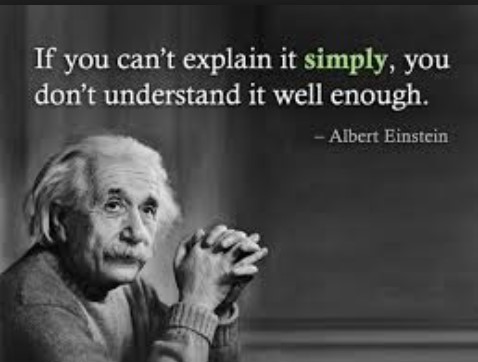
One of my favorite quotations! Mr. Luvera hit the nail on the head, not only for trial presentations, but for any type of writing regardless of your profession. Some people think that their writing should be complex, with lots of Latin, jargon, and legalese. Technical writers often use complicated terms and words understood (barely) by people who work in their industry, but no one else.

Most readers skim or skip the long, single-space block quotations often found in legal briefs. Wouldn’t you? Imagine having to slog through poorly written briefs day after day? Or imagine that you are a juror who must decipher poorly written jury instructions. If what you say is that important, why risk losing the reader even for a moment?

Just like Murphy’s Law, in writing, whatever can be misunderstood, will be. What is the point of writing anything if you are not easily understood? No, you are not “dumbing down” your writing or treating the reader like a child. You are communicating and facilitating your goal — to be understood. -CCE

enstein

Share this:

  • Print (Opens in new window) Print
  • Tweet
  • Email a link to a friend (Opens in new window) Email
  • Share on Tumblr
  • More
  • Share on Reddit (Opens in new window) Reddit
  • Share on Telegram (Opens in new window) Telegram
Like Loading...

Improve Your Brief With The Curse of Knowledge Test.

14 Friday Nov 2014

Posted by Celia C. Elwell, RP in Appellate Writing, Bad Legal Writing, Brief Writing, Legal Analysis, Legal Argument, Legal Writing, Readability

≈ Comments Off on Improve Your Brief With The Curse of Knowledge Test.

Tags

Appellate Writing, Brief Writing, Bryan Garner, Legal Writing, Mark Herrmann, Raymond Ward, Steven Pinker, the (new) legal writer blog

The Curse Of Knowledge: The Root Of Incomprehensible Writing, by Raymond P. Ward, the [new] legal writer blog

http://tinyurl.com/kjpzl9a

Bryan Garner tells participants in his seminars that good writing makes the reader feel smart, while bad writing makes the reader feel stupid. What is the root of this kind of bad writing? Mark Herrmann has an idea about that, drawn from cognitive scientist Steven Pinker: we think that our readers already know what we are trying to tell them. Pinker calls this phenomenon ‘the curse of knowledge.’

So what is the cure for this affliction? Herrmann recommends empathy for the reader. ‘Put yourself in the reader’s state of ignorance,’ he counsels, “and write for that audience.’ Pinker suggests testing your draft on people who don’t already know what you’re trying to tell them:

A better way to exorcise the curse of knowledge is to close the loop, as the engineers say, and get a feedback signal from the world of readers—that is, show a draft to some people who are similar to your intended audience and find out whether they can follow it. Social psychologists have found that we are overconfident, sometimes to the point of delusion, about our ability to infer what other people think, even the people who are closest to us. Only when we ask those people do we discover that what’s obvious to us isn’t obvious to them.

Garner has a similar recommendation in The Winning Brief, at least for cases where the amount at stake is worth the expense: Convene a focus group of lawyers unfamiliar with the case to play the part of appellate judges by reading and reacting to your draft brief. This exercise has many benefits. One of them is to tell you whether the curse of knowledge has infected your brief.


Share this:

  • Print (Opens in new window) Print
  • Tweet
  • Email a link to a friend (Opens in new window) Email
  • Share on Tumblr
  • More
  • Share on Reddit (Opens in new window) Reddit
  • Share on Telegram (Opens in new window) Telegram
Like Loading...

Collection of Judges’ Best Advice On Legal Writing.

08 Saturday Nov 2014

Posted by Celia C. Elwell, RP in 5th Circuit Court of Appeals, Appellate Law, Appellate Writing, Bad Legal Writing, District of Columbia Circuit Court of Appeals, Editing, Legal Argument, Legal Writing, Legalese, Oregon Supreme Court, Plain Language, Readability, Texas Supreme Court, United States Supreme Court, Wisconsin Supreme Court

≈ Comments Off on Collection of Judges’ Best Advice On Legal Writing.

Tags

Appellate Brief Writing, Bryan A. Garner, Joseph Kimble, Legal Writing, Legalese, Michigan Bar Association, Plain Language

Judges on Effective Writing: The Importance of Plain Language, by Bryan A. Garner, Vol 84 Mich. B. J. 44 (February 2005)

http://tinyurl.com/kk6trum

Each quote here is a pearl of wisdom – classical and timeless. Look no further to find the heart and soul of effective legal writing. Click on the hyperlink to find the footnotes for each quotation. -CCE

I trust that, after more than 20 years, some of the Plain Language columns are worth reprinting. This one appeared in March 1994. As I noted then, the survey that Mr. Garner mentions in his introduction is the same one that we first did in Michigan, with very similar results. See the October 1987 and May 1990 columns. The judges are identified by their judicial positions when they make their remarks. —JK (Joseph Kimble)

Lawyers are notoriously poor at gauging what judges prefer in legal writing. Too many of us believe, for example, that judges expect us to use legalese. In 1991, when the Texas Plain-Language Committee surveyed all the state district and appellate judges in Texas, we found that more than 80 percent prefer plain language (Plaintiff complains of Defendant and says) over legalese (Now comes the Plaintiff, by and through his attorneys of record, Darrow and Holmes, and for his Original Petition in this cause would respectfully show unto the Court the following). Indeed, several judges responded to the survey with a plea that we stamp out legalese once and for all.

The results of that survey surprised many Texas litigators—and many changed the form of their court papers. But many more have persisted in the old, legalistic style—perhaps out of a fondness akin to what some people feel for the language of the King James Version of the Bible. Judge Lynn Hughes of Houston speaks directly to those litigators: ‘Anyone who thinks Comes now the Plaintiff is anything like the King James Version has no sense of poetry.’

Literary tastes may differ, of course, but it’s worth knowing what judges say—and have been saying for a long time—about the language we lawyers use. Following are some choice quotations I’ve recently collected. —Bryan A. Garner

Judicial Diagnoses

‘Lawyers spend a great deal of their time shoveling smoke.’ Hon. Oliver Wendell Holmes1, U.S. Supreme Court

‘[Too many lawyers believe that] it is essential to legal English that one write as pompously as possible, using words and phrases that have long since disappeared from normal English discourse.’ Hon. Antonin Scalia2 , U.S. Supreme Court

‘The reason legal writing has gotten to such a low point is that we have had very bad teachers—judges who wrote years ago and wrote badly. We learned bad habits from them and their opinions in law school.’
Hon. William Bablitch3, Supreme Court of Wisconsin

Stick to the Mother Tongue

‘[The advocate] will stock the arsenal of his mind with tested dialectical weapons. He will master the short Saxon word that pierces the mind like a spear and the simple figure that lights the understanding. He will never drive the judge to his dictionary. He will rejoice in the strength of the mother tongue as found in the King James version of the Bible, and in the power of the terse and flashing phrase of a Kipling or a Churchill.’  Hon. Robert H. Jackson4, U.S. Supreme Court

‘[A]void as much as possible stilted legal language, the thereins, thereofs, whereinbefores, hereinafters, and what-have-yous. Use English wherever you can to express the idea as well and as concisely as in law or Latin. A healthy respect for the robust Anglo-Saxon appeals more than does the Latin, whether or not it is Anglicized. The home-grown product in this case is better than the imported, not to say smuggled, one.’ Hon. Wiley B. Rutledge5, U.S. Supreme Court

‘Write so that you’re understood. English is a hard language to learn, but it’s an easy language to communicate in. There’s no reason to put Latin in your brief.’ Hon. Craig T. Enoch6, Fifth Court of Appeals, Dallas

‘Don’t use legalese. It causes you to put your contentions in stale ways.’ Hon. Thomas Gibbs Gee7, U.S. Court of Appeals for the Fifth Circuit, 1974-91

‘Legalese is an impediment to clear, logical thinking.’ Hon. F. Lee Duggan8, First Court of Appeals, Houston

‘It’s easier for a judge when you’re using common usage. Judges are only human, after all.’ Hon. Carolyn Wright9, Family District Court, Dallas

Simplify, Simplify!

‘For a hundred years, good lawyers have been writing without all the garbage and in a simple, direct style.’ Hon. Lynn N. Hughes10. U.S. District Court, Houston

‘A lawyer should write the brief at a level a 12th grader could understand. That’s a good rule of thumb. It also aids the writer. Working hard to make a brief simple is extremely rewarding because it helps a lawyer to understand the issue. At the same time, it scores points with the court.’ Hon. William Bablitch11, Supreme Court of Wisconsin

‘When a judge finds a brief which sets up from twelve to twenty or thirty issues or ‘points’ or ‘assignments of error,’ he begins to look for the two or three, perhaps the one, of controlling force. Somebody has got lost in the underbrush and the judge has to get him—or the other fellow—out. That kind of brief may be labeled the ‘obfuscating’ type. It is distinctly not the kind to use if the attorney wishes calm, temperate, dispassionate reason to emanate from the cloister. I strongly advise against use of this type of brief, consciously or unconsciously. Though this fault has been called over-analysis, it is really a type of under-analysis.’ Hon. Wiley B. Rutledge12, U.S. Supreme Court

‘The key is to make the brief easy for the judge to follow.’ Hon. Lloyd Doggett13, Supreme Court of Texas

Cut the Verbiage

‘You want your brief to be as readable as possible . . . . If I pick up a brief of 49 and a half pages, it has a little less credibility than one that succinctly argues its points in 25 pages . . . . There’s nothing better to read than a well-written brief from a really good lawyer.’ Hon. Jerry E. Smith14, U.S. Court of Appeals for the Fifth Circuit

‘Eye fatigue and irritability set in well before page 50.’ Hon. Patricia M. Wald15, U.S. Court of Appeals for the D.C. Circuit

‘A brief should manifest conviction . . . . [That] is virtually impossible . . . if it contains an excessive number of quotations or is larded with numerous citations to the authorities. Short quotations sometimes clinch a point, but long ones fail in that objective.’ Hon. George Rossman16. Supreme Court of Oregon

‘Start in the very first sentence with the problem in this case. Put it right up front. Start early. Don’t bury it under a lot of verbiage and preliminaries.’ Hon. Nathan L. Hecht17, Supreme Court of Texas

Does Style Matter?

‘Style must be regarded as one of the principal tools of the judiciary and it thus deserves detailed attention and repeated emphasis.’ Hon. Griffin B. Bell18, U.S. Court of Appeals for the Fifth Circuit

‘Lawyers are excused from the necessity of interesting their readers, and all too often—let’s face the evidence—they take advantage of this enviable exemption.’ Hon. Jerome Frank19, U.S. Court of Appeals for the Second Circuit

‘Is good writing rewarded? I used to think it doesn’t matter much, in comparison with legal authority, justice, and the like. Now I know better: Good writing is rewarded so automatically that you don’t even think about it.’ Hon. Murry Cohen20, Fourteenth Court of Appeals, Houston

Bryan A. Garner (bagarner@att.net), president of Dallas-based LawProse, Inc. (www.lawprose.org), is the author of many books on writing, including Legal Writing in Plain English (2001) and The Elements of Legal Style (2d ed. 2002). He is also editor in chief of all current editions of Black’s Law Dictionary. He teaches at Southern Methodist University School of Law.

Share this:

  • Print (Opens in new window) Print
  • Tweet
  • Email a link to a friend (Opens in new window) Email
  • Share on Tumblr
  • More
  • Share on Reddit (Opens in new window) Reddit
  • Share on Telegram (Opens in new window) Telegram
Like Loading...

Amicus Briefs From A Texas Supreme Court Judge’s Perspective.

30 Thursday Oct 2014

Posted by Celia C. Elwell, RP in Amicus Briefs, Appellate Law, Appellate Writing, Brief Writing, Legal Writing

≈ Comments Off on Amicus Briefs From A Texas Supreme Court Judge’s Perspective.

Tags

Amicus Briefs, Appellate Law, Appellate Lawyer Blog, Chad Ruback, Don Cruse, Legal Writing, Texas Supreme Court Justice Don Willett

Texas Supreme Court Justice Don Willett’s Thoughts on Amicus Briefs, by Chad Ruback, Appellate Lawyer Blog

http://tinyurl.com/m2mg7un

This afternoon, Texas Supreme Court Justice Don Willett and Austin lawyer Don Cruse spoke at a continuing legal education seminar.  Among other things, they addressed amicus briefs filed in the Supreme Court.

The court requests a response to the petition for review in about 33% of cases.  However, when an amicus brief has been filed prior to the time that the court decides whether to request a response, Mr. Cruse determined that the court requests a response about 85% of the time.  While only 2% of cases have amicus briefs filed prior to the time that the court decides whether to request a response, it seems that those petitions are disproportionately successful in getting a response requested.

The court requests briefs on the merits (a/k/a full briefing) in about 20% of cases.  However, when an amicus brief has been filed prior to the time that the court decides whether to request briefs on the merits, Mr. Cruse determined that the court requests briefs on the merits about 82% of the time.  While only 7% of cases have amicus briefs filed prior to the time that the court decides whether to request briefs on the merits, it seems that those petitions are disproportionately successful in getting briefs on the merits requested.

Consistent with this data, Justice Willett indicated that he enjoys reading amicus briefs and that it is advisable for a petitioner to have supporting amicus briefs filed early in the proceeding (e.g., before the court has decided to whether to request a response or at least before the court has decided whether to request briefs on the merits).

Share this:

  • Print (Opens in new window) Print
  • Tweet
  • Email a link to a friend (Opens in new window) Email
  • Share on Tumblr
  • More
  • Share on Reddit (Opens in new window) Reddit
  • Share on Telegram (Opens in new window) Telegram
Like Loading...

Non-Lawyer’s Glossary From The United Kingdom.

28 Tuesday Oct 2014

Posted by Celia C. Elwell, RP in Glossaries, Legal Dictionaries, Legal Writing, References

≈ Comments Off on Non-Lawyer’s Glossary From The United Kingdom.

Tags

Cara Ashby, Legal Dictionary, Legal Glossary, Legal Writing, Pinnington Law, References, United Kingdom

The Non-Lawyer Guide to Legal Terms, by Pinnington Law (with hat tip to Cara Ashby!)

http://pinningtonlaw.co.uk/glossary/

The Legal Glossary

We understand that divorce or separation proceedings can be a stressful and complicated process. Therefore, we have created this glossary to ensure you understand all aspects of the legal processes which you will need to follow. From the various technical terms involved in court proceedings and legal documents to the different child arrangement orders and agreements for which you can apply, our glossary will help you improve your understanding of complicated legal matters. By doing so, you can commence divorce or separation proceedings with confidence in your own legal expertise.

Share this:

  • Print (Opens in new window) Print
  • Tweet
  • Email a link to a friend (Opens in new window) Email
  • Share on Tumblr
  • More
  • Share on Reddit (Opens in new window) Reddit
  • Share on Telegram (Opens in new window) Telegram
Like Loading...

Text And Tweet Abbreviations Are Okay – Sometimes.

28 Tuesday Oct 2014

Posted by Celia C. Elwell, RP in Abbreviations, Legal Writing

≈ Comments Off on Text And Tweet Abbreviations Are Okay – Sometimes.

Tags

Abbreviations, Grammar Girl, Legal Writing, Mignon Fogarty, Text Messages, Tweets

Text Messaging, the Internet, and Formality, by Mignon Fogarty, Grammar Girl Blog

http://tinyurl.com/pxw477f

These admonitions apply to emails as well. -CCE

A few weeks ago I saw something that before then I had heard of but hadn’t seen myself: a smiley face in a very formal document, or, I suppose I should say, what should have been a very formal document. I literally thought of it and then sputtered for days.

There’s nothing new about cute abbreviations. OK, one of the most recognized English words in the world, came out of a cute abbreviation, and America’s founding fathers could have used the abbreviation IOU (for I owe you). A few decades later, the cost of sending a telegram encouraged people to use even more abbreviations and shortened forms of words. Today though, smartphone-wielding text messagers and tweeters may be playing with language and abbreviations more than ever before. And there’s nothing wrong with that! If you want to text your best buddy you’re going to be l8 (late) or that you LOLed (laughed out loud), have at it. That’s an appropriately informal situation. I just discovered that my phone has Halloween emoji, so you may be seeing ghosts or pumpkins on my Twitter feed soon. They look like fun.

But here are some formal documents in which you shouldn’t use emoji, smiley faces, or text messaging abbreviations: business plans, mission statements, resumes, cover letters, letters of recommendation, or pretty much any school assignment that I can think of right now. Seriously, you still need to take some things seriously.

Share this:

  • Print (Opens in new window) Print
  • Tweet
  • Email a link to a friend (Opens in new window) Email
  • Share on Tumblr
  • More
  • Share on Reddit (Opens in new window) Reddit
  • Share on Telegram (Opens in new window) Telegram
Like Loading...

Compilation of Ken Adams’ Articles on Contract Drafting.

25 Saturday Oct 2014

Posted by Celia C. Elwell, RP in Contract Law, Legal Writing

≈ Comments Off on Compilation of Ken Adams’ Articles on Contract Drafting.

Tags

Adams On Contract Drafting Blog, AdamsDrafting Blog, Contract Law, Ken Adams, Legal Writing, The Koncise Drafter

Ken Adams’s Articles, Adams on Contract Drafting Blog

http://www.adamsdrafting.com/writing/ken-adamss-articles/

In addition to Ken’s posts from February 2013, this blog contains Ken’s posts from The Koncise Drafter (from December 2010 to February 2013) and from the AdamsDrafting blog (from May 2006 to December 2010).


Share this:

  • Print (Opens in new window) Print
  • Tweet
  • Email a link to a friend (Opens in new window) Email
  • Share on Tumblr
  • More
  • Share on Reddit (Opens in new window) Reddit
  • Share on Telegram (Opens in new window) Telegram
Like Loading...

Using Parentheticals As A Legal Writing Tool.

21 Tuesday Oct 2014

Posted by Celia C. Elwell, RP in Legal Writing, Parentheticals, String Citations

≈ Comments Off on Using Parentheticals As A Legal Writing Tool.

Tags

Legal Skills Prof Blog, Legal Writing, Nick Wagoner, Parentheticals, String Citations

Parentheticals are an excellent legal writing tool, especially in string citations. They can be used to reinforce a legal argument without a lengthy explanation, like this:

“All cases cited by Defendants are very different from this case. In all of them, the danger was plainly visible. See Transport Indemnity Co. v. Page, 406 P.2d 980 (Okla. 1965)(daytime accident); Haworth v. Mosher, 395 F.2d 566 (10th Cir. 1968)(dust storm on highway clearly visible by approaching motorists); Thur v. Dunkley, 474 P.2d 403 (Okla. 1970)(accident occurred during daylight with ample unobstructed vision from either direction).”

When used incorrectly, they frustrate the reader. In this three-part series, Nick Wagoner illustrates the best, and worst, ways to use parentheticals. –CCE

Guest blogger Nick Wagoner on “Common Parenthetical Pitfalls” [Part 1], by James B. Levy, Editor, Legal Skills Prof Blog

http://tinyurl.com/6qdrg8k

Tips For Writing Better Parentheticals – Part 2, by James B. Levy, Editor, Legal Skills Prof Blog

http://tinyurl.com/6rn6plw

More On Writing Good Parentheticals From Our Guest Blogger Nick Wagoner [Part 3], by James B. Levy, Editor, Legal Skills Prof Blog

http://tinyurl.com/8a3aker

Share this:

  • Print (Opens in new window) Print
  • Tweet
  • Email a link to a friend (Opens in new window) Email
  • Share on Tumblr
  • More
  • Share on Reddit (Opens in new window) Reddit
  • Share on Telegram (Opens in new window) Telegram
Like Loading...

Does The Law Really Require Legalese?

16 Thursday Oct 2014

Posted by Celia C. Elwell, RP in Legal Writing, Legalese, Plain Language

≈ Comments Off on Does The Law Really Require Legalese?

Tags

Joseph Kimble, Legal Writing, Legal Writing Editor Blog, Legalese, Plain Language

You Think the Law Requires Legalese?, by Joseph Kimble, Legal Writing Editor Blog

http://legalwritingeditor.com/2013/10/21/think-law-requires-legalese/

A classic. -CCE

There’s a sign that, in some configuration, appears on every gas pump in Michigan, although most drivers probably don’t even notice it anymore. You can see one in the photo to the right.

Let’s put aside the all-capitals, which are notoriously hard to read. And never mind that the first and second items aren’t exactly parallel. (‘Stop engine. Don’t smoke.’) The trouble — linguistically, stylistically, semantically — shows up in the third item.

Look at that little sentence. We get an explicit subject, A person, which really throws off the parallelism. The lawyer’s shall — now corrupted and ambiguous from misuse — does not belong even in statutes or regulations, let alone on a gas pump. Remain in attendance? Oh, please. The first of is unnecessary. And for the big comedic finish, we’re seemingly told that the nozzle must be able to see the person.

The fix isn’t hard: ‘You must stay outside your vehicle and be able to see the nozzle.’ Or for parallelism with the first two items: ‘Stay outside your vehicle, and make sure you can see the nozzle.’

Now, are people likely to misunderstand the pump version? No. Is this the worst public writing on the planet? Obviously not. But by tracing this mundane example to its source, anyone who cares about clarity in legal and official documents can learn a set of critical lessons. . . .


Share this:

  • Print (Opens in new window) Print
  • Tweet
  • Email a link to a friend (Opens in new window) Email
  • Share on Tumblr
  • More
  • Share on Reddit (Opens in new window) Reddit
  • Share on Telegram (Opens in new window) Telegram
Like Loading...

Writing A Business Memorandum.

13 Monday Oct 2014

Posted by Celia C. Elwell, RP in Business Memorandums

≈ Comments Off on Writing A Business Memorandum.

Tags

Business Memorandum, Legal Writing, Loyola University New Orleans

The Business Memo, College of Humanities and Natural Sciences, Loyola University New Orleans

http://loyno.edu/wac/business-memo

The memorandum, usually called a memo, is a common form of internal communication in business and academia. Memos have many purposes, including informing employees, giving directions, outlining procedures, requesting data, supplying responses, and confirming decisions. But essentially there are three basic reasons to write a memo:

  • To persuade to action (we should do this)
  • To issue a directive (do this)
  • To provide a report (here’s what was done, or here’s what we found out)

Every good memo includes:

  • A clear statement of purpose, stated upfront: I am writing because . . .
  • Information about what the reader needs to know: The facts are . . .
  • Statement of any action requested, ordered, or undertaken: I will, or I propose that you . . .

General points to remember . . . .

Share this:

  • Print (Opens in new window) Print
  • Tweet
  • Email a link to a friend (Opens in new window) Email
  • Share on Tumblr
  • More
  • Share on Reddit (Opens in new window) Reddit
  • Share on Telegram (Opens in new window) Telegram
Like Loading...

Corporate Memo Writing Guide.

11 Saturday Oct 2014

Posted by Celia C. Elwell, RP in Bad Legal Writing, Corporate Memorandums, Editing, Legal Writing, Legalese, Readability

≈ Comments Off on Corporate Memo Writing Guide.

Tags

Corporate Memos, Internal Memos, Legal Writing, Quartz Blog, Vickie Elmer

The Complete Guide To Writing Corporate Memos, by Vickie Elmer, Quartz Blog

http://qz.com/153401/complete-guide-to-writing-corporate-memos/

A recent all-staff internal memo from two senior Yahoo executives addressed its readers as ‘pilgrim,’ then ‘sailor,’ and mentioned ‘T-Rex,’ ‘The Itsy-Bitsy Pterodactyl,’ the ‘hippocampian wagons’ and ‘Ayn Randian Objectivism’ all in one paragraph.

That widely ridiculed email served as a reminder that internal memos matter as much as any marketing brochure or press release—especially given how likely they are these days to leak online. ‘What we write in memo form is going to become our business persona,’ says Sandra Lamb, author of How to Write It.

That persona could be someone who speaks in jargon and ‘stilted business-school gobbledygook’—as Microsoft CEO Steve Ballmer did in a memo announcing leadership changes. It could be brutally matter-of-fact, as former Nokia CEO Stephen Elop was in a wake-up call to staff. Or it could be funny and enduringly honest, as Groupon CEO Andrew Mason was when he announced his resignation. Here are some tips to ensure that your memo is clear, effective, and memorable—for the right reasons. . . .

Share this:

  • Print (Opens in new window) Print
  • Tweet
  • Email a link to a friend (Opens in new window) Email
  • Share on Tumblr
  • More
  • Share on Reddit (Opens in new window) Reddit
  • Share on Telegram (Opens in new window) Telegram
Like Loading...

Garner’s Ten Legal Writing Tips.

05 Sunday Oct 2014

Posted by Celia C. Elwell, RP in Briefing Cases, Citations, Editing, Legal Analysis, Legal Argument, Legal Writing, Proofreading, Public Domain Citations, Readability, Spell Checking, The Bluebook

≈ Comments Off on Garner’s Ten Legal Writing Tips.

Tags

ABA Journal, Bryan Garner, Computer Legal Research, Editing, Legal Analysis, Legal Citations, Legal Writing, Proofreading

Ten Tips for Legal Writing, by Judith D. Fischer, Legal Writing Prof Blog

http://tinyurl.com/pwlxeyt

Bryan Garner’s latest article in in the ABA Journal is titled Ten Tips for Better Legal Writing. Some Garner of his tips are especially appropriate for law students, who could appropriately paste ‘Don’t rely exclusively on computer research’ on the wall by their work space. That would serve as a reminder that unfocused computer searches are like a box of chocolates–you never know what you’re going to get.  Garner also advises legal writers to be neither too tentative nor too cocksure in their conclusions, both of which are hazards for beginning law students. And Garner’s tenth tip would improve the professionalism of many a student paper: ‘Proofread one more time than you think necessary.’


Share this:

  • Print (Opens in new window) Print
  • Tweet
  • Email a link to a friend (Opens in new window) Email
  • Share on Tumblr
  • More
  • Share on Reddit (Opens in new window) Reddit
  • Share on Telegram (Opens in new window) Telegram
Like Loading...

Appellate Judge Explains How To Lose An Appeal – Works Every Time!

27 Saturday Sep 2014

Posted by Celia C. Elwell, RP in Appellate Writing, Bad Legal Writing, Brief Writing, Editing, Fonts, Footnotes, Legal Analysis, Legal Argument, Legal Writing, Legalese, Proofreading, Psychology, Readability

≈ Comments Off on Appellate Judge Explains How To Lose An Appeal – Works Every Time!

Tags

Appellate Brief Writing, Appellate Record Citations, Bad Legal Writing, Hon. Alex Kozinski, Legal Writing, The Montana Lawyer

The Wrong Stuff: How You Too Can…Lose Your Appeal, by Hon. Alex Kozinski, 1992 BYU L. Rev. 325, The Montana Lawyer, 23 Mont. Law 5 (Oct. 1997)

Webmaster’s note: This was originally presented as a lecture at Brigham Young University, J. Reuben Clark School of Law on January 21, 1992. It was later recycled as The Wrong Stuff, 1992 BYU L. Rev. 325. The lecture was repeated during the 1997 Montana State Bar Annual Meeting, and again recycled in the Montana Lawyer as How You Too… Can Lose Your Appeal (and you thought Judge Kozinski didn’t care about the environment!).

The BYU L. Rev. edition is available as a PDF scan. What follows is the Montana Lawyer edition.

[former link is broken – see new link below]

https://digitalcommons.law.byu.edu/cgi/viewcontent.cgi?article=1748&context=lawreview


When George Bousliman called a few months ago and invited me to come, I said, ‘What could I possibly talk about that would be of interest to members of the State Bar of Montana?’ He said, ‘The truth is, we don’t really care what you say; what we really want is a cover boy for The Montana Lawyer.’

Well, I have my pride. I want to be loved for my intellect, not just my face. So, I decided to talk on a totally irrelevant topic that I know a little something about: How to lose an appeal.

* * *

First, you want to tell the judges right up front that you have a rotten case. The best way to do this is to file a fat brief. So if the rules give you 50 *6 pages, ask for 75, 90, 125–the more the better. Even if you don’t get the extra pages, you will let the judges know you don’t have an argument capable of being presented in a simple, direct, persuasive fashion. Keep in mind that simple arguments are winning arguments; convoluted arguments are sleeping pills on paper.

But don’t just rely on the length of your brief to telegraph that you haven’t got much of a case. No. Try to come up with something that will annoy the judges, make it difficult for them to read what you have written and make them mistrust whatever they can read. Here are a few suggestions: Bind your brief so that it falls apart when the judge gets about half way through it. Or you could try a little trick recently used by a major law firm: Assemble your brief so that every other page reads upside down. This is likely to induce motion sickness and it’s always a fine idea to have the judge associate your argument with nausea. Also–this is a biggie–make sure your photocopier is low on toner or take a key and scratch the glass so it will put annoying lines on every page.

Best of all, cheat on the page limit. . . .

Share this:

  • Print (Opens in new window) Print
  • Tweet
  • Email a link to a friend (Opens in new window) Email
  • Share on Tumblr
  • More
  • Share on Reddit (Opens in new window) Reddit
  • Share on Telegram (Opens in new window) Telegram
Like Loading...

Show, Don’t Tell, When You Use The Right Word.

03 Wednesday Sep 2014

Posted by Celia C. Elwell, RP in Editing, Legal Argument, Legal Writing, Proofreading, Readability

≈ Comments Off on Show, Don’t Tell, When You Use The Right Word.

Tags

Jason Steed, Legal Solutions Blog, Legal Writing, Persuasive Writing

Legal Writing: Word Choice, by Jason Steed, Legal Solutions Blog

http://blog.legalsolutions.thomsonreuters.com/practice-of-law/legal-writing-word-choice/

Every good lawyer knows that persuasion begins with framing the issue, and framing the issue begins with effective word choice. But many lawyers don’t realize, or occasionally forget, just how effective good word choice can be—or worse, they misunderstand what it means to make effective word choices. They think, for example, that labeling an act as “extremely egregious” will help the court to understand just how terrible the act was. But every good writer knows that good writing means showing, not telling—and adverbs and adjectives are all about telling.

In other words, adverbs and adjectives are not a sign of good persuasive writing. If you find yourself using adverbs or adjectives to get your point across, then you’re probably making bad word choices. Why? Because adverbs modify verbs, and adjectives modify nouns—and if your verbs and nouns need modifying, then they probably aren’t the best verbs and nouns you could be using.

So how effective can simple nouns and verbs be? . . . .


Share this:

  • Print (Opens in new window) Print
  • Tweet
  • Email a link to a friend (Opens in new window) Email
  • Share on Tumblr
  • More
  • Share on Reddit (Opens in new window) Reddit
  • Share on Telegram (Opens in new window) Telegram
Like Loading...
← Older posts
Newer posts →
Follow The Researching Paralegal on WordPress.com

Enter your email address to follow this blog and receive notifications of new posts by email.

Search

Sign In/Register

  • Create account
  • Log in
  • Entries feed
  • Comments feed
  • WordPress.com

Categories

Archives

  • June 2024
  • March 2022
  • January 2022
  • November 2021
  • October 2021
  • January 2021
  • November 2020
  • October 2020
  • September 2020
  • August 2020
  • June 2020
  • May 2020
  • April 2020
  • January 2020
  • December 2019
  • October 2019
  • August 2019
  • July 2019
  • May 2019
  • March 2019
  • January 2019
  • December 2018
  • November 2018
  • October 2018
  • September 2018
  • August 2018
  • July 2018
  • June 2018
  • May 2018
  • April 2018
  • March 2018
  • February 2018
  • December 2017
  • November 2017
  • October 2017
  • September 2017
  • August 2017
  • July 2017
  • June 2017
  • May 2017
  • April 2017
  • March 2017
  • February 2017
  • January 2017
  • December 2016
  • November 2016
  • October 2016
  • September 2016
  • August 2016
  • July 2016
  • June 2016
  • May 2016
  • April 2016
  • March 2016
  • February 2016
  • January 2016
  • December 2015
  • November 2015
  • October 2015
  • September 2015
  • August 2015
  • July 2015
  • June 2015
  • May 2015
  • April 2015
  • March 2015
  • February 2015
  • January 2015
  • December 2014
  • November 2014
  • October 2014
  • September 2014
  • August 2014
  • July 2014
  • June 2014
  • May 2014
  • April 2014
  • March 2014
  • February 2014
  • January 2014
  • December 2013
  • November 2013
  • October 2013

Recent Comments

lawyersonia's avatarlawyersonia on In Custodia Legis – Lega…
Eric Voigt's avatarEric Voigt on Top 20 Paralegal Blogs, Websit…
profvoigt's avatarprofvoigt on Research Guides in Focus – Mun…
Make Your PDF Docume… on Make Your PDF Document Edit-Pr…
madlaw291282999's avatarmadlaw291282999 on Using Hyperbole -Are You Riski…

Recent Comments

lawyersonia's avatarlawyersonia on In Custodia Legis – Lega…
Eric Voigt's avatarEric Voigt on Top 20 Paralegal Blogs, Websit…
profvoigt's avatarprofvoigt on Research Guides in Focus – Mun…
Make Your PDF Docume… on Make Your PDF Document Edit-Pr…
madlaw291282999's avatarmadlaw291282999 on Using Hyperbole -Are You Riski…
  • RSS - Posts
  • RSS - Comments

Blog at WordPress.com.

  • Subscribe Subscribed
    • The Researching Paralegal
    • Join 460 other subscribers
    • Already have a WordPress.com account? Log in now.
    • The Researching Paralegal
    • Subscribe Subscribed
    • Sign up
    • Log in
    • Report this content
    • View site in Reader
    • Manage subscriptions
    • Collapse this bar
 

Loading Comments...
 

You must be logged in to post a comment.

    %d