Westlaw Public Records Database Breached. Who Is Affected?

Tags

, , , , ,

Westlaw Discloses Breach Of Public Records Database, by Sabrina I. Pacifici, BeSpacific Blog

http://tinyurl.com/pffqhny

News release: ‘West Publishing Corporation, a unit of Thomson Reuters, has notified the New Hampshire Attorney General’s Office of a breach involving their Westlaw subscription-only public records database. In a letter dated November 4th to those affected, Senior Vice President Andy Martens explained that on October 14, they detected unusual search activity. Investigation revealed that some subscribers’ passwords had been compromised and used to access the database. The types of information involved included addresses, date of birth, and in some cases, driver’s license numbers and Social Security numbers. No bank account or credit card information was involved. In response to the breach, West removed external access to full sensitive identifiers in public records, forced a password reset on all public user accounts, and implemented  additional technological controls to detect and respond to searches of more limited public records that also appeared unauthorized. Federal law enforcement was also contacted. West offered those affected two years of free credit monitoring with Experian ProtectMyID Elite. Nine NH residents were notified. The total number of individuals notified was not indicated in their report to New Hampshire.’

Permacookies – AT&T’s and Verizon’s Way Of Saying “Hello.”

Tags

, , , , , , , , , , , ,

AT&T Kills The ‘Permacookie,’ Stops Tracking Customers’ Internet Usage (For Now), by Nick Mediati, PC World

http://tinyurl.com/kff7k94

In recent weeks, Verizon and AT&T have been caught up in a privacy firestorm over their use of so-called ‘permacookies,’ a method of tracking what their users do while browsing the Web with the intent of sharing that data with advertisers. Verizon’s permacookie program lives on, but AT&T has ceased the practice, ProPublica reported on Friday.

At least for now.

AT&T tells ProPublica that its use of permacookies was ‘part of a test,’ which has since wrapped up, but the company says that it ‘may still launch a program to sell data collected by its tracking number.’ For its part, AT&T says that it will allow customers to opt out of the program if—or when—it decides to use permacookies for advertising purposes.

The story behind the story: Permacookies aren’t cookies in the traditional sense: Instead, they’re unique identifiers appended to website addresses you type in on your device that let carriers see what kinds of sites you visit.

Permacookies exist for the same reason traditional tracking cookies exist—so advertisers can see what sorts of things you might be interested and serve up related ads in the hopes that you’ll click on them. But unlike regular tracking cookies, which you can easily delete from your browser or block entirely, there’s no way of removing or blocking permacookies since they’re handled entirely by the carrier. . . .

Whatever Can Be Misunderstood, Will Be.

Tags

, , , , ,

This Should Be Every Trial Lawyer’s Mantra, by Paul Luvera, Plaintiff Trial Lawyer Tips Blog

http://tinyurl.com/myfv5oo

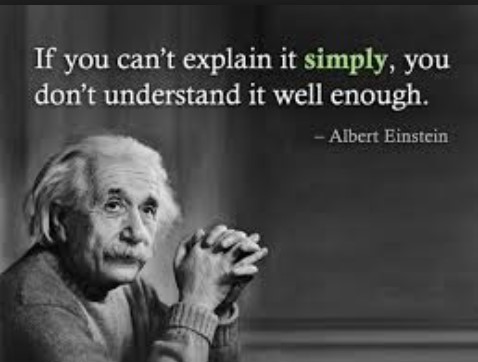
One of my favorite quotations! Mr. Luvera hit the nail on the head, not only for trial presentations, but for any type of writing regardless of your profession. Some people think that their writing should be complex, with lots of Latin, jargon, and legalese. Technical writers often use complicated terms and words understood (barely) by people who work in their industry, but no one else.

Most readers skim or skip the long, single-space block quotations often found in legal briefs. Wouldn’t you? Imagine having to slog through poorly written briefs day after day? Or imagine that you are a juror who must decipher poorly written jury instructions. If what you say is that important, why risk losing the reader even for a moment?

Just like Murphy’s Law, in writing, whatever can be misunderstood, will be. What is the point of writing anything if you are not easily understood? No, you are not “dumbing down” your writing or treating the reader like a child. You are communicating and facilitating your goal — to be understood. -CCE

enstein

Malpractice Immunity And Defensive Medicine.

Tags

, , , , , ,

Giving Physicians Immunity From Malpractice Claims Does Not Reduce ‘Defensive Medicine,’  Medical News Today (Rand Corporation)

Changing laws to make it more difficult to sue physicians for medical malpractice may not reduce the amount of ‘defensive medicine’ practiced by physicians, according to a new RAND Corporation study.

Studying the behavior of emergency physicians in three states that raised the standard for malpractice in the emergency room to gross negligence, researchers found that strong new legal protections did not translate into less-expensive care.

The findings are published in the Oct. 16 edition of the New England Journal of Medicine.

‘Our findings suggest that malpractice reform may have less effect on costs than has been projected by conventional wisdom,’ said Dr. Daniel A. Waxman, the study’s lead author and a researcher at RAND, a nonprofit research organization. ‘Physicians say they order unnecessary tests strictly out of fear of being sued, but our results suggest the story is more complicated.’

It is widely said that defensive medicine accounts for a substantial part of the hundreds of billions of dollars of unnecessary health care spending that is estimated to occur annually in the United States. Malpractice reform has been advocated by many experts as a key to reining in health care costs.

RAND researchers looked at three states — Georgia, Texas and South Carolina — that about a decade ago changed the legal malpractice standard for emergency care to gross negligence. Other states use the more common ordinary negligence standard, or a failure to exercise reasonable care.

The higher standard means that for physicians accused of malpractice in the three states examined, plaintiffs must prove that doctors consciously disregarded the need to use reasonable care, knowing full well that their actions were likely to cause serious injury. . . .

Should Attorneys, Not Judges, Conduct Voir Dire At Trial?

Tags

, , , , ,

Let the Lawyers Ask: Five Reasons for Attorney-Conducted Voir Dire, by Dr. Ken Broda-Bahm, Persuasive Litigator

http://tinyurl.com/new9t3c

You may think that trial attorneys are the only ones who conduct voir dire at trial. That is not necessarily the case. Not all judges agree, especially in federal court. Dr. Broda-Bahm argues here that the parties’ lawyers should have this role. -CCE

Ever had the experience of asking someone to ask someone else something on your behalf? It’s like a sixth-grader’s attempt to find out if someone likes you. Sometimes you need a little plausible deniability but, in most cases now, it’s easier and more direct to just ask on your own. And that is pretty much what attorneys want in voir dire. It is nice for the judge to explain the procedures and deal with some of the more obvious hardship and cause challenges, but I think it’s safe to say that every trial lawyer wants the chance to ask their own questions in voir dire. Unfortunately, in some states and in most federal courtrooms, attorney-conducted oral voir dire is either limited or nonexistent.

The judges in those courtrooms, however, have discretion, and can allow attorney-conducted oral voir dire if they think the case or the circumstances call for it. So, when attorneys do have an opening to argue for their own chance at the lectern during voir dire, how do they make the case? If the judge is firmly convinced that it’s wasted time or an unwelcome opportunity for lawyers to ask panelists to prejudge the case, then nothing is going to change that judge’s mind. But if judges are on the fence, then a joint request from the parties, along with a few good reasons, might be enough to sway them. This post offers five reasons, along with some supporting research, that could buttress a brief or an oral argument in favor of attorney-conducted oral voldir dire. . . .

Improve Your Brief With The Curse of Knowledge Test.

Tags

, , , , , , ,

The Curse Of Knowledge: The Root Of Incomprehensible Writing, by Raymond P. Ward, the [new] legal writer blog

http://tinyurl.com/kjpzl9a

Bryan Garner tells participants in his seminars that good writing makes the reader feel smart, while bad writing makes the reader feel stupid. What is the root of this kind of bad writing? Mark Herrmann has an idea about that, drawn from cognitive scientist Steven Pinker: we think that our readers already know what we are trying to tell them. Pinker calls this phenomenon ‘the curse of knowledge.’

So what is the cure for this affliction? Herrmann recommends empathy for the reader. ‘Put yourself in the reader’s state of ignorance,’ he counsels, “and write for that audience.’ Pinker suggests testing your draft on people who don’t already know what you’re trying to tell them:

A better way to exorcise the curse of knowledge is to close the loop, as the engineers say, and get a feedback signal from the world of readers—that is, show a draft to some people who are similar to your intended audience and find out whether they can follow it. Social psychologists have found that we are overconfident, sometimes to the point of delusion, about our ability to infer what other people think, even the people who are closest to us. Only when we ask those people do we discover that what’s obvious to us isn’t obvious to them.

Garner has a similar recommendation in The Winning Brief, at least for cases where the amount at stake is worth the expense: Convene a focus group of lawyers unfamiliar with the case to play the part of appellate judges by reading and reacting to your draft brief. This exercise has many benefits. One of them is to tell you whether the curse of knowledge has infected your brief.


Copyright Infringement and Fair Use.

Tags

, , , , , ,

Law Firm Copying and Fair Use: An Examination of Different Purpose and Fair Use Markets, by Sabrina I. Pacifici, BeSpacific Blog

http://tinyurl.com/lfs2g9v

Jones, D. R., Law Firm Copying and Fair Use: An Examination of Different Purpose and Fair Use Markets (September 29, 2014). South Texas Law Review, Vol. 56, No. 2, 2014 – Forthcoming; University of Memphis Legal Studies Research Paper No. 144. Available for download at SSRN: http://ssrn.com/abstract=2503089

‘In several recent lawsuits, publishers sued law firms for copyright infringement. The lawsuits focused on making unlicensed copies of scholarly articles to file with patent applications, including copies for the firms’ internal use and for the firms’ clients. In two of these cases, lower court judges determined that the making of unlicensed copies was fair use. The decisions hinged on transformative use, focusing on the defendant’s purpose for using the works. There was no alteration or change in the works. The judges found fair use, despite the possible availability of licensing. These patent application cases fit within a larger category of cases involving the use of copyrighted works in judicial and quasi-judicial proceedings. This article uses these cases as a vehicle to review the use of purpose in fair use analysis. It advocates that the review of the character and purpose of a use should include a deeper examination of the policies and societal interests underlying the use. This broader consideration is especially important if a plaintiff asserts the presence of a ready market for the payment of fees for use of a copyrighted work. This article explores the determination of a fair use market as a way to support the unlicensed use of copyrighted works although a ready market exists for the payment of fees. These cases offer an excellent model for the analysis necessary to determine a fair use market.’

Basic Evidence Presentation Tips For Young Lawyers.

Tags

, , , , , ,

Letter To Young Lawyers—Basic Tips And Presentation Of Evidence, by Hon. E. Kenneth Wright Jr.,YLD News, Illinois State Bar Association™, Vol. 55, No. 1 (August 2010)

Dear Attorney Jane Doe and Attorney John Doe:

As a young lawyer, you are in a place that I left some time ago. However, I have watched you step into jury courtrooms with a level of anticipation and excitement that is refreshing. While a few of you mask it well, I know there is also some anxiety lurking in the background. Don’t worry, because that anxiety strikes even the most seasoned litigators. Now I sit on the bench, and I sometimes wish I could call a time out during the trial to share with you some simple tips that will put you more at ease as you proceed with your case.

Being a member of the judiciary is an honor that comes with extraordinary powers and responsibilities. These powers do not include a coach’s ability to call for substitution of players, so in this note I want to briefly address some basic practical pointers to improve your overall practice as well as touch upon the specific issue of presentation of evidence to a jury. I hope by doing so I give you peace of mind and contribute, in a small way, to your growth as a fine attorney.

Basic Pointers

How quickly you acclimate yourself to courtroom practice depends in large part on you, your learning style, and how many opportunities you have to appear before the court. In the beginning, you may feel overwhelmed by the number of items you must remember, track and recall at a moment’s notice. In your haste, you may overlook a few very basic points that can actually help you. . . .

How To Research Corporations.

Tags

, , , , ,

From Due Diligence to Corporate Intelligence, by Internet for Lawyers Blog

http://tinyurl.com/po56fuh

Say you’re working on a big case, and you need as much information on the opposing company as possible. Or perhaps you’re pitching a potential new client, and want to know everything about their business for your presentation. Maybe your client’s competition is developing a new product or you want to read all the news stories about some development that will affect your business or your clients’. Do you know how to get that information quickly? And for free?

There was a time not so long ago when a law firm would have to use an ‘information specialist’ to find this information, or in extreme cases, hire a ‘corporate spy’ to dig up the most sensitive competitive business information. But today, with so much business, legal and news information available on the Internet, getting this kind of ‘business intelligence’ is infinitely easier. If you know where to look, you too can be a corporate 007. . . .

What to Know About do-it-yourself Wills

Good advice! -CCE

Tyler J. Dixon, Esq.'s avatarGrand Junction Lawyer Blog

You know it, and I know it: A good lawyer can be expensive. With all of the companies out there that are providing fill-in-the-blank, do-it-yourself Wills and other estate planning documents on the cheap, it may be awfully tempting to try to save money using them. Many start at only around $100.

In some instances, using estate planning software or websites may actually be a good idea. For example, if you have a very simple estate plan with no estate tax issues, and you are leaving the bulk of your estate to your spouse or kids, you should consider it.

All estate planners and estate planning experts agree that any Will, even a fill-in-the-blank, do-it-yourself Will, is almost always better than not having one at all, especially if your family and financial situation is basic and straightforward. However, you need to make sure that if you do your own estate…

View original post 193 more words

Collection of Judges’ Best Advice On Legal Writing.

Tags

, , , , , ,

Judges on Effective Writing: The Importance of Plain Language, by Bryan A. Garner, Vol 84 Mich. B. J. 44 (February 2005)

http://tinyurl.com/kk6trum

Each quote here is a pearl of wisdom – classical and timeless. Look no further to find the heart and soul of effective legal writing. Click on the hyperlink to find the footnotes for each quotation. -CCE

I trust that, after more than 20 years, some of the Plain Language columns are worth reprinting. This one appeared in March 1994. As I noted then, the survey that Mr. Garner mentions in his introduction is the same one that we first did in Michigan, with very similar results. See the October 1987 and May 1990 columns. The judges are identified by their judicial positions when they make their remarks. —JK (Joseph Kimble)

Lawyers are notoriously poor at gauging what judges prefer in legal writing. Too many of us believe, for example, that judges expect us to use legalese. In 1991, when the Texas Plain-Language Committee surveyed all the state district and appellate judges in Texas, we found that more than 80 percent prefer plain language (Plaintiff complains of Defendant and says) over legalese (Now comes the Plaintiff, by and through his attorneys of record, Darrow and Holmes, and for his Original Petition in this cause would respectfully show unto the Court the following). Indeed, several judges responded to the survey with a plea that we stamp out legalese once and for all.

The results of that survey surprised many Texas litigators—and many changed the form of their court papers. But many more have persisted in the old, legalistic style—perhaps out of a fondness akin to what some people feel for the language of the King James Version of the Bible. Judge Lynn Hughes of Houston speaks directly to those litigators: ‘Anyone who thinks Comes now the Plaintiff is anything like the King James Version has no sense of poetry.’

Literary tastes may differ, of course, but it’s worth knowing what judges say—and have been saying for a long time—about the language we lawyers use. Following are some choice quotations I’ve recently collected. Bryan A. Garner

Judicial Diagnoses

‘Lawyers spend a great deal of their time shoveling smoke.’ Hon. Oliver Wendell Holmes1, U.S. Supreme Court

‘[Too many lawyers believe that] it is essential to legal English that one write as pompously as possible, using words and phrases that have long since disappeared from normal English discourse.’ Hon. Antonin Scalia2 , U.S. Supreme Court

‘The reason legal writing has gotten to such a low point is that we have had very bad teachers—judges who wrote years ago and wrote badly. We learned bad habits from them and their opinions in law school.’
Hon. William Bablitch3, Supreme Court of Wisconsin

Stick to the Mother Tongue

‘[The advocate] will stock the arsenal of his mind with tested dialectical weapons. He will master the short Saxon word that pierces the mind like a spear and the simple figure that lights the understanding. He will never drive the judge to his dictionary. He will rejoice in the strength of the mother tongue as found in the King James version of the Bible, and in the power of the terse and flashing phrase of a Kipling or a Churchill.’  Hon. Robert H. Jackson4, U.S. Supreme Court

‘[A]void as much as possible stilted legal language, the thereins, thereofs, whereinbefores, hereinafters, and what-have-yous. Use English wherever you can to express the idea as well and as concisely as in law or Latin. A healthy respect for the robust Anglo-Saxon appeals more than does the Latin, whether or not it is Anglicized. The home-grown product in this case is better than the imported, not to say smuggled, one.’ Hon. Wiley B. Rutledge5, U.S. Supreme Court

‘Write so that you’re understood. English is a hard language to learn, but it’s an easy language to communicate in. There’s no reason to put Latin in your brief.’ Hon. Craig T. Enoch6, Fifth Court of Appeals, Dallas

‘Don’t use legalese. It causes you to put your contentions in stale ways.’ Hon. Thomas Gibbs Gee7, U.S. Court of Appeals for the Fifth Circuit, 1974-91

‘Legalese is an impediment to clear, logical thinking.’ Hon. F. Lee Duggan8, First Court of Appeals, Houston

‘It’s easier for a judge when you’re using common usage. Judges are only human, after all.’ Hon. Carolyn Wright9, Family District Court, Dallas

Simplify, Simplify!

‘For a hundred years, good lawyers have been writing without all the garbage and in a simple, direct style.’ Hon. Lynn N. Hughes10. U.S. District Court, Houston

‘A lawyer should write the brief at a level a 12th grader could understand. That’s a good rule of thumb. It also aids the writer. Working hard to make a brief simple is extremely rewarding because it helps a lawyer to understand the issue. At the same time, it scores points with the court.’ Hon. William Bablitch11, Supreme Court of Wisconsin

‘When a judge finds a brief which sets up from twelve to twenty or thirty issues or ‘points’ or ‘assignments of error,’ he begins to look for the two or three, perhaps the one, of controlling force. Somebody has got lost in the underbrush and the judge has to get him—or the other fellow—out. That kind of brief may be labeled the ‘obfuscating’ type. It is distinctly not the kind to use if the attorney wishes calm, temperate, dispassionate reason to emanate from the cloister. I strongly advise against use of this type of brief, consciously or unconsciously. Though this fault has been called over-analysis, it is really a type of under-analysis.’ Hon. Wiley B. Rutledge12, U.S. Supreme Court

‘The key is to make the brief easy for the judge to follow.’ Hon. Lloyd Doggett13, Supreme Court of Texas

Cut the Verbiage

‘You want your brief to be as readable as possible . . . . If I pick up a brief of 49 and a half pages, it has a little less credibility than one that succinctly argues its points in 25 pages . . . . There’s nothing better to read than a well-written brief from a really good lawyer.’ Hon. Jerry E. Smith14, U.S. Court of Appeals for the Fifth Circuit

‘Eye fatigue and irritability set in well before page 50.’ Hon. Patricia M. Wald15, U.S. Court of Appeals for the D.C. Circuit

‘A brief should manifest conviction . . . . [That] is virtually impossible . . . if it contains an excessive number of quotations or is larded with numerous citations to the authorities. Short quotations sometimes clinch a point, but long ones fail in that objective.’ Hon. George Rossman16. Supreme Court of Oregon

‘Start in the very first sentence with the problem in this case. Put it right up front. Start early. Don’t bury it under a lot of verbiage and preliminaries.’ Hon. Nathan L. Hecht17, Supreme Court of Texas

Does Style Matter?

‘Style must be regarded as one of the principal tools of the judiciary and it thus deserves detailed attention and repeated emphasis.’ Hon. Griffin B. Bell18, U.S. Court of Appeals for the Fifth Circuit

‘Lawyers are excused from the necessity of interesting their readers, and all too often—let’s face the evidence—they take advantage of this enviable exemption.’ Hon. Jerome Frank19, U.S. Court of Appeals for the Second Circuit

‘Is good writing rewarded? I used to think it doesn’t matter much, in comparison with legal authority, justice, and the like. Now I know better: Good writing is rewarded so automatically that you don’t even think about it.’ Hon. Murry Cohen20, Fourteenth Court of Appeals, Houston

Bryan A. Garner (bagarner@att.net), president of Dallas-based LawProse, Inc. (www.lawprose.org), is the author of many books on writing, including Legal Writing in Plain English (2001) and The Elements of Legal Style (2d ed. 2002). He is also editor in chief of all current editions of Black’s Law Dictionary. He teaches at Southern Methodist University School of Law.

To Decide Motion To Compel, Court Asks Whether Discovery Was “Fair.”

Tags

, , , , ,

Considering Motion to Compel, Court Asks Whether Discovery Responses Have Been “Fair,” by K&L Gates

http://tinyurl.com/kkgomaa

Finjan, Inc. v. Blue Coat Sys., Inc., No. 5:13-cv-03999-BLF, 2014 WL 5321095 (N.D. Cal. Oct. 17, 2014)

In this patent infringement case, Defendant objected to ‘producing custodial email from archival systems when [the Plaintiff] is not able to do the same in return.’ Plaintiff filed a motion to compel. In assessing the motion, the court recognized potential limitations on discovery, pursuant to Fed. R. Civ. P. 26(b)(2)(C)(iii).  The court indicated that, ‘[r]educed to its essence, Rule 26(b)(2)(iii) [sic] requires this court to decide: have Blue Coat’s discovery responses been fair?’  In response, the court concluded that the defendant’s responses had ‘largely been fair, but not entirely.’ Turning specifically to the question of custodial emails, the court reasoned:

Where Blue Coat has been less than fair is with respect to archival email for its eight custodians. Blue Coat may largely be in the right that it should not have to dig through legacy systems when Finjan is unable to the same for its custodians. But one party’s discovery shortcomings are rarely enough to justify another’s. And here, at least with respect to documents mentioning Finjan—the one specific category of documents Finjan could identify that it needed from archived email—Finjan’s request is reasonable.

A full copy of the court’s opinion is available here.

Witness Credibility When Witness Has A Criminal History.

Tags

, , , , , ,

Credibility Proxies: Violence, by JSK, Evidence ProfBlogger, EvidenceProf Blog

http://tinyurl.com/pr3nqtl

Yesterday [November 7, 2014], we saw the Colorado Supreme Court grappling with whether an act of shoplifting is admissible as evidence bearing on a witness’s credibility. In that same opinion, People v. Segovia, the C.S.C. noted that acts of violence have typically been excluded when offered to impeach credibility.

This frequently cited notion, that acts of violence are not particularly relevant to credibility, is worth interrogating further. To do so, I turn to another opinion from the past decade. This one is a frequently cited opinion by then Judge Sotomayor of the Second Circuit, U.S. v. Estrada, 430 F.3d 606. The case was an appeal of the convictions of two men who were found to have conspired to sell cocaine and heroin. At trial, the government called cooperating witnesses. Defense counsel sought to impeach the two witnesses with evidence that between them they had burglary, larceny, felony drug and murder convictions. Acknowledging that F.R.E. 609(a)(1) suggest that felony convictions are presumptively relevant to credibility, the trial court held in camera hearings to probe into the nature of the larceny, felony drug and murder convictions.  It found that they weren’t especially probative of truthfulness. The court therefore ruled that defense counsel could not name the particular felonies committed or ask about the nature of the convictions, but instead could simply elicit the fact of the convictions and the dates.

The Second Circuit disagreed with the blanket prohibition on naming the felonies. It held that unless a conviction fails 403 balancing and is excluded entirely, ‘it is the jury’s function to assess the probative value of a witness’ specific conviction or convictions as part of its overall evaluation of the witness’s credibility.’ Judge Sotomayor wrote that the trial court must examine ‘which of a witness’s crimes have elements relevant to veracity and honesty and which do not’ because while all felonies are not equally probative of credibility ‘many are significantly probative of a witness’ propensity for truthfulness.’

Judge Sotomayor then offered a taste of how the trial court should go about making these determinations. And this is where it gets really interesting. With heavy reliance on earlier authority, she distinguished acts of violence from crimes that “reflect adversely on a person’s integrity.’ Crimes of violence ‘generally have little or no direct bearing on honesty and veracity’ because they result from provocation, carelessness, impatience or combativeness. By contrast, she explained, theft and escape crimes, which don’t fall under 609(a)(2), are nonetheless highly probative of credibility because they involve ‘deliberate and injurious violation of basic standards rather than impulse or anger, and usually . . . some element of deceiving the victim.’ In addition, the gravity and/or depravity involved in the offense should be considered both for their ability to prejudice the jury and because ‘particularly heinous crimes may be high in probative value insofar as they reflect a rejection of social mores.’

Once again, then, rejection of social mores and ‘violation of basic standards” are held up as clear indicators of lack of credibility. Strangely, though, crimes of violence seem to fit those definitions quite well. The very criminalization of such acts suggest that society demands that one maintain self-control and refrain from violence in most circumstances. A violent lack of inhibition or a deliberate indifference to the injuries caused by ones’ actions arguably run contrary to basic standards that glue society together just as fundamentally as the decision to steal from another person.

Even if, instead, lying is linked to the ability to scheme or plan, then this is not much more helpful as a way to distinguish crimes of violence. Certainly, many theft crimes may happen without much thought (shoplifting, for example) and they may be more excusable as the result of thoughtlessness than violence that causes bodily harm to another person. Why is it likely that someone who steals $100 on a whim is more prone to lying than someone who lashes out at another with a beer bottle during a brawl? Why isn’t it equally likely that people who are prone to fly into a violent rage at a perceived slight or recklessly injure others would be careless of the courtroom oath or think nothing of fabricating facts in order to protect themselves? Judge Sotomayor doesn’t answer these questions.

Ironically, even as she offered this fairly detailed explanation of how to weigh felonies under Rule 609(a)(1), Judge Sotomayor illustrated the subjectivity of such line drawing. Coming to the opposite conclusion of the Colorado Supreme Court, she found that it was not error for the district court to conclude that the circumstances of one of the witness’ shoplifting conviction did not ‘involve falsity or deceit such as to fall within the ambit of Rule 609(a)(2).’ Her explanation: stealth and dishonesty are not the same thing.

iPriviledge – Is It Legal To Be Forced To Use Your Fingerprint To Unlock Your iPhone?

Tags

, , , , , , , , ,

iPrivilege: Virginia Beach Judge Finds Prosecution Can Force Defendant To Supply Fingerprint To Unlock iPhone, by Evidence ProfBlogger, Editor Colin Miller, EvidProf Blogger

 http://tinyurl.com/lyvlk4o

In relevant part, the Fifth Amendment states that:

“No person…shall be compelled in any criminal case to be a witness against himself….”

The Supreme Court has stated that the Fifth Amendment only covers “testimonial” evidence that results from compelled communicative acts, i.e., acts which disclose the content of one’s mind. Therefore, the Fifth Amendment does not cover a suspect’s act of appearing in a lineup or giving a blood sample to determine whether there are drugs in his system. The Fifth Amendment also does not cover the act of completing a handwriting exemplar. Imagine that the police find an alleged confession note written by the defendant. The prosecution can force the defendant to complete a handwriting exemplar in which the defendant writes a pre-printed paragraph in his handwriting so that a handwriting expert can compare the exemplar and the confession note. All of these and similar acts are not communicative because they are nontestimonial in that they do not force the defendant to disclose the contents of his mind.

What about if the defendant has encrypted files on his computer? Can the prosecution force the defendant to decrypt them? Some courts have said no. Other courts have said yes.

Can the prosecution force a defendant to supply his fingerprint to use for the TouchID on his iPhone? For the last year, I’ve used this article to teach my students that a judge could likely order a defendant to supply his fingerprint to unlock his iPhone. Recently, this possibility has become a reality.

According to an article in SlashGear:

[A] judge has ruled that you can be forced to relinquish your fingerprint to investigators seeking access to your device. The reason, says the judge, is that the fingerprint isn’t knowledge like a password, but is instead a physical object of sorts, like a key or a DNA sample.

The ruling was made recently by Virginia Beach Circuit Court Judge Steven Frucci, and was the result of a case against EMS captain David Baust, who was accused of attempted murder. The case’s prosecutors wanted access to Baust’s phone, believing that it might have a video of the alleged crime, but the defendant’s lawyer argued against this.

And, according to an article in the Huffington Post:

[I]t’s unclear how the ruling will impact Baust’s case. If his phone is protected by Touch ID, prosecutors could access it using Frucci’s ruling. If the phone is protected by a passcode or both a passcode and Touch ID, they can’t . . . .

One workaround to this issue could be to just turn off your phone if cops approach. In that case, you’d have to enter your four-digit pin when you turn it back on, even if you use Touch ID. . . .

What Are Lawyers’ Ethical Responsibilities For Their Clients’ Mental Health?

Tags

, , , , , , , ,

Clients and Suicide: The Lawyer’s Dilemma, by Ken Strutin, LLRX.com

http://www.llrx.com/features/lawyerclientssuicide.htm

Imagine representing Socrates and then learning that he was planning to take hemlock, what should counsel have done?1 It is a question that would have perplexed the wisest of his time and ours.2 Add twenty-four centuries and the issues are all the more complicated.3

Mental health challenges abound in many precincts of modern society, including the practice of law,4 the prosecution and punishment of crime5 and the representation of clients.6 The stress of prosecution or litigation, whether it means risking a prison term, unemployment, bankruptcy, eviction, broken family relations, isolation, or other serious consequences can create or exacerbate a vulnerable and dangerous state of mind in a client.

Client suicidal thoughts, attempts or actions expose the intimacies of human autonomy and test the limits of the attorney-client relationship. They cross a range of legal, moral and medical contexts: professional responsibility, client confidentiality, effective assistance of counsel, legal malpractice, criminal liability, and end of life issues. So it is that attorneys confronted with signs of suicidal intentions in their clients need to be conscious of their legal and ethical responsibilities.7

This article collects notable materials on this complex and sensitive topic, including ethics opinions, law reviews, bibliographies and other resources. . . .

Are Cars Safer Now? Unfortunately, Not So Much.

Tags

, , , , , , , , , ,

The Latest Innovations in Auto Safety: Shrapnel and Harpoons, The Pop Tort.com

http://tinyurl.com/qglxdom

Since when did cars become war zones?

Of course they used to be. Back in the 1950s and 1960s when, during car crashes, ‘Drivers were impaled on rigid steering wheel columns.… Unpadded dashboards and the sharp edges and ashtrays gouged out eyes’ and cars ‘crumpled like a Japanese lantern’ in rollover accidents.  But all that changed when eventually, the auto industry decided that safety ‘sold’ and cars became safer.

But if we’ve learned one thing over the last few years, it’s that with every new safety innovation comes a new opportunity to cut corners.

First to today’s lead story in the New York Times, a tabloid-sounding article called ‘It Looked Like a Stabbing, but Takata Air Bag Was the Killer.’

Hien Tran lay dying in intensive care this month after a car accident, as detectives searched for clues about the apparent stab wounds in her neck.…

When Ms. Tran crashed her car, the air bag, instead of protecting her, appeared to have exploded and sent shrapnel flying into her neck, the Orange County sheriff’s office said. On Monday, in an unusual warning, federal safety regulators urged the owners of more than five million vehicles to ‘act immediately’ to get the air bags fixed.…

But the urgent request was bound to create confusion among owners. Honda said it did not have enough parts to fix the cars immediately. Toyota said it would in some cases disable the air bags, leaving a note not to ride in the front passenger seat.

They’re kidding, right? . . .

Identifying, Then Immobilizing, Stolen Assets.

Tags

, , , , , , ,

Recovering Assets By Identifying & Immobilizing Them, by Fred Abrams, Asset Search Blog

http://tinyurl.com/pmmjgke

Identifying and immobilizing assets in a timely fashion can be paramount to asset recovery cases ranging from an ultra-high net worth divorce to a forced collection proceeding against a debtor.

The abstract about ‘Suspending Suspicious Transactions’¹ similarly mentions the ‘timely identification and immobilization’ of  assets.  The abstract discusses this with regard to money laundering and terrorist financing:

‘Seizure and confiscation of proceeds of crime, and funds intended to finance terrorism, are key objectives of the global initiative to combat money laundering and terrorism financing. The timely identification and immobilization of such funds are critical to permit the action necessary to prevent the flight of illicit assets beyond the reach of national law enforcement and prosecutorial authorities.’

Suspending Suspicious Transactions was published during July 2013 by the World Bank.  It examines the role Financial Intelligence Units, (‘FIUs’), can have in freezing assets and/or postponing financial transactions at banks.

Suspending Suspicious Transactions also supplies fact patterns showing how FIUs work under anti-money laundering/countering financing of  terrorism, (‘AML/CFT”), laws. . . .

Amicus Briefs From A Texas Supreme Court Judge’s Perspective.

Tags

, , , , , ,

Texas Supreme Court Justice Don Willett’s Thoughts on Amicus Briefs, by Chad Ruback, Appellate Lawyer Blog

http://tinyurl.com/m2mg7un

This afternoon, Texas Supreme Court Justice Don Willett and Austin lawyer Don Cruse spoke at a continuing legal education seminar.  Among other things, they addressed amicus briefs filed in the Supreme Court.

The court requests a response to the petition for review in about 33% of cases.  However, when an amicus brief has been filed prior to the time that the court decides whether to request a response, Mr. Cruse determined that the court requests a response about 85% of the time.  While only 2% of cases have amicus briefs filed prior to the time that the court decides whether to request a response, it seems that those petitions are disproportionately successful in getting a response requested.

The court requests briefs on the merits (a/k/a full briefing) in about 20% of cases.  However, when an amicus brief has been filed prior to the time that the court decides whether to request briefs on the merits, Mr. Cruse determined that the court requests briefs on the merits about 82% of the time.  While only 7% of cases have amicus briefs filed prior to the time that the court decides whether to request briefs on the merits, it seems that those petitions are disproportionately successful in getting briefs on the merits requested.

Consistent with this data, Justice Willett indicated that he enjoys reading amicus briefs and that it is advisable for a petitioner to have supporting amicus briefs filed early in the proceeding (e.g., before the court has decided to whether to request a response or at least before the court has decided whether to request briefs on the merits).

When Working Freelance, Get An Agreement In Writing.

Tags

, , , , , ,

Get It In Writing: Freelance Attorney Work Agreement, by Emerald Gratz, Lawyerist Blog

http://tinyurl.com/ntjd2gk

A quick word to paralegals who consider freelance work. Please remember that only lawyers can give legal advice. Except for specific circumstances provided by state or federal statutes, a non-lawyer cannot appear in court on behalf of someone else. If you work freelance, please review and follow the ethical requirements for our profession when working freelance. –CCE

The question of whether the work of a freelance attorney requires a written agreement seems obvious at first glance — “get it in writing” is the golden rule, after all. In practice it is not always that simple. There may be situations, depending on the client, project, or timetable, where getting a written freelance work agreement is not possible or necessary. If a hiring attorney is looking for last-minute emergency assistance, there may not be time to negotiate an agreement. Or the hiring attorney and freelance attorney may have an existing relationship and are comfortable working without a formal agreement.

In these situations, it still benefits both sides to set forth basic project terms in an email, at least. Ultimately, the freelance attorney is responsible for defining the business relationship and running his or her own freelance law practice. . . .

Non-Lawyer’s Glossary From The United Kingdom.

Tags

, , , , , ,

The Non-Lawyer Guide to Legal Terms, by Pinnington Law (with hat tip to Cara Ashby!)

http://pinningtonlaw.co.uk/glossary/

The Legal Glossary

We understand that divorce or separation proceedings can be a stressful and complicated process. Therefore, we have created this glossary to ensure you understand all aspects of the legal processes which you will need to follow. From the various technical terms involved in court proceedings and legal documents to the different child arrangement orders and agreements for which you can apply, our glossary will help you improve your understanding of complicated legal matters. By doing so, you can commence divorce or separation proceedings with confidence in your own legal expertise.

Text And Tweet Abbreviations Are Okay – Sometimes.

Tags

, , , , ,

Text Messaging, the Internet, and Formality, by Mignon Fogarty, Grammar Girl Blog

http://tinyurl.com/pxw477f

These admonitions apply to emails as well. -CCE

A few weeks ago I saw something that before then I had heard of but hadn’t seen myself: a smiley face in a very formal document, or, I suppose I should say, what should have been a very formal document. I literally thought of it and then sputtered for days.

There’s nothing new about cute abbreviations. OK, one of the most recognized English words in the world, came out of a cute abbreviation, and America’s founding fathers could have used the abbreviation IOU (for I owe you). A few decades later, the cost of sending a telegram encouraged people to use even more abbreviations and shortened forms of words. Today though, smartphone-wielding text messagers and tweeters may be playing with language and abbreviations more than ever before. And there’s nothing wrong with that! If you want to text your best buddy you’re going to be l8 (late) or that you LOLed (laughed out loud), have at it. That’s an appropriately informal situation. I just discovered that my phone has Halloween emoji, so you may be seeing ghosts or pumpkins on my Twitter feed soon. They look like fun.

But here are some formal documents in which you shouldn’t use emoji, smiley faces, or text messaging abbreviations: business plans, mission statements, resumes, cover letters, letters of recommendation, or pretty much any school assignment that I can think of right now. Seriously, you still need to take some things seriously.

Former Convictions Do Not Always Ruin Witness Credibility.

Tags

, , , , ,

Don’t Assume Prior Convictions Kill Credibility, by Dr. Ken Broda-Bahm, Persuasive Litigator Blog

http://tinyurl.com/lgssphj

The witness is in good shape and the testimony looks to be great. There’s just one little problem in his past: a conviction. Litigators are understandably concerned about any threats to witness credibility, but if that threat comes in the form of a rap sheet, that’s viewed as a very damaging fact, if not a ticking time bomb. The effects of a prior conviction are most often written about in a criminal defense context where the research generally shows that the fact of a prior conviction significantly increases the chances of a current conviction, particularly where the prior conviction is for a similar crime. But it can be a factor for any witness who’s had a prior brush with the law. In civil cases, crimes involving dishonesty can be admitted for the narrow purpose of impeaching a witness’s credibility. A recent study (Stanchi & Bowen, 2014) that focused on a civil trial context looks at the question of whether the damage is as bad as one might suspect. The results? No it isn’t. In a realistic controlled study, the researchers found that prior conviction evidence did not increase the chances for an adverse verdict. Instead, emphasis on the conviction caused mock jurors to frame the trial as more of a zero sum contest on witness credibility — a frame that can end up actually benefiting the convicted witness.  

These results have some implications for attorneys assessing the risks to their witnesses’ credibility. . . . .

Microsoft OneNote – Why We Should Be Using It.

Tags

, , , , ,

Tools For Writing: Microsoft Onenote, by Matthew Stibbe, Bad Language Blog

http://tinyurl.com/k9kwmkv

I feel stupid. I have this on my computer, but have not used it. That will definitely change. – CCE

Microsoft OneNote, the underdog pretender to Evernote’s crown, is a growing part of my life. I’ve used the digital notebook application, on and off, for many years. I tried switching to Evernote a couple of times but always came back, like the prodigal son. (Full disclosure: Microsoft is a client of Articulate’s but this is just my own personal review.)

Indeed, there are many things to like about OneNote:

  • Hierarchical structure. You have notebooks, tabs, pages and sub-pages. For a tidy-minded person like me, this works better than using tags to categorise notes.
  • Encryption. You can password-protect and encrypt whole sections of your notes.
  • Familiar interface. It looks and feels a lot like Microsoft Word, which is where I spend most of my life. Evernote’s roots are more HTML and sometimes that shows in the limited formatting options.
  • Multiple elements. It’s easy to embed and scale multiple pictures, add diagrams and handwritten notes and mix up multiple text boxes on the same page. It feels like a digital notebook should feel – flexible.

But until recently, it fell short of its potential. That’s changing. Here’s why:

  • Solid multi-platform support. I can – and do – use OneNote on my PC, Mac, web browser, iPhone, iPad and Android. Notebooks synchronise smoothly across all the devices.
  • Price. It’s free on all platforms and you can use it with a free OneDrive subscription or, as I do, with an Office 365 account and OneDrive for Business.
  • Pen support. I don’t have a pen-equipped Microsoft Surface but my Samsung Galaxy Note has a pen and OneNote works well with it.
  • Sharing. It’s easy to share notebooks with colleagues. For example, I just created one where we can archive useful sources and web pages.
  • Change highlighting. When someone changes something in a shared notebook, the changes are nicely highlighted when you log in. I think this is going to be an increasingly important feature.
  • Integrations. It works with Feedly, my RSS-reader of choice and IFTTT. More integrations are happening.
  • Capture. There’s a screen clipping app and a web page grabber that drops new content straight into OneNote pages, where you can annotate them.

Overall, I’m finding that I’m spending more time in OneNote and I can see it becoming a useful tool for me and my colleagues at Articulate.

What do you think? How does it compare with Evernote?


Employees’ Privacy Rights, Social Media, And The Stored Communications Act.

Tags

, , , , , ,

Federal Court Allows Plaintiff’s Stored Communications Act to Proceed Highlighting Role of Social Media in the Workplace, by Randy Enochs, Wisconsin Employment & Labor Law Blog

http://tinyurl.com/l5d3l9z

A federal district court in Northern Illinois, in a rather interesting case given the widespread use of Facebook and Twitter in the workplace by employees who are looking to advance both their careers with an employer as well as market themselves better, has denied an employer’s motion for summary judgment on the plaintiff’s Stored Communication Act (SCA) claim.  The case is super fact-specific and may not apply in every case, but highlights an important message to employers in the social media arena, which continues to present new and interesting issues every year. . . .

Compilation of Ken Adams’ Articles on Contract Drafting.

Tags

, , , , ,

Ken Adams’s Articles, Adams on Contract Drafting Blog

http://www.adamsdrafting.com/writing/ken-adamss-articles/

In addition to Ken’s posts from February 2013, this blog contains Ken’s posts from The Koncise Drafter (from December 2010 to February 2013) and from the AdamsDrafting blog (from May 2006 to December 2010).