
• Home
  • About Me
  • Disclaimer

The Researching Paralegal

~ Articles and Research for Legal Professionals

The Researching Paralegal

Category Archives: Legal Writing

Time For Some Levity. Here’s The Case Law Hall of Fame.

31 Saturday Jan 2015

Posted by Celia C. Elwell, RP in Court Orders, Courts, Humor, Judges, Legal Writing

≈ Comments Off on Time For Some Levity. Here’s The Case Law Hall of Fame.

Tags

Case Law Hall of Fame, Legal Humor, Lowering the Bar Blog

Case Law Hall of Fame, Lowering the Bar Blog

http://kevinunderhill.typepad.com/lowering_the_bar/case-law-hall-of-fame.html

Cold wet day here. (Hey, not complaining – we need the rain!) Others digging out from monster snow banks. Time for a giggle or two provided by Lowering The Bar. Each of these is worth a snicker, and some might evoke a full belly laugh. It is hard to find one favorite. Which one is yours? -CCE

Bradshaw v. Unity Marine Corp. (S.D. Tex. 2001) (‘Both attorneys have obviously entered into a secret pact . . . to draft their pleadings entirely in crayon on the back sides of gravy-stained paper place mats, in the hope that the Court would be so charmed by their child-like efforts that their utter dearth of legal authorities in their briefing would go unnoticed.’).

Brown v. Swindell (La. Ct. App. 1967) (holding plaintiff could not recover damages for emotional distress allegedly due to embarrassment of owning a three-legged dog).

Bruni v. Bruni (Ontario Super. Ct. 2010) (‘Here, a husband and wife have been marinating in a mutual hatred so intense as to surely amount to a personality disorder requiring treatment . . . . I am prepared to certify a class action for the return of all wedding gifts.’)

Collins v. Henman (S.D. Ill. 1987) (dismissing case because, even accepting petitioner’s claim that he was the Prophet Muhammed, he was still required to exhaust remedies in state court before filing federal habeas action).

Denny v. Radar Industries (Mich. Ct. App. 1971)(‘Appellant [tried to distinguish his case.] He didn’t. We couldn’t. Affirmed.’)

Fisher v. Lowe (Mich. Ct. App. 1983) (‘We thought that we would never see/A suit to compensate a tree’). Bonus points: Westlaw did the summary and headnotes in verse, too.

Lodi v. Lodi (Cal. Ct. App. 1985) (‘This case started when plaintiff Oreste Lodi sued himself in the Shasta County Superior Court.’).

Miles v. City Council (S.D. Ga. 1982) (relating the story of Blackie the Talking Cat).

Moore v. Moore (Mo. Ct. App. 1960) (recognizing husband’s right to fish without female interference, but ruling that minor infringements on it are not grounds for divorce; also finding that the term ‘hillbilly’ is not an insult, at least when used in Southern Missouri).

Nance v. United States (D.C. Cir. 1962) (‘How do you know it was me, when I had a handkerchief over my face?’)

Noble v. Bradford Marine Inc. (S.D. Fla. 1992) (ruling, not long after ‘Wayne’s World’ was released, that ‘very excellent’ authorities showed that removal to federal court was ‘most bogus and way improvident’; ordering defendants to ‘party on in state court.’).

Norman v. Reagan (D. Or. 1982) (dismissing case against former President Reagan for allegedly causing plaintiff’s ‘civil death’ and also certain unspecified claims regarding a suspicious mailbox).

Pardue v. Turnage (La. Ct. App. 1980) (‘An exhaustive reading of the entire record convinces this court that Kenneth Turnage did give his stuffed bear to the Lessards.  For the trial court to find otherwise was manifest error.’).

People v. Foranyic (Cal. Ct. App. 1998) (ruling that there was probable cause for police to detain someone they see riding a bike at 3 a.m., carrying an axe)

R. v. Duncan (Ontario Ct. Justice 2013) (‘There is an ancient proverb to the effect that ‘those whom the gods would destroy, they first make mad.’‘)

Stambovsky v. Ackley (N.Y. 1991) (holding that a homebuyer could seek recission of sale contract based on his claim that he did not know house was allegedly haunted by poltergeists; based on estoppel, court ruled that ‘as a matter of law, the house is haunted’).

United States ex rel. Mayo v. Satan and His Staff (W.D. Pa. 1971) (dismissing case against Satan and unidentified staff members for lack of jurisdiction and uncertainty as to whether case could properly be maintained as a class action).

Washington v. Alaimo (S.D. Ga. 1996) (ordering plaintiff to show cause why he should not be sanctioned for ‘filing a motion for improper purposes,’ such as those hinted at in the title of the pleading, ‘Motion to Kiss My Ass.’)

In re Marriage of Gustin (Mo. Ct. App. 1993) (holding that wife’s chopping through door of marital residence with a hatchet was not ‘marital misconduct’ sufficient to affect distribution of property).
Share this:

  • Print (Opens in new window) Print
  • Tweet
  • Email a link to a friend (Opens in new window) Email
  • Share on Tumblr
  • Pocket
  • More
  • Share on Reddit (Opens in new window) Reddit
  • Share on Telegram (Opens in new window) Telegram
Like Loading...

William P. Statsky’s Legal Thesaurus/Dictionary.

31 Saturday Jan 2015

Posted by Celia C. Elwell, RP in Editing, Legal Analysis, Legal Dictionaries, Legal Writing, Primary Law, Proofreading, References, Research, Spell Checking

≈ Comments Off on William P. Statsky’s Legal Thesaurus/Dictionary.

Tags

Common Law, Justice Marian P. Opala, Legal Dictionary, Legal Reference, Legal Terminology, Legal Thesaurus, Oklahoma Supreme Court, Statsky’s Legal Thesaurus/Dictionary, William P. Statsky

Recently, I saw a Dictionary of Legal Terms advertised on Amazon. I am sure there are many excellent dictionaries, including Black’s, that are useful. I have for many years now relied on Statsky’s Legal Thesaurus/Dictionary, which was a gift from a former boss. 

At one time, I worked for Justice Marian P. Opala at the Oklahoma Supreme Court. Justice Opala was simply brilliant – I can think of no other description. He was precise in his choice of words, and worked diligently to craft his formal opinions for the Court. He was absolute stickler for legal writing perfection in every way imaginable, and he abhorred legalese.

One of my tasks was to proofread and make editing suggestions for his draft opinions. I found Statsky’s book to be invaluable. In one instance, I used it to find an alternate clause to edit an old common law phrase.

When Justice Opala asked how I had come up with the suggestion, I sweated bullets and expected to be chastised for my choice. Instead, he explained that he wanted to know how I had been able to come up with an alternative that did not change the legal meaning of his original phrase. He was impressed. I was relieved.

It would have been wonderful if I could have truthfully said that I came up with it completely on my own. Instead, I shared how I had found it in Statsky’s book.

Over time, Justice Opala got the notion that the book belonged to him. When I left his chambers for another position, Justice Opala protested when I packed it with my other belongings. I had to show him the flyleaf where my former boss had written a message to me to assure Justice Opala that it was indeed my book, and not his.

I can think of no greater endorsement than Justice Opala’s opinion. I take the book with me to legal writing seminars as a recommended addition to anyone’s reference library. And I keep a copy at the house and at the office. If you are looking for such a resource, I can endorse it without hesitation. -CCE

Share this:

  • Print (Opens in new window) Print
  • Tweet
  • Email a link to a friend (Opens in new window) Email
  • Share on Tumblr
  • Pocket
  • More
  • Share on Reddit (Opens in new window) Reddit
  • Share on Telegram (Opens in new window) Telegram
Like Loading...

Another Kimble Legal Writing Example – This Is How You Do It.

29 Thursday Jan 2015

Posted by Celia C. Elwell, RP in Editing, Legal Writing

≈ Comments Off on Another Kimble Legal Writing Example – This Is How You Do It.

Tags

Joseph Kimble, Judith D. Fischer, Legal Writing, Legal Writing Prof Blog, Legalese, The Green Bag

Lawyers Are Poor Drafters, by Judith D. Fischer, Legal Writing Prof Blog

http://lawprofessors.typepad.com/legalwriting/2015/01/lawyers-are-poor-drafters.html

Most lawyers are poor drafters, writes Professor Joseph Kimble of Western Michigan University-Cooley Law School. In a recent article, Kimble identifies two key reasons for this: law schools have tended to neglect legal drafting, and lawyers often mimic the antiquated language in form books and poorly drafted statutes. To illustrate the problem, Kimble offers a court order prepared by lawyers and judges at a recent symposium. Displaying the order and his revised version side by side, he points out, among other things, that the original has 125 words more than the revision; the original includes several legalese phrases, such as pursuant to; and the original includes unnecessary cross-references. For his full analysis, see You Think Lawyers Are Good Drafters? in the autumn 2014 issue of The Green Bag.

Share this:

  • Print (Opens in new window) Print
  • Tweet
  • Email a link to a friend (Opens in new window) Email
  • Share on Tumblr
  • Pocket
  • More
  • Share on Reddit (Opens in new window) Reddit
  • Share on Telegram (Opens in new window) Telegram
Like Loading...

iWrite Legal – Free iPhone App For Legal Writers.

26 Monday Jan 2015

Posted by Celia C. Elwell, RP in Apple, Apps, Editing, iPhones, Legal Technology, Legal Writing, Plain Language, Proofreading, Readability

≈ Comments Off on iWrite Legal – Free iPhone App For Legal Writers.

Tags

iPhone App, Kathleen Vinson, Law Sites Blog, Legal Writing, Legal Writing App, Legal Writing Tips, Robert Ambrogi, Writing Checklist

Can An iPhone App Improve Your Legal Writing?, by Robert Ambrogi, Law Sites Blog

http://www.lawsitesblog.com/2013/03/can-an-iphone-app-improve-your-legal-writing.html

Can an iPhone app improve your legal writing? Kathleen Vinson thinks so. A professor of legal writing at Suffolk University Law School in Boston, Vinson has developed iWrite Legal, a free iPhone app designed to help legal writers improve their writing skills.

The app consists of three sections — Legal Writing Tips, Legal Writing Checklist and Additional Resources — all aimed at providing advice and guidance on writing, editing and proofreading a legal document.

The first section, Legal Writing Tips, is simply that — a collection of tips, no doubt gleaned from Vinson’s own experience teaching legal writing. Each tip occupies its own screen, with a heading such as ‘Finding the Time to Write,’ ‘Be Consistent’ and ‘One Point at a Time,’ followed by a paragraph that elaborates on the point. For example, under the heading, ‘Writing Efficiently,’ the app offers this tip:

Do you feel that it is taking a long time to draft a document? Good writing takes time but often what slows writers down is trying to edit while you write. Don’t edit/revise while you write or stop to think of the perfect word. Write quickly and then once you have completed a draft, edit slowly. If you have to, cover the screen while you type so you can fight the urge to edit while you write.

The second part of the app consists of four legal writing checklists. They cover the initial stages of writing, revising, editing and proofreading. For example, the checklist for the initial stages of writing lists items such as, ‘What is the purpose of the document?’, ‘What relief do you want from the court?’ and ‘Why is your client entitled to this relief?’ As you satisfy yourself that you have covered each element, touch that element in the app to check it off.

The final component of the app, Additional Resources, simply provides links to the Suffolk Law Legal Practice Skills program’s Twitter feed, YouTube video and Legal Writing Tips podcasts.

So will this app make you a better writer? . . . .

Continue reading →

Share this:

  • Print (Opens in new window) Print
  • Tweet
  • Email a link to a friend (Opens in new window) Email
  • Share on Tumblr
  • Pocket
  • More
  • Share on Reddit (Opens in new window) Reddit
  • Share on Telegram (Opens in new window) Telegram
Like Loading...

Trouble With Typos? Ten Tips To Help Get Rid of Them.

25 Sunday Jan 2015

Posted by Celia C. Elwell, RP in Editing, Legal Writing, Proofreading, Spell Checking

≈ Comments Off on Trouble With Typos? Ten Tips To Help Get Rid of Them.

Tags

Grammar Girl Blog, Legal Writing, Mignon Fogarty, Proofreading, Typos, Writing Errors

10 Tips to Banish Typos, by Mignon Fogarty, Grammar Girl Blog

 http://tinyurl.com/kavzl5t

Funny Typos

Typos can seem funny after the fact. A couple of years ago I told you about someone who accidentally recommended a friend as a ‘fat and accurate typist’ instead of a ‘fast and accurate typist’ and another person who wrote to tell a friend he had written an excellent report and instead called it an ‘excrement report.’

Costly Typos

Some typos are more than embarrassing; they’re costly. Contracts, for example, are not good places for typos. A Canadian utility company became famous for the ‘million dollar comma‘ lawsuit when they had to pay another company more than $2 million because of a misplaced comma.

Old Typos

Typos aren’t a new problem either. There are a few old editions of the King James Bible that have typos. A 1612 edition known as the ‘Printers Bible’ reads ‘Printers have persecuted me without a cause’ instead of ‘Princes have persecuted me without a cause,’ and another one from 1635 is called the ‘Sinner’s Bible’ because it reads ‘Thou shalt commit adultery’ instead of ‘Thou shalt not commit adultery.’ Whoops.

When you want to avoid embarrassing yourself, incurring costly lawsuits, and leading believers astray, here are 10 tips to help.

  1. Have someone else read your work. The best way to find typos is to have someone else read your work. They don’t know what you meant to say, and their fresh eyes will almost always catch things you missed. Since that’s not always possible, here are some other solutions.
  2. When you’re writing on your computer, use the auto-correct feature.I also call this the ‘know thyself’ trick. For example, I always type ‘pateint’ instead of ‘patient.’ Always. But with the auto-correct feature in my word-processing software, I can tell the computer that every time I type ‘pateint’ it should insert ‘patient.’ Problem solved!

The best way to find typos is to have someone else read your work.

  1. Run your work through your computer’s spell-checking tool. It’s amazing how many people don’t do this. Don’t think the computer is infallible though. The first choice it gives you may not be the right one, and spell-checkers often think correct possessives such as children’s and someone else’s are wrong. The computer can highlight things you should check yourself, but it isn’t perfect.
  2. Print your work.Always proofread a printed version of your work. Many people find that if they try to proofread on a computer monitor, they miss more errors than when reading a printed copy of their work.
  3. Give yourself some time.If possible, let your work sit for a while before you proofread it. If you are able to clear your mind and approach the writing from a fresh perspective, then your brain is more able to focus on the actual words, rather than seeing the words you think you wrote.
  4. Read your work aloud.This forces you to read each word individually. I write a script for each Grammar Girl podcast, and when I read it to record the show, I almost always find an error I missed when proofreading it other ways. A long time ago, a listener told me that he felt uncomfortable reading his writing aloud at work, so he does it while pretending to talk on the phone so people don’t know what he’s doing.
  5. Force yourself to view each word.If you don’t want to read aloud, you can force yourself to consider each word by using the tip of a pencil or pen to physically touch each word. You can also force yourself to focus on smaller sections of the document by putting a ruler under each line of text as you are reading or by cutting out a small rectangular window on an index card and sliding it over your copy as you read.

[[AdMiddle]8. Read your work backward, starting with the last sentence and working your way in reverse order to the beginning. Supposedly, this works better than reading through from the beginning because your brain knows what you meant to write, so you tend to skip over spelling mistakes when you’re reading forward.

Philip Corbet recently reviewed some of his favorite proofreading tips in his New York Times column ‘After Deadline,’ and I picked up a couple of new ideas there.

  1. Separate proofreading tasks.Read the article through once to just check the spelling, and then read it through again to just check the punctuation. By separating tasks, you’ll be able to focus better on each one.

(He also showed an example of a sentence that looked like a revision gone awry–as though the writer had rewritten the sentence but forgotten to remove remnants of the earlier version–and that really struck a chord with me. Almost every time I post a terrible typo to Twitter or Facebook, it’s because I was repeatedly editing the post to make it shorter and didn’t see that something got left in from an earlier version. So the advice is to be especially careful when you’re revising things at the last second.)

  1. Print your work in a different font with different margins.Bryan Garner, the author of Garner’s Modern American Usage, posted this tip to his Twitter feed: ‘When you’re sick of editing your own work, you should print it in a different font with different margins. It works!’ I’m going to try that one on my next book.

If you want to raise a happy dog who loves to play and cuddle–but still comes when called and doesn’t chew up your favorite shoes–you need Jolanta Benal’s The Dog Trainer’s Complete Guide to a Happy, Well-Behaved Pet: http://bit.ly/upuIhO

Distractions

VIDEO: ‘The Impotence of Proofreading‘ by Taylor Mali.

Share this:

  • Print (Opens in new window) Print
  • Tweet
  • Email a link to a friend (Opens in new window) Email
  • Share on Tumblr
  • Pocket
  • More
  • Share on Reddit (Opens in new window) Reddit
  • Share on Telegram (Opens in new window) Telegram
Like Loading...

Link Rot – How To Archive The Internet?

21 Wednesday Jan 2015

Posted by Celia C. Elwell, RP in Footnotes, Legal Technology, Link Rot

≈ Comments Off on Link Rot – How To Archive The Internet?

Tags

beSpacific Blog., Content Drift, Footnotes, Internet, Jill Lepore, Link Rot, Reference Rot, Sabrina I. Pacifici, URLs

The Cobweb – Can The Internet Be Archived?, by Sabrina I. Pacifici, BeSpacific Blog

http://www.bespacific.com/cobweb-can-internet-archived/

This is not my first post on “link rot.” There are groups who are looking for solutions, but I cannot in confidence say that there is yet a definitive answer. -CCE 

The New Yorker – Annals of Technology. January 26, 2015 Issue. The Cobweb Can the Internet be archived? By Jill Lepore

‘…The Web dwells in a never-ending present. It is—elementally—ethereal, ephemeral, unstable, and unreliable. Sometimes when you try to visit a Web page what you see is an error message: ‘Page Not Found.’ This is known as ‘link rot,’ and it’s a drag, but it’s better than the alternative. More often, you see an updated Web page; most likely the original has been overwritten. (To overwrite, in computing, means to destroy old data by storing new data in their place; overwriting is an artifact of an era when computer storage was very expensive.) Or maybe the page has been moved and something else is where it used to be. This is known as ‘content drift,’ and it’s more pernicious than an error message, because it’s impossible to tell that what you’re seeing isn’t what you went to look for: the overwriting, erasure, or moving of the original is invisible. For the law and for the courts, link rot and content drift, which are collectively known as ‘reference rot,’ have been disastrous. In providing evidence, legal scholars, lawyers, and judges often cite Web pages in their footnotes; they expect that evidence to remain where they found it as their proof, the way that evidence on paper—in court records and books and law journals—remains where they found it, in libraries and courthouses. But a 2013 survey of law- and policy-related publications found that, at the end of six years, nearly fifty per cent of the URLs cited in those publications no longer worked. According to a 2014 study conducted at Harvard Law School, ‘more than 70% of the URLs within the Harvard Law Review and other journals, and 50% of the URLs within United States Supreme Court opinions, do not link to the originally cited information.’ The overwriting, drifting, and rotting of the Web is no less catastrophic for engineers, scientists, and doctors. Last month, a team of digital library researchers based at Los Alamos National Laboratory reported the results of an exacting study of three and a half million scholarly articles published in science, technology, and medical journals between 1997 and 2012: one in five links provided in the notes suffers from reference rot. It’s like trying to stand on quicksand…’

Share this:

  • Print (Opens in new window) Print
  • Tweet
  • Email a link to a friend (Opens in new window) Email
  • Share on Tumblr
  • Pocket
  • More
  • Share on Reddit (Opens in new window) Reddit
  • Share on Telegram (Opens in new window) Telegram
Like Loading...

Federal Magistrate On Writing Discovery and Responses – “What We Have Here Is A Failure to Communicate.”

17 Saturday Jan 2015

Posted by Celia C. Elwell, RP in Boilerplate Forms, Discovery, Editing, Interrogatories, Legal Writing, Legalese, Plain Language, Readability, Requests for Admissions, Requests for Production

≈ Comments Off on Federal Magistrate On Writing Discovery and Responses – “What We Have Here Is A Failure to Communicate.”

Tags

Discovery, Discovery Disputes, Discovery Responses, Legal Writing, Oklahoma Bar Journal, U.S. Magistrate Paul J. Cleary

Some Thoughts on Discovery and Legal Writing, by Judge Paul J. Cleary, Oklahoma Bar Journal, 82 OBJ 33 (2011)

http://tinyurl.com/mjfawqa

Since 2002, The Hon. Paul J. Cleary has served as U.S. Magistrate Judge for the Northern District of Oklahoma.  He has the joy of overseeing discovery in civil litigation. You could say that experience makes him an expert. 

It should be no surprise that he urges counsel to use good writing habits and avoid boilerplate language. -CCE

“What we have here is failure to communicate.” Cool Hand Luke (Jalem Productions 1967).

There is a famous scene at the end of the movie Blow Up2 where mimes face off in a tennis match using an imaginary ball and racquets. It reminds me of too many discovery disputes: I sit as the linesman, watching helplessly as the lawyers roil and argue between intermittent swats at imaginary objects.

The fundamental problems that underlie most discovery disputes might be pulled from the pages of a marriage counselor’s handbook: Fear of commitment and inability to communicate. Lawyers won’t commit to a definition of the legal dispute: It’s not a simple breach of contract; it’s a contract, fraud, bad faith, conspiracy, racketeering case. The ill-defined nature of the dispute drives discovery into vast, uncharted territory. By the same token, lawyers responding to discovery requests won’t commit to a clear statement of what responsive documents exist and which of those will be produced. The purpose of this article is to examine the problem of inartful/incomprehensible discovery requests and responses and to offer some observations and, perhaps,some solutions. . . .

Continue reading →

Share this:

  • Print (Opens in new window) Print
  • Tweet
  • Email a link to a friend (Opens in new window) Email
  • Share on Tumblr
  • Pocket
  • More
  • Share on Reddit (Opens in new window) Reddit
  • Share on Telegram (Opens in new window) Telegram
Like Loading...

The Right Way to Assemble Attachments To Appellate Supervisory Writs.

17 Saturday Jan 2015

Posted by Celia C. Elwell, RP in Appellate Law, Appellate Writing, Legal Writing, Louisiana Supreme Court, Readability

≈ Comments Off on The Right Way to Assemble Attachments To Appellate Supervisory Writs.

Tags

Appellate Law, Appellate Procedure, Appellate Writs, Legal Writing, Louisiana Civil Appeals, Raymond P. Ward

Practical Tip For Assembling A Writ Application, by Raymond P. Ward, Louisiana Civil Appeals

http://tinyurl.com/o2or5jy

Today [January 14. 2015] I started working on an application to the court of appeal for a supervisory writ, and was reminded of my # 1 tip for this task: the first thing you do—before you write a word—is assemble the attachments. Uniform Rule 4-5 lists the attachments that must be included. I like to put them all together and give them provisional page numbers before I start writing the application itself, starting with A1, A2, etc. If your attachments are in PDF (if they’re not, they should be), putting them together and page-numbering them is a snap with Adobe Acrobat or other PDF-handling software.

Assembling the appendix on the front end has at least two advantages. First, when you draft the writ application, you can include pinpoint citations to items in the appendix. Second, you find out immediately if you’re missing something that you need (such as the hearing transcript).

There is one little hitch to my system: Uniform Rule 4-5(B) requires all pages of the application, including the application itself and all attachments, to be consecutively numbered. And if you don’t know how long the application itself will be until you write it, you don’t know until the end of the process the number of the first page of the attachments. But this problem is easy to solve. Once the application is in almost-final form, you know how long it will be. If it’s 25 pages, you know that the number of the first page of attachments will be 26. So when I’m finalizing, say, a 25-page application, I just add 25 to all my “An” citations to the attachments and remove the “A”. A1 becomes 26, A2 becomes 27, etc. Is this time-consuming? A bit. But not nearly as time-consuming as trying to fill in totally blank citations to the attachments.

Which leads to another tip: when, in writing a writ application, you cite one of the attachments, cite it by its consecutive-page number. If it’s a multi-volume writ application, cite by volume and page number. Example: “See writ app. vol. 2 p. 301.” Your job as the writer is to make it as easy as possible for the reader to locate what you’re citing. So give the reader the information needed to instantly locate whatever it is you’re citing.

Share this:

  • Print (Opens in new window) Print
  • Tweet
  • Email a link to a friend (Opens in new window) Email
  • Share on Tumblr
  • Pocket
  • More
  • Share on Reddit (Opens in new window) Reddit
  • Share on Telegram (Opens in new window) Telegram
Like Loading...

Rewrite Legalese – This Is How You Do It.

15 Thursday Jan 2015

Posted by Celia C. Elwell, RP in Bad Legal Writing, Editing, Legal Writing, Legalese, Plain Language, Readability

≈ Comments Off on Rewrite Legalese – This Is How You Do It.

Tags

Joseph Kimble, Legal Skills Prof Blog, Legalese, Louis J. Sirico Jr., Plain English, Plain English Movement, William P. Statsky

Examples: Translating Legalese into Plain English, by Louis J. Sirico, Jr., Legal Skills Prof, Legal Skills Prof Blog (with hat tip to William P. Statsky!)

http://lawprofessors.typepad.com/legal_skills/2015/01/examples-translating-legalese-into-plain-english.html

Having problems rewriting legalese into understandable plain English? Use these excellent examples from Joseph Kimble, one of the legal writing giants, posted by another great legal writing expert, Louis J. Sirico, Jr. – CCE

Share this:

  • Print (Opens in new window) Print
  • Tweet
  • Email a link to a friend (Opens in new window) Email
  • Share on Tumblr
  • Pocket
  • More
  • Share on Reddit (Opens in new window) Reddit
  • Share on Telegram (Opens in new window) Telegram
Like Loading...

Top Posts for 2014.

01 Thursday Jan 2015

Posted by Celia C. Elwell, RP in ALWD, Android Phones, Citations, File Naming Conventions, Law Office Management, Legal Ethics, Legal Technology, Legal Writing, Legalese, Microsoft Office, Office Procedures, Outlook, Readability, The Bluebook

≈ Comments Off on Top Posts for 2014.

Tags

Android Phones, Legal Citation Format, Legal Ethics, Legal Writing, Legalese, Microsoft Outlook, Top Posts for 2014

Here they are – the posts ranked highest during 2014, the first full year for this blog. Posted in order of popularity, it is an interesting mix. Many thanks for stopping by. -CCE

Android Users – Good Advice And Alternative Options For Google Calendar Sync.

https://researchingparalegal.com/2014/07/09/android-users-good-advice-and-alternative-options-for-google-calendar-sync/

Peter Martin’s Introduction to Basic Legal Citation — An ALWD and Bluebook Cheat Sheet.

https://researchingparalegal.com/2013/10/31/peter-martins-introduction-to-basic-legal-citation-an-alwd-and-bluebook-cheat-sheet/

Legal Ethics Head’s Up – Don’t Get Drunk, Move A Dead Body, And Lie To Police.

https://researchingparalegal.com/2014/02/10/legal-ethics-heads-up-dont-get-drunk-move-a-dead-body-and-lie-to-police/

What The Heck Does “SS” In An Affidavit Mean Anyway?

https://researchingparalegal.com/2014/05/25/what-the-heck-does-ss-in-an-affidavit-mean-anyway/

Plain English Tools include Gobbledygook Generator.

https://researchingparalegal.com/2013/11/20/plain-english-tools-include-gobbledygook-generator/

Please Use Electronic File Naming Conventions!

https://researchingparalegal.com/2014/03/29/please-use-electronic-file-naming-conventions/

Sayeth or Saith? Actually, It’s Neither.

 https://researchingparalegal.com/2014/02/22/sayeth-or-saith-actually-its-neither/

Share this:

  • Print (Opens in new window) Print
  • Tweet
  • Email a link to a friend (Opens in new window) Email
  • Share on Tumblr
  • Pocket
  • More
  • Share on Reddit (Opens in new window) Reddit
  • Share on Telegram (Opens in new window) Telegram
Like Loading...

Bet You Can’t Guess Ken Adams’ Opinion of “Boilerplate” Contract Forms.

29 Monday Dec 2014

Posted by Celia C. Elwell, RP in Boilerplate Forms, Contract Law, Legal Writing

≈ Comments Off on Bet You Can’t Guess Ken Adams’ Opinion of “Boilerplate” Contract Forms.

Tags

Adams on Contract Drafting, Boilerplate Forms, Clio, Contract Law, EDGAR, Ken Adams, Legal Writing, LegalZoom, Rocket Lawyer

The Sad Truth About Promiscuous Copying of Contract Language, by Ken Adams, Adams on Contract Drafting

http://tinyurl.com/loyhwy6

I recently came across this blog post on Clio’s website. Clio is software that handles time and billing, calendaring, and collaboration, but this blog post is about something else—how law firms can use ‘commercial legal forms.’ It suggests three possible uses: You can copy them. You can resell them. Or you can create and sell your own. Here’s my take on the first of those suggestions.

The author says that if you’re looking to copy ‘boilerplate,’ you can get it from three sources:

  • from your own files
  • from ‘the same vast library of forms and templates that the public now enjoys,’ which ‘are often crafted by experienced lawyers’
  • from forms sold by the likes of LegalZoom and Rocket Lawyer, one advantage being that checking those forms would ‘take a fraction of the time that would have been spent of compiling a rough draft from scratch’

Regular readers will know that I find the latter two options depressing. Good luck relying on anything you find in, say, the great flea market that is the U.S. Securities and Exchange Commission’s EDGAR system. As for relying on the LegalZooms and Rocket Lawyers of the world, go here for my critique of a LegalZoom contract and go here for my critique of a Rocket Lawyer contract.

The sad fact is that plucking contract language from the random mass and then checking it and revising it appropriately requires serious skill and is time-consuming, despite what the Clio author says. Given the cold realities of quality control, the something-for-nothing appeal of promiscuous copying of contract language is an illusion.

Copying contract language without that sort of scrutiny requires a leap of faith; if you’re putting your faith in some contract you found in a few minutes of rooting around online, you’re screwed before you even start.

Incidentally, given that Clio is now offering advice about where to copy from, I’ll now start writing about time-management software! Not really.


Share this:

  • Print (Opens in new window) Print
  • Tweet
  • Email a link to a friend (Opens in new window) Email
  • Share on Tumblr
  • Pocket
  • More
  • Share on Reddit (Opens in new window) Reddit
  • Share on Telegram (Opens in new window) Telegram
Like Loading...

How Are Your Punctuation Skills?

21 Sunday Dec 2014

Posted by Celia C. Elwell, RP in Editing, Legal Writing, Proofreading, Readability

≈ Comments Off on How Are Your Punctuation Skills?

Tags

ABA Journal, Editing, Jack McNeill, Legal Writing, Pace Law Library Blog, Punctuation, William P. Statsky

Improve Your Writing Skills. How Would You Punctuate these Paragraphs?, by Jack McNeill, Pace Law Library Blog (with hat tip to William P. Statsky!)

http://tinyurl.com/ovqs4qr

Bill Statsky ran across this jewel, and was kind enough to send it along. Regardless of how well we think we write, there is room for improvement for many of us, myself included. Exercises such as this help to hone our skills. -CCE

From the ABA Journal we have this challenge. Two paragraphs are proposed. They include no punctuation. How would you punctuate them? Proper punctuation improves the clarity and flow of your writing. Try your skills. Later in the article the paragraphs are shown professionally edited. If you did not do well against the professional, think about how the professional approached the paragraphs and what you might do to use those skills to improve your own writing. The article is here: How are your punctuation skills? Try this comparison exercise to find out.

Share this:

  • Print (Opens in new window) Print
  • Tweet
  • Email a link to a friend (Opens in new window) Email
  • Share on Tumblr
  • Pocket
  • More
  • Share on Reddit (Opens in new window) Reddit
  • Share on Telegram (Opens in new window) Telegram
Like Loading...

This Is THE Right Way To Cite to Legal Authorities.

13 Saturday Dec 2014

Posted by Celia C. Elwell, RP in Citations, Legal Writing, Parentheticals, Readability, String Citations

≈ Comments Off on This Is THE Right Way To Cite to Legal Authorities.

Tags

Kentucky Bar Association, Legal Citations, Legal Writing, Professor Eric Voigt, Professor Kristin J. Hazelwood, R+W Legal Consultants, SSRN

Four Tips on Citing Authority, by Professor Eric Voigt, R+W Legal Consultants

http://rwlegalconsultants.com/four-tips-on-citing-authority/

Although Professor Hazelwood of the University of Kentucky does not resolve the continuing debate between citations in the text or in footnotes, she has drafted a practical article on citing authority. Professor Hazelwood discusses four ways to unclutter your legal writing: (1) don’t string cite numerous cases for the same point; (2) place citations at the end of sentences; (3) include explanatory parentheticals with citations to further explain the relevance of the citations; and (4) avoid unnecessary repetition.

Her article was published by the Kentucky Bar Association in its monthly journal, Bench & Bar. You can read the full article on her SSRN page.

Share this:

  • Print (Opens in new window) Print
  • Tweet
  • Email a link to a friend (Opens in new window) Email
  • Share on Tumblr
  • Pocket
  • More
  • Share on Reddit (Opens in new window) Reddit
  • Share on Telegram (Opens in new window) Telegram
Like Loading...

In Legal Writing, Why Less Really Is More. Really, Really.

13 Saturday Dec 2014

Posted by Celia C. Elwell, RP in Appellate Writing, Bad Legal Writing, Brief Writing, Editing, Jury Instructions, Legal Argument, Legal Writing, Readability, Statement of Facts, Summary of the Argument

≈ Comments Off on In Legal Writing, Why Less Really Is More. Really, Really.

Tags

Editing, Legal Writing, Raymond Ward, Readability, the (new) legal writer blog

Less is more. Really. by Raymond Ward, the (new) legal writer blog

http://tinyurl.com/l94vnyd

If you really have the goods, modesty is more effective than piling it on. Mark Herrmann explains this principle.

Share this:

  • Print (Opens in new window) Print
  • Tweet
  • Email a link to a friend (Opens in new window) Email
  • Share on Tumblr
  • Pocket
  • More
  • Share on Reddit (Opens in new window) Reddit
  • Share on Telegram (Opens in new window) Telegram
Like Loading...

Is It “Shall Not . . . Unless” Or “May . . . Only If”?

09 Tuesday Dec 2014

Posted by Celia C. Elwell, RP in Contract Law, Legal Writing

≈ Comments Off on Is It “Shall Not . . . Unless” Or “May . . . Only If”?

Tags

Adams On Contract Drafting Blog, Contract Writing, Contracts, Ken Adams, Legal Writing

“Shall Not … Unless” Versus “May … Only If” (Updated!), by Ken Adams, Adams On Contract Drafting Blog

http://tinyurl.com/mdnboct

One of the privileges of blogging is that it gives you the opportunity to talk utter BS without doing much damage. A case in point is this post, originally published on August 4, 2014.

To recap, the issue was whether one of the two following alternatives was preferable to the other:

Acme shall not sell the Shares unless Widgetco consents.
Acme may sell the Shares only if Widgetco consents.

In an August 6 update I opted for the version with shall not, saying that it avoids the uncertainty inherent in the version using may … only. Well, I’m here to tell you that that’s incorrect, in that both versions incorporate uncertainty.

In the version with shall not, the question is what category of contract language applies if Widgetco consents. Our old friend the expectation of relevance (more about that here) suggests that Acme may sell the Shares if Widgetco consents, but it’s conceivable that it might instead be obligated to sell the Shares if Widgetco consents.

And in the version with may . . . only, the expectation of relevance suggests that Acme may not sell the Shares if Widgetco doesn’t consent, but it’s conceivable that it might instead be obligated to sell the Shares if Widgetco doesn’t consent.

So in terms of uncertainty, there’s nothing to choose between the two. To eliminate that uncertainty you’d have to say the following:

Acme shall not sell the Shares, but it may sell the Shares if Widgetco consents.

(You could say instead Acme shall not sell the Shares unless Widgetco consents, in which case Acme may sell the Shares, but I have a slight preference for the version using except, as it’s shorter.)

Would I go to the trouble of eliminating the expectation of relevance? I think so, but I acknowledge that doing so would be pretty hard-core.

If you don’t want to eliminate the expectation of relevance, which of the two original options would I go for now? Still the version with shall not. The default position is that absent contract restrictions, one may do stuff, so it follows that it’s the prohibition that has teeth; I’d lead with it.

Share this:

  • Print (Opens in new window) Print
  • Tweet
  • Email a link to a friend (Opens in new window) Email
  • Share on Tumblr
  • Pocket
  • More
  • Share on Reddit (Opens in new window) Reddit
  • Share on Telegram (Opens in new window) Telegram
Like Loading...

Evan Schaeffer Shares Top Legal Writing Tips.

06 Saturday Dec 2014

Posted by Celia C. Elwell, RP in Bad Legal Writing, Legal Argument, Legal Writing, Propositions and Headings, Readability

≈ Comments Off on Evan Schaeffer Shares Top Legal Writing Tips.

Tags

Evan Schaeffer, Legal Writing, The Trial Practice Tips Lawyer Blog

Improve Your Legal Writing, by Evan Schaeffer, The Trial Practice Tips Lawyer Blog

http://www.illinoistrialpractice.com/2014/11/improve-your-legal-writing.html

My three articles on legal writing, all originally published in the Illinois Bar Journal, continue to get a steady stream of Google-fueled web traffic.

I’ve reposted these three articles, which are favorites of mine, on my personal website. Follow the links to–

‘Five Steps Towards Persuasive Writing,’

‘Improve Your Legal Writing with Five Simple Rules,’ and

‘First Drafts Made Easy.’

Hundreds of other legal-writing tips can be found here at Trial Practice Tips in the ‘Legal Writing’ category.

Share this:

  • Print (Opens in new window) Print
  • Tweet
  • Email a link to a friend (Opens in new window) Email
  • Share on Tumblr
  • Pocket
  • More
  • Share on Reddit (Opens in new window) Reddit
  • Share on Telegram (Opens in new window) Telegram
Like Loading...

Mrs. Finklebean And Whether To Use “And” and “But” At Beginning Of Sentences.

04 Thursday Dec 2014

Posted by Celia C. Elwell, RP in Legal Writing, Plain Language, Readability

≈ Comments Off on Mrs. Finklebean And Whether To Use “And” and “But” At Beginning Of Sentences.

Tags

Legal Writing, Mark Cooney, Michigan Bar Journal, Mrs. Finklebean, Plain Language

A Letter to Mrs. Finklebean, by Mark Cooney, Plain Language, 93 Mich. B. J. 60 (August 2014)

www.michbar.org/journal/pdf/pdf4article2413.pdf

Dear Mrs. Finklebean,
I was a student in your fourth-grade class
way back, jeez, almost 30 years ago—long
before my silk-stocking days as a partner at
a prestigious law firm. If I stand out in your
memory, it’s probably because of my regrettable
decision to put a wriggling gob of earthworms
into your coat pocket after recess
one day. I swear it wasn’t my idea; Butch
Dugan threatened to give me an atomic
wedgie unless I did it. Once again, I’m truly
sorry for that little stunt.

But I haven’t written you after all these
years to renew my childhood apologies, Mrs.
Finklebean. In fact, if I may be so bold, I’ve
written because you owe me an apology—
one that’s long overdue. Let me explain. . . .


Share this:

  • Print (Opens in new window) Print
  • Tweet
  • Email a link to a friend (Opens in new window) Email
  • Share on Tumblr
  • Pocket
  • More
  • Share on Reddit (Opens in new window) Reddit
  • Share on Telegram (Opens in new window) Telegram
Like Loading...

Contracts Must Be Drafted With Specific Language To Enforce Arbitration.

01 Monday Dec 2014

Posted by Celia C. Elwell, RP in 5th Circuit Court of Appeals, Appellate Law, Arbitration, Arbitration, Breach, Contract Law, Employment Law, Legal Analysis, Legal Writing, Precedent

≈ Comments Off on Contracts Must Be Drafted With Specific Language To Enforce Arbitration.

Tags

Arbitration, Breach of Contract, Contract Law, Legal Writing, Lexology, Liz Kramer, Stinson Leonard Street LLP

“Harmonizing” Contract Language Leads Two Circuit Courts To Deny Arbitration, by Arbitration Nation Blog, posted at Lexology Blog

http://tinyurl.com/mh3y6z3

Two parties recently convinced federal circuit courts that the language of their arbitration agreements was not sufficient to compel arbitration of their disputes. Both cases turned on how courts ‘harmonize’ language from different parts of an agreement or from multiple agreements.

The decision from the Eighth Circuit was a pretty easy one. The parties’ contract required them to mediate any dispute. Then it said: ‘if the dispute is not resolved through mediation, the parties may submit the controversy or claim to Arbitration. If the parties agree to arbitration, the following will apply…’ The party fighting arbitration (a city in South Dakota) argued the quoted language does not mandate arbitration, it makes arbitration an option for the parties, so the case should remain in court. [Emphasis in original.]

The party seeking arbitration emphasized a sentence at the end of the arbitration paragraph saying that the arbitrator’s ‘decision shall be a condition precedent to any right of legal action.’ It argued that the only way to harmonize that language is to conclude that arbitration is required. The court disagreed, finding that a reasonable interpretation is simply that if the parties decided to arbitrate, the arbitration decision is a condition precedent to further legal action. Quam Construction Co., Inc. v. City of Redfield, ___ F.3d___, 2014 WL 5334781 (8th Cir. Oct. 21, 2014). Therefore, the Eighth Circuit affirmed the district court’s denial of the motion to compel arbitration.

The Fifth Circuit had a harder case in Sharpe v. AmeriPlan Corp., __ F.3d__, 2014 WL 5293707 (5th Cir. Oct. 16, 2014). In that case, three former sales directors of a company sued for breach of contract after they were terminated. The company moved to compel arbitration and the district court granted the motion.

Their original employment agreements with the company did not call for arbitration, in fact they set the venue for legal proceedings exclusively in Texas courts. The employment agreements also incorporated a ‘Policies and Procedures Manual.’ The employment agreements could only be modified with written consent of all parties, but the Manual could be unilaterally modified by the company. Years later, the company amended its Manual to provide for mandatory arbitration.

The Fifth Circuit reversed the district court, finding that the new arbitration clause was unenforceable. First, the court concluded that the jurisdiction and venue clauses in the original employment agreements survived the amendment to the Manual, because there was no written and signed change to the employment agreements themselves and because the company had affirmatively relied on the venue clause (calling for Texas courts) when it transferred the case from California to Texas. And second, the court found that the old and new provisions “cannot be harmonized” without rendering the original agreement meaningless.

There are drafting lessons from these cases: if you want to have mandatory arbitration of disputes, the contract must consistently say that, and if you want to modify existing agreements to add arbitration, make sure to honor any language in the original agreement about how that agreement can be amended or modified and be clear what clauses are replaced or superseded.

Share this:

  • Print (Opens in new window) Print
  • Tweet
  • Email a link to a friend (Opens in new window) Email
  • Share on Tumblr
  • Pocket
  • More
  • Share on Reddit (Opens in new window) Reddit
  • Share on Telegram (Opens in new window) Telegram
Like Loading...

Appellate Legal Writing – This Is How You Do It.

27 Thursday Nov 2014

Posted by Celia C. Elwell, RP in Appellate Law, Appellate Writing, Brief Writing, Editing, Legal Analysis, Legal Argument, Legal Writing, Legalese, Plain Language, Proofreading, Propositions and Headings, Readability, Statement of Facts, Summary of the Argument, Table of Authorities

≈ Comments Off on Appellate Legal Writing – This Is How You Do It.

Tags

A Writ In Time, Appellate Writing, Bridging the Gap Seminar, Chief Judge Alex Kozinski, Free CLE Materials and Forms, Legal Writing, Louisiana Civil Appeals Blog, Moot Court, Raymond P. Ward, the (new) legal writer blog

Free La. Appellate CLE Materials, by Raymond P. Ward, Louisiana Civil Appeals Blog

http://tinyurl.com/mg88sy7

Here’s something you don’t see everyday – a top-notch lawyer generously sharing everything juicy in his CLE presentation.  I am a long-time follower of Mr. Ward’s blogs. I strongly recommend this blog, as well as his other blog, the [new] legal writer blog at http://raymondpward.typepad.com/newlegalwriter/. 

Notice how the propositions further the appellate brief’s argument to the court. They are not simply “The Court Should Grant Summary Judgment to Plaintiff” or something equally bland.  Likewise, the propositions are not more than one sentence.

The Statement of the Case is less than one page. The writer doesn’t bog the Court down with unnecessary facts. You can look, but you will not find even a whiff of legalese.

Please pay attention when you read the materials and each sample document (thank you for including them!). Notice that no words are wasted. There is a reason why.

Notice the word choice, the size of the sentences and paragraphs, and the crafting of the propositions and subheadings. The persuasive argument is easy to follow. The writer keeps the reader’s attention – an absolute must for anything you write.

Do you aspire to be a good writer? Write like this. -CCE

This morning [October 28, 2014], I presented an hour of CLE on appellate practice for the Louisiana State Bar Association’s ‘Bridging the Gap’ seminar, a program for newly minted lawyers who passed the February 2014 bar exam. For attendees and anyone else who may be interested, here are some supplemental materials used or discussed in the presentation:

  • My written materials
  • A PDF copy of my PowerPoint presentation
  • My article A Writ in Time, 51 La. B.J. 338 (Feb.–Mar. 2004)
  • Two entertaining and informative articles by Chief Judge Alex Kozinski of the U.S. Ninth Circuit:
    • In Praise of Moot Court—Not!, in which Judge Kozinski discusses the differences between law-school moot-court competitions and real-world appellate practice
    • The Wrong Stuff, in which Judge Kozinski offers tips to help you lose your next appeal

For reasons discussed at the seminar and elsewhere, I recommend against over-reliance on forms. With that caution stated—and with no warranties—I offer some samples of pleadings and briefs, all in PDF:

  • Notice of intent to seek a supervisory writ

  • Application for a supervisory writ

  • Request for oral argument

  • Brief (La. court of appeal)

  • La. Supreme Court writ application

  • La. Supreme Court merits brief

  • US 5th Circuit brief

Share this:

  • Print (Opens in new window) Print
  • Tweet
  • Email a link to a friend (Opens in new window) Email
  • Share on Tumblr
  • Pocket
  • More
  • Share on Reddit (Opens in new window) Reddit
  • Share on Telegram (Opens in new window) Telegram
Like Loading...

Writing the Opening Of A Brief – The Right Way.

21 Friday Nov 2014

Posted by Celia C. Elwell, RP in Appellate Writing, Bad Legal Writing, Brief Writing, Legal Analysis, Legal Argument, Legal Writing, Litigation, Readability

≈ Comments Off on Writing the Opening Of A Brief – The Right Way.

Tags

Brief Openings, Brief Writing, Kenneth F. Oettle, Legal Writing, Litigation Strategy, Sills Cummis & Gross P.C.

Open A Brief With Substance, Not Bluster, by Kenneth F. Oettle, Newsroom Publications, Sills Cummis & Gross, P.C.

http://tinyurl.com/l7jk5a8

Ken Oettle is one of my favorite legal writers. In my opinion, his book, Making Your Point!, should be on the reference shelf of every serious legal writer. Yes, it’s that good. There are many excellent legal writers. Ken is one of the best.

To comply with copyright, no excerpts can be published. You will still find the entire article at the link from Sills Cummis & Gross, P.C. -CCE

Share this:

  • Print (Opens in new window) Print
  • Tweet
  • Email a link to a friend (Opens in new window) Email
  • Share on Tumblr
  • Pocket
  • More
  • Share on Reddit (Opens in new window) Reddit
  • Share on Telegram (Opens in new window) Telegram
Like Loading...

Whatever Can Be Misunderstood, Will Be.

15 Saturday Nov 2014

Posted by Celia C. Elwell, RP in Bad Legal Writing, Editing, Legal Writing, Legalese, Plain Language, Proofreading, Quotations, Readability

≈ Comments Off on Whatever Can Be Misunderstood, Will Be.

Tags

Albert Einstein, Legal Writing, Legalese, Paul Luvera, Plain Language, Plaintiff Trial Lawyer Tips Blog

This Should Be Every Trial Lawyer’s Mantra, by Paul Luvera, Plaintiff Trial Lawyer Tips Blog

http://tinyurl.com/myfv5oo

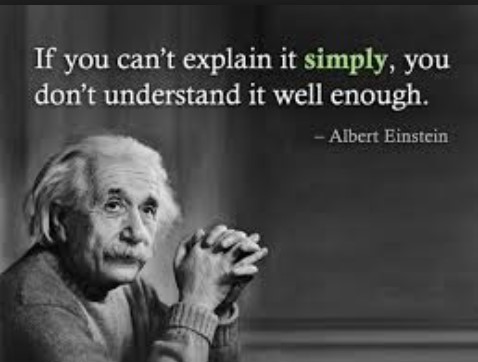
One of my favorite quotations! Mr. Luvera hit the nail on the head, not only for trial presentations, but for any type of writing regardless of your profession. Some people think that their writing should be complex, with lots of Latin, jargon, and legalese. Technical writers often use complicated terms and words understood (barely) by people who work in their industry, but no one else.

Most readers skim or skip the long, single-space block quotations often found in legal briefs. Wouldn’t you? Imagine having to slog through poorly written briefs day after day? Or imagine that you are a juror who must decipher poorly written jury instructions. If what you say is that important, why risk losing the reader even for a moment?

Just like Murphy’s Law, in writing, whatever can be misunderstood, will be. What is the point of writing anything if you are not easily understood? No, you are not “dumbing down” your writing or treating the reader like a child. You are communicating and facilitating your goal — to be understood. -CCE

enstein

Share this:

  • Print (Opens in new window) Print
  • Tweet
  • Email a link to a friend (Opens in new window) Email
  • Share on Tumblr
  • Pocket
  • More
  • Share on Reddit (Opens in new window) Reddit
  • Share on Telegram (Opens in new window) Telegram
Like Loading...

Improve Your Brief With The Curse of Knowledge Test.

14 Friday Nov 2014

Posted by Celia C. Elwell, RP in Appellate Writing, Bad Legal Writing, Brief Writing, Legal Analysis, Legal Argument, Legal Writing, Readability

≈ Comments Off on Improve Your Brief With The Curse of Knowledge Test.

Tags

Appellate Writing, Brief Writing, Bryan Garner, Legal Writing, Mark Herrmann, Raymond Ward, Steven Pinker, the (new) legal writer blog

The Curse Of Knowledge: The Root Of Incomprehensible Writing, by Raymond P. Ward, the [new] legal writer blog

http://tinyurl.com/kjpzl9a

Bryan Garner tells participants in his seminars that good writing makes the reader feel smart, while bad writing makes the reader feel stupid. What is the root of this kind of bad writing? Mark Herrmann has an idea about that, drawn from cognitive scientist Steven Pinker: we think that our readers already know what we are trying to tell them. Pinker calls this phenomenon ‘the curse of knowledge.’

So what is the cure for this affliction? Herrmann recommends empathy for the reader. ‘Put yourself in the reader’s state of ignorance,’ he counsels, “and write for that audience.’ Pinker suggests testing your draft on people who don’t already know what you’re trying to tell them:

A better way to exorcise the curse of knowledge is to close the loop, as the engineers say, and get a feedback signal from the world of readers—that is, show a draft to some people who are similar to your intended audience and find out whether they can follow it. Social psychologists have found that we are overconfident, sometimes to the point of delusion, about our ability to infer what other people think, even the people who are closest to us. Only when we ask those people do we discover that what’s obvious to us isn’t obvious to them.

Garner has a similar recommendation in The Winning Brief, at least for cases where the amount at stake is worth the expense: Convene a focus group of lawyers unfamiliar with the case to play the part of appellate judges by reading and reacting to your draft brief. This exercise has many benefits. One of them is to tell you whether the curse of knowledge has infected your brief.


Share this:

  • Print (Opens in new window) Print
  • Tweet
  • Email a link to a friend (Opens in new window) Email
  • Share on Tumblr
  • Pocket
  • More
  • Share on Reddit (Opens in new window) Reddit
  • Share on Telegram (Opens in new window) Telegram
Like Loading...

Collection of Judges’ Best Advice On Legal Writing.

08 Saturday Nov 2014

Posted by Celia C. Elwell, RP in 5th Circuit Court of Appeals, Appellate Law, Appellate Writing, Bad Legal Writing, District of Columbia Circuit Court of Appeals, Editing, Legal Argument, Legal Writing, Legalese, Oregon Supreme Court, Plain Language, Readability, Texas Supreme Court, United States Supreme Court, Wisconsin Supreme Court

≈ Comments Off on Collection of Judges’ Best Advice On Legal Writing.

Tags

Appellate Brief Writing, Bryan A. Garner, Joseph Kimble, Legal Writing, Legalese, Michigan Bar Association, Plain Language

Judges on Effective Writing: The Importance of Plain Language, by Bryan A. Garner, Vol 84 Mich. B. J. 44 (February 2005)

http://tinyurl.com/kk6trum

Each quote here is a pearl of wisdom – classical and timeless. Look no further to find the heart and soul of effective legal writing. Click on the hyperlink to find the footnotes for each quotation. -CCE

I trust that, after more than 20 years, some of the Plain Language columns are worth reprinting. This one appeared in March 1994. As I noted then, the survey that Mr. Garner mentions in his introduction is the same one that we first did in Michigan, with very similar results. See the October 1987 and May 1990 columns. The judges are identified by their judicial positions when they make their remarks. —JK (Joseph Kimble)

Lawyers are notoriously poor at gauging what judges prefer in legal writing. Too many of us believe, for example, that judges expect us to use legalese. In 1991, when the Texas Plain-Language Committee surveyed all the state district and appellate judges in Texas, we found that more than 80 percent prefer plain language (Plaintiff complains of Defendant and says) over legalese (Now comes the Plaintiff, by and through his attorneys of record, Darrow and Holmes, and for his Original Petition in this cause would respectfully show unto the Court the following). Indeed, several judges responded to the survey with a plea that we stamp out legalese once and for all.

The results of that survey surprised many Texas litigators—and many changed the form of their court papers. But many more have persisted in the old, legalistic style—perhaps out of a fondness akin to what some people feel for the language of the King James Version of the Bible. Judge Lynn Hughes of Houston speaks directly to those litigators: ‘Anyone who thinks Comes now the Plaintiff is anything like the King James Version has no sense of poetry.’

Literary tastes may differ, of course, but it’s worth knowing what judges say—and have been saying for a long time—about the language we lawyers use. Following are some choice quotations I’ve recently collected. —Bryan A. Garner

Judicial Diagnoses

‘Lawyers spend a great deal of their time shoveling smoke.’ Hon. Oliver Wendell Holmes1, U.S. Supreme Court

‘[Too many lawyers believe that] it is essential to legal English that one write as pompously as possible, using words and phrases that have long since disappeared from normal English discourse.’ Hon. Antonin Scalia2 , U.S. Supreme Court

‘The reason legal writing has gotten to such a low point is that we have had very bad teachers—judges who wrote years ago and wrote badly. We learned bad habits from them and their opinions in law school.’
Hon. William Bablitch3, Supreme Court of Wisconsin

Stick to the Mother Tongue

‘[The advocate] will stock the arsenal of his mind with tested dialectical weapons. He will master the short Saxon word that pierces the mind like a spear and the simple figure that lights the understanding. He will never drive the judge to his dictionary. He will rejoice in the strength of the mother tongue as found in the King James version of the Bible, and in the power of the terse and flashing phrase of a Kipling or a Churchill.’  Hon. Robert H. Jackson4, U.S. Supreme Court

‘[A]void as much as possible stilted legal language, the thereins, thereofs, whereinbefores, hereinafters, and what-have-yous. Use English wherever you can to express the idea as well and as concisely as in law or Latin. A healthy respect for the robust Anglo-Saxon appeals more than does the Latin, whether or not it is Anglicized. The home-grown product in this case is better than the imported, not to say smuggled, one.’ Hon. Wiley B. Rutledge5, U.S. Supreme Court

‘Write so that you’re understood. English is a hard language to learn, but it’s an easy language to communicate in. There’s no reason to put Latin in your brief.’ Hon. Craig T. Enoch6, Fifth Court of Appeals, Dallas

‘Don’t use legalese. It causes you to put your contentions in stale ways.’ Hon. Thomas Gibbs Gee7, U.S. Court of Appeals for the Fifth Circuit, 1974-91

‘Legalese is an impediment to clear, logical thinking.’ Hon. F. Lee Duggan8, First Court of Appeals, Houston

‘It’s easier for a judge when you’re using common usage. Judges are only human, after all.’ Hon. Carolyn Wright9, Family District Court, Dallas

Simplify, Simplify!

‘For a hundred years, good lawyers have been writing without all the garbage and in a simple, direct style.’ Hon. Lynn N. Hughes10. U.S. District Court, Houston

‘A lawyer should write the brief at a level a 12th grader could understand. That’s a good rule of thumb. It also aids the writer. Working hard to make a brief simple is extremely rewarding because it helps a lawyer to understand the issue. At the same time, it scores points with the court.’ Hon. William Bablitch11, Supreme Court of Wisconsin

‘When a judge finds a brief which sets up from twelve to twenty or thirty issues or ‘points’ or ‘assignments of error,’ he begins to look for the two or three, perhaps the one, of controlling force. Somebody has got lost in the underbrush and the judge has to get him—or the other fellow—out. That kind of brief may be labeled the ‘obfuscating’ type. It is distinctly not the kind to use if the attorney wishes calm, temperate, dispassionate reason to emanate from the cloister. I strongly advise against use of this type of brief, consciously or unconsciously. Though this fault has been called over-analysis, it is really a type of under-analysis.’ Hon. Wiley B. Rutledge12, U.S. Supreme Court

‘The key is to make the brief easy for the judge to follow.’ Hon. Lloyd Doggett13, Supreme Court of Texas

Cut the Verbiage

‘You want your brief to be as readable as possible . . . . If I pick up a brief of 49 and a half pages, it has a little less credibility than one that succinctly argues its points in 25 pages . . . . There’s nothing better to read than a well-written brief from a really good lawyer.’ Hon. Jerry E. Smith14, U.S. Court of Appeals for the Fifth Circuit

‘Eye fatigue and irritability set in well before page 50.’ Hon. Patricia M. Wald15, U.S. Court of Appeals for the D.C. Circuit

‘A brief should manifest conviction . . . . [That] is virtually impossible . . . if it contains an excessive number of quotations or is larded with numerous citations to the authorities. Short quotations sometimes clinch a point, but long ones fail in that objective.’ Hon. George Rossman16. Supreme Court of Oregon

‘Start in the very first sentence with the problem in this case. Put it right up front. Start early. Don’t bury it under a lot of verbiage and preliminaries.’ Hon. Nathan L. Hecht17, Supreme Court of Texas

Does Style Matter?

‘Style must be regarded as one of the principal tools of the judiciary and it thus deserves detailed attention and repeated emphasis.’ Hon. Griffin B. Bell18, U.S. Court of Appeals for the Fifth Circuit

‘Lawyers are excused from the necessity of interesting their readers, and all too often—let’s face the evidence—they take advantage of this enviable exemption.’ Hon. Jerome Frank19, U.S. Court of Appeals for the Second Circuit

‘Is good writing rewarded? I used to think it doesn’t matter much, in comparison with legal authority, justice, and the like. Now I know better: Good writing is rewarded so automatically that you don’t even think about it.’ Hon. Murry Cohen20, Fourteenth Court of Appeals, Houston

Bryan A. Garner (bagarner@att.net), president of Dallas-based LawProse, Inc. (www.lawprose.org), is the author of many books on writing, including Legal Writing in Plain English (2001) and The Elements of Legal Style (2d ed. 2002). He is also editor in chief of all current editions of Black’s Law Dictionary. He teaches at Southern Methodist University School of Law.

Share this:

  • Print (Opens in new window) Print
  • Tweet
  • Email a link to a friend (Opens in new window) Email
  • Share on Tumblr
  • Pocket
  • More
  • Share on Reddit (Opens in new window) Reddit
  • Share on Telegram (Opens in new window) Telegram
Like Loading...

Amicus Briefs From A Texas Supreme Court Judge’s Perspective.

30 Thursday Oct 2014

Posted by Celia C. Elwell, RP in Amicus Briefs, Appellate Law, Appellate Writing, Brief Writing, Legal Writing

≈ Comments Off on Amicus Briefs From A Texas Supreme Court Judge’s Perspective.

Tags

Amicus Briefs, Appellate Law, Appellate Lawyer Blog, Chad Ruback, Don Cruse, Legal Writing, Texas Supreme Court Justice Don Willett

Texas Supreme Court Justice Don Willett’s Thoughts on Amicus Briefs, by Chad Ruback, Appellate Lawyer Blog

http://tinyurl.com/m2mg7un

This afternoon, Texas Supreme Court Justice Don Willett and Austin lawyer Don Cruse spoke at a continuing legal education seminar.  Among other things, they addressed amicus briefs filed in the Supreme Court.

The court requests a response to the petition for review in about 33% of cases.  However, when an amicus brief has been filed prior to the time that the court decides whether to request a response, Mr. Cruse determined that the court requests a response about 85% of the time.  While only 2% of cases have amicus briefs filed prior to the time that the court decides whether to request a response, it seems that those petitions are disproportionately successful in getting a response requested.

The court requests briefs on the merits (a/k/a full briefing) in about 20% of cases.  However, when an amicus brief has been filed prior to the time that the court decides whether to request briefs on the merits, Mr. Cruse determined that the court requests briefs on the merits about 82% of the time.  While only 7% of cases have amicus briefs filed prior to the time that the court decides whether to request briefs on the merits, it seems that those petitions are disproportionately successful in getting briefs on the merits requested.

Consistent with this data, Justice Willett indicated that he enjoys reading amicus briefs and that it is advisable for a petitioner to have supporting amicus briefs filed early in the proceeding (e.g., before the court has decided to whether to request a response or at least before the court has decided whether to request briefs on the merits).

Share this:

  • Print (Opens in new window) Print
  • Tweet
  • Email a link to a friend (Opens in new window) Email
  • Share on Tumblr
  • Pocket
  • More
  • Share on Reddit (Opens in new window) Reddit
  • Share on Telegram (Opens in new window) Telegram
Like Loading...

Non-Lawyer’s Glossary From The United Kingdom.

28 Tuesday Oct 2014

Posted by Celia C. Elwell, RP in Glossaries, Legal Dictionaries, Legal Writing, References

≈ Comments Off on Non-Lawyer’s Glossary From The United Kingdom.

Tags

Cara Ashby, Legal Dictionary, Legal Glossary, Legal Writing, Pinnington Law, References, United Kingdom

The Non-Lawyer Guide to Legal Terms, by Pinnington Law (with hat tip to Cara Ashby!)

http://pinningtonlaw.co.uk/glossary/

The Legal Glossary

We understand that divorce or separation proceedings can be a stressful and complicated process. Therefore, we have created this glossary to ensure you understand all aspects of the legal processes which you will need to follow. From the various technical terms involved in court proceedings and legal documents to the different child arrangement orders and agreements for which you can apply, our glossary will help you improve your understanding of complicated legal matters. By doing so, you can commence divorce or separation proceedings with confidence in your own legal expertise.

Share this:

  • Print (Opens in new window) Print
  • Tweet
  • Email a link to a friend (Opens in new window) Email
  • Share on Tumblr
  • Pocket
  • More
  • Share on Reddit (Opens in new window) Reddit
  • Share on Telegram (Opens in new window) Telegram
Like Loading...
← Older posts
Newer posts →
Follow The Researching Paralegal on WordPress.com

Enter your email address to follow this blog and receive notifications of new posts by email.

Search

Sign In/Register

  • Create account
  • Log in
  • Entries feed
  • Comments feed
  • WordPress.com

Categories

Archives

  • June 2024
  • March 2022
  • January 2022
  • November 2021
  • October 2021
  • January 2021
  • November 2020
  • October 2020
  • September 2020
  • August 2020
  • June 2020
  • May 2020
  • April 2020
  • January 2020
  • December 2019
  • October 2019
  • August 2019
  • July 2019
  • May 2019
  • March 2019
  • January 2019
  • December 2018
  • November 2018
  • October 2018
  • September 2018
  • August 2018
  • July 2018
  • June 2018
  • May 2018
  • April 2018
  • March 2018
  • February 2018
  • December 2017
  • November 2017
  • October 2017
  • September 2017
  • August 2017
  • July 2017
  • June 2017
  • May 2017
  • April 2017
  • March 2017
  • February 2017
  • January 2017
  • December 2016
  • November 2016
  • October 2016
  • September 2016
  • August 2016
  • July 2016
  • June 2016
  • May 2016
  • April 2016
  • March 2016
  • February 2016
  • January 2016
  • December 2015
  • November 2015
  • October 2015
  • September 2015
  • August 2015
  • July 2015
  • June 2015
  • May 2015
  • April 2015
  • March 2015
  • February 2015
  • January 2015
  • December 2014
  • November 2014
  • October 2014
  • September 2014
  • August 2014
  • July 2014
  • June 2014
  • May 2014
  • April 2014
  • March 2014
  • February 2014
  • January 2014
  • December 2013
  • November 2013
  • October 2013

Recent Comments

lawyersonia's avatarlawyersonia on In Custodia Legis – Lega…
Eric Voigt's avatarEric Voigt on Top 20 Paralegal Blogs, Websit…
profvoigt's avatarprofvoigt on Research Guides in Focus – Mun…
Make Your PDF Docume… on Make Your PDF Document Edit-Pr…
madlaw291282999's avatarmadlaw291282999 on Using Hyperbole -Are You Riski…

Recent Comments

lawyersonia's avatarlawyersonia on In Custodia Legis – Lega…
Eric Voigt's avatarEric Voigt on Top 20 Paralegal Blogs, Websit…
profvoigt's avatarprofvoigt on Research Guides in Focus – Mun…
Make Your PDF Docume… on Make Your PDF Document Edit-Pr…
madlaw291282999's avatarmadlaw291282999 on Using Hyperbole -Are You Riski…
  • RSS - Posts
  • RSS - Comments

Blog at WordPress.com.

  • Subscribe Subscribed
    • The Researching Paralegal
    • Join 460 other subscribers
    • Already have a WordPress.com account? Log in now.
    • The Researching Paralegal
    • Subscribe Subscribed
    • Sign up
    • Log in
    • Report this content
    • View site in Reader
    • Manage subscriptions
    • Collapse this bar
 

Loading Comments...
 

You must be logged in to post a comment.

    %d