• Home
  • About Me
  • Disclaimer

The Researching Paralegal

~ Articles and Research for Legal Professionals

The Researching Paralegal

Category Archives: Bad Legal Writing

Classic Legal Writing Never Goes Out Of Style.

11 Friday Sep 2015

Posted by Celia C. Elwell, RP in Bad Legal Writing, Contract Law, Legal Writing, Plain Language, Readability

≈ Comments Off on Classic Legal Writing Never Goes Out Of Style.

Tags

Adams on Contract Drafting, Joe Kimble, Ken Adams, Michigan Bar Journal, Plain Language

30 Years of the Michigan Bar Journal’s “Plain Language” Column, by Ken Adams, Adams on Contract Drafting

http://www.adamsdrafting.com/30-years-of-the-michigan-bar-journals-plain-language-column/

The Michigan Bar Journal’s ‘Plain Language’ column recently celebrated its thirtieth year. Joe Kimble, its longtime editor, wrote this piece marking the event. . . .

Continue reading →

Share this:

  • Print (Opens in new window) Print
  • Tweet
  • Email a link to a friend (Opens in new window) Email
  • Share on Tumblr
  • Pocket
  • More
  • Share on Reddit (Opens in new window) Reddit
  • Share on Telegram (Opens in new window) Telegram
Like Loading...

Legal Writing Tips Honey Pot.

29 Wednesday Jul 2015

Posted by Celia C. Elwell, RP in Bad Legal Writing, Business Memorandums, Contract Law, Editing, Grammar, Legal Writing, Punctuation

≈ Comments Off on Legal Writing Tips Honey Pot.

Tags

Contracts, Grammar, Legal Writing, Legal Writing Tips, Legal Writing Tips for Attorneys and Judges, Punctuation, Ross Guberman

Writing Cheat Sheets for Your Summer at the Screen, by Ross Guberman, Legal Writing Tips for Attorneys and Judges

http://legalwritingpro.com/blog/writing-cheat-sheets-for-your-summer-at-the-screen/

There is something here for everyone – student, newbie, or seasoned professional. Writing tips for memos, grammar, punctuation, biggest partner complaints, checklist for drafting contracts, and more. Many thanks, Mr. Guberman! -CCE

As a writing trainer for many of the nation’s top law firms with about 500 summer-associate workshops under my belt, I’ve learned first-hand where summer associates go wrong and how to help them succeed.

Here are some questions that will likely come up over the summer, along with links to some free online resources. . . .

Continue reading →

Share this:

  • Print (Opens in new window) Print
  • Tweet
  • Email a link to a friend (Opens in new window) Email
  • Share on Tumblr
  • Pocket
  • More
  • Share on Reddit (Opens in new window) Reddit
  • Share on Telegram (Opens in new window) Telegram
Like Loading...

Judge’s Benchslap Orders Parties To Rewrite Their Acronym-Loaded Briefs.

20 Monday Jul 2015

Posted by Celia C. Elwell, RP in Acronyms, Bad Legal Writing, Brief Writing, District of Columbia Circuit Court of Appeals, Legal Writing, Readability, Style Manuals

≈ Comments Off on Judge’s Benchslap Orders Parties To Rewrite Their Acronym-Loaded Briefs.

Tags

Acronyms, Benchslap, Legal Writing, Ross Guberman

Alphabet Attack, by Ross Guberman, Legal Writing Tips for Attorneys and Judges

http://legalwritingpro.com/blog/alphabet-attack/

I wonder how many judges have wanted to do this? -CCE

It wouldn’t be spring in America without some federal judges publicly criticizing attorneys in a genre now known as ‘benchslap.’

The offended court this time: the D.C. Circuit. The court’s target: acronyms in briefs filed in a complex telecom dispute. The benchslap: ‘It is ordered . . . that the parties submit new briefs that eliminate uncommon acronyms used in their previously filed final briefs.’ The court even cited its own practice handbook for good measure: ‘[i]n briefs the use of acronyms other that those that are widely known should be avoided.’ . . .

Continue reading →

Share this:

  • Print (Opens in new window) Print
  • Tweet
  • Email a link to a friend (Opens in new window) Email
  • Share on Tumblr
  • Pocket
  • More
  • Share on Reddit (Opens in new window) Reddit
  • Share on Telegram (Opens in new window) Telegram
Like Loading...

Yes! Ohio Court Rules Missing Punctuation Changes Interpretation Of Municipal Code.

11 Saturday Jul 2015

Posted by Celia C. Elwell, RP in Bad Legal Writing, Grammar, Legal Analysis, Legal Writing, Proofreading, Punctuation, Statutory Interpretation

≈ 1 Comment

Tags

Commas, Municipal Ordinance, Punctuation, Sarah Larimer, The Washington Post, William P. Statsky

Ohio Appeals Court Ruling Is A Victory For Punctuation, Sanity, by Sarah Larimer, The Washington Post (with hat tip to William P. Statsky)

http://tinyurl.com/q7vzjws

Punctuation nerds, rejoice! For all of us who care deeply about really good legal writing, grammar, and punctuation, today we are vindicated! Thank you, Judge Robert A. Hendrickson, of the Twelfth District Court of Appeals in Ohio. -CCE

Look, I know you’re all busy, but let’s just take a minute today and celebrate Judge Robert A. Hendrickson and the 12th District Court of Appeals in Ohio.

These defenders of punctuation.

These champions of copy editors everywhere.

That one court that totally called out a village ordinance for its comma-related failings.

(I know!!!)

Continue reading →

Share this:

  • Print (Opens in new window) Print
  • Tweet
  • Email a link to a friend (Opens in new window) Email
  • Share on Tumblr
  • Pocket
  • More
  • Share on Reddit (Opens in new window) Reddit
  • Share on Telegram (Opens in new window) Telegram
Like Loading...

Excellent Editing Tips From Jonathan Van Patton.

09 Saturday May 2015

Posted by Celia C. Elwell, RP in Bad Legal Writing, Editing, Legal Argument, Legal Writing, Readability

≈ Comments Off on Excellent Editing Tips From Jonathan Van Patton.

Tags

Editing, Jonathan Van Patten, Legal Skills Prof Blog, Legal Writing, Louis J. Sirico Jr., Persuasive Writing, South Dakota Law Review, William P. Statsky

“On Editing,” by Louis J. Sirico, Jr., Legal Skills Prof Blog (with hat tip to William P. Statsky)

http://lawprofessors.typepad.com/legal_skills/2015/05/on-editing.html


Excellent article on editing! Editing is no easy task. You have to practice to do it well.

This article focuses on editing, but also on persuasive writing. Anyone interested in writing a winning brief, motion, or opening and closing argument will like this one. -CCE

An excellent treatise on editing and writing is Jonathan Van Patten’s article “On Editing,” 60 South Dakota Law Review 1 (2015). Employing an extremely clear writing style, he states and explains his propositions on good writing. I plan to distribute the article to the editors of my school’s law reviews.

You can access the article here.

Share this:

  • Print (Opens in new window) Print
  • Tweet
  • Email a link to a friend (Opens in new window) Email
  • Share on Tumblr
  • Pocket
  • More
  • Share on Reddit (Opens in new window) Reddit
  • Share on Telegram (Opens in new window) Telegram
Like Loading...

A “Rant of Sorts?” More Like A Meltdown.

26 Sunday Apr 2015

Posted by Celia C. Elwell, RP in Bad Legal Writing, Court Rules, Courts, E-Filing, Legal Writing

≈ Comments Off on A “Rant of Sorts?” More Like A Meltdown.

Tags

Below The Bar Blog, Kevin Underhill, Pro Se Litigant, Profanity

It “May Appear to Some to Be a ‘Rant’ of Sorts,” by Kevin Underhill, Lowering the Bar Blog

http://www.loweringthebar.net/2015/04/it-may-appear-to-be-a-rant.html

Okay, there’s no question that the person who wrote this document had some issues to get off her chest. We all need to express ourselves. Some of us just do it differently than others. Regardless of what has happened in this case, this reaction over the top.

This is probably a good time to mention that this is not the way to persuade the court to do what you want. -CCE

In this Facebook post, Tamah Jada Clark, the author of the now-legendary pleading entitled ‘To F— This Court And Everything That It Stands For,’ expresses puzzlement as to why that pleading ‘has now, apparently, become a ‘big deal.’ She also suggests that ’there is a lot of ambiguity and confusion as to what exactly has taken place heretofore to provoke what may appear to some to be a ‘rant’ of sorts.’

That may appear to some to be an understatement of sorts.

Clark suggests in the post that she ‘will take time to address the matter’ in the near future, and I’m certainly looking forward to that, but she does offer a couple of justifications. First, she argues that the incident is being exaggerated, saying that the ‘Notice [To F— This Court And Everything That It Stands For] is one of MANY documents I filed with the court and it only represents less than 1% of what has taken place.’ I know what you mean. You do everything right and then just ONCE you snap and file a nine-page profanity-filled diatribe telling a federal judge that he ‘sucks nuts’ and should ‘die,’ and then they never let you live it down.

Second, she claims that the judge has treated her unfairly all along and, oddly, that the judge has not allowed her to express herself. . . .

Continue reading →

Share this:

  • Print (Opens in new window) Print
  • Tweet
  • Email a link to a friend (Opens in new window) Email
  • Share on Tumblr
  • Pocket
  • More
  • Share on Reddit (Opens in new window) Reddit
  • Share on Telegram (Opens in new window) Telegram
Like Loading...

A Novel Approach To Circuit Court’s Word Limit Rule. If Only It Had Worked!

22 Wednesday Apr 2015

Posted by Celia C. Elwell, RP in Abbreviations, Appellate Writing, Bad Legal Writing, Brief Writing, Editing, Initialisms, Legal Writing, Readability

≈ Comments Off on A Novel Approach To Circuit Court’s Word Limit Rule. If Only It Had Worked!

Tags

ABA Journal, Abbreviations, Appellate Writing, Court Rules, Debra Cassen Weiss, Legal Writing

Squished-Together Words Don’t Count As One, Federal Circuit Says; Appeal Is Tossed, by Debra Cassen Weiss, ABA Journal (with hat tip to William P. Statsky!)

http://tinyurl.com/kqmddjt

A litigant that squeezed multiple words together and resorted to abbreviations didn’t satisfy word limits in its briefs and won’t be able to pursue its appeal, according to the U.S. Court of Appeals for the Federal Circuit.

The appeals court tossed the patent appeal by Pi-Net International in an April 20 order (PDF). How Appealing links to the opinion and a story by Law360 (sub. req.), which dubbed the creative wording ‘a trick straight out of high school English class.’ . . .

*           *           *

On appeal, JPMorgan objected to Pi-Net’s first brief, saying it attempted to evade the 14,000 word limit by deleting spaces between various words and squeezing them together, according to the Federal Circuit. The Federal Circuit offered an example: One case citation consists of 14 words, but Pi-Net squeezed them together to make them into one word. . . .

Continue reading →

Share this:

  • Print (Opens in new window) Print
  • Tweet
  • Email a link to a friend (Opens in new window) Email
  • Share on Tumblr
  • Pocket
  • More
  • Share on Reddit (Opens in new window) Reddit
  • Share on Telegram (Opens in new window) Telegram
Like Loading...

Too Many Acronyms = Alphabet Soup.

16 Thursday Apr 2015

Posted by Celia C. Elwell, RP in Abbreviations, Acronyms, Bad Legal Writing, Brief Writing, Court Rules, Courts, Initialisms, Legal Writing, Local Rules, Spell Checking

≈ Comments Off on Too Many Acronyms = Alphabet Soup.

Tags

ABA Journal, Abbreviations, Acronyms, Brief Writing, Court Rules, Debra Cassen Weiss, Legal Writing

Check Your Briefs For Acronym Overuse, DC Circuit Clerk Tells Lawyers In Campaign Finance Case, by Debra Cassen Weiss, ABA Journal

http://tinyurl.com/mff4sqx

Acronyms continue to bedevil the U.S. Court of Appeals for the D.C. Circuit.

Parties before the court are advised in circuit rules to avoid little-known acronyms; lawyers who didn’t heed the advice were called out in a 2012 opinion. Now the clerk’s office is doing its part to police the briefs. . . .

Continue reading →

Share this:

  • Print (Opens in new window) Print
  • Tweet
  • Email a link to a friend (Opens in new window) Email
  • Share on Tumblr
  • Pocket
  • More
  • Share on Reddit (Opens in new window) Reddit
  • Share on Telegram (Opens in new window) Telegram
Like Loading...

Legal Writing Tips from “Dear Scrivener.”

29 Sunday Mar 2015

Posted by Celia C. Elwell, RP in Bad Legal Writing, Editing, Legal Writing, Plain Language, Readability

≈ Comments Off on Legal Writing Tips from “Dear Scrivener.”

Tags

Grammar & Punctuation, Judith D. Fischer, Legal Writing, Legal Writing Prof Blog, Scott Moise

A Potpourri Of Tips About Legal Writing, by Judith D. Fischer, Legal Writing Prof Blog

http://lawprofessors.typepad.com/legalwriting/2015/03/a-potpourri-of-tips-about-legal-writing.html

For a potpourri of tips about legal writing, see Dear Scrivener by Scott Moise in the March 2015 South Carolina Lawyer. . . .

Continue reading →

Share this:

  • Print (Opens in new window) Print
  • Tweet
  • Email a link to a friend (Opens in new window) Email
  • Share on Tumblr
  • Pocket
  • More
  • Share on Reddit (Opens in new window) Reddit
  • Share on Telegram (Opens in new window) Telegram
Like Loading...

Legislative Drafting And Plain English – They Are Not Mutually Exclusive.

22 Sunday Mar 2015

Posted by Celia C. Elwell, RP in Bad Legal Writing, Editing, Legal Argument, Legal Writing, Legalese, Plain Language, Punctuation, Readability

≈ Comments Off on Legislative Drafting And Plain English – They Are Not Mutually Exclusive.

Tags

Judge Mark P. Painter, Judging Strictly By Merit, Legal Writing, Legalese, Plain English

A Classic Example Of Bad Writing, by Judge Mark P. Painter, Judging Strictly By Merit

http://www.judgepainter.org/legalwriter55

In my last column I gave kudos to the U.S. Supreme Court and its rules committee for rewriting the Federal Rules of Civil Procedure in plain language. But the fight goes on. Legislative drafting continues to be particularly egregious. . . .

Continue reading →

Share this:

  • Print (Opens in new window) Print
  • Tweet
  • Email a link to a friend (Opens in new window) Email
  • Share on Tumblr
  • Pocket
  • More
  • Share on Reddit (Opens in new window) Reddit
  • Share on Telegram (Opens in new window) Telegram
Like Loading...

No Question About It – Bad Legal Writing Squanders Your Money.

01 Sunday Mar 2015

Posted by Celia C. Elwell, RP in Bad Legal Writing, Economics, Law Office Management, Legal Writing, Legalese, Management, Plain Language, Readability, Time Management

≈ Comments Off on No Question About It – Bad Legal Writing Squanders Your Money.

Tags

Bad Legal Writing, Findlaw, Law Firm Economics, Matthew Salzwedel, Plain English, The Lawyerist Blog

Face It — Bad Legal Writing Wastes Money, by Matthew Salzwedel, The Lawyerist Blog

https://lawyerist.com/60599/face-it-bad-legal-writing-wastes-money/

A recent article on FindLaw.com called Five Ways Attorneys Waste Money claimed that attorneys can cut clients’ costs by avoiding needless motions, staffing cases leanly, focusing on the important issues, avoiding petty spats with the opposition, and being smart about when to settle.

But the article ignored the most important way attorneys can save money for their firms and clients: by learning how to write in plain English.

Most attorneys don’t believe that writing style matters. They might concede that writing in plain English can be aesthetically pleasing to the reader; but they also say that it’s not worth the time to learn how to do it because there’s no evidence that writing in plain English saves time or money.

But these attorneys ignore what legal-writing experts have taught — and what the empirical evidence has shown — for more than 50 years: that plain English saves time and money by increasing the ability of readers to understand and retain what they have read. . . .

Continue reading →

Share this:

  • Print (Opens in new window) Print
  • Tweet
  • Email a link to a friend (Opens in new window) Email
  • Share on Tumblr
  • Pocket
  • More
  • Share on Reddit (Opens in new window) Reddit
  • Share on Telegram (Opens in new window) Telegram
Like Loading...

10th Circuit Uses Sentence Diagramming To Decipher Federal Gun Statute.

19 Thursday Feb 2015

Posted by Celia C. Elwell, RP in Bad Legal Writing, Legal Writing, Readability, Statutory Interpretation

≈ Comments Off on 10th Circuit Uses Sentence Diagramming To Decipher Federal Gun Statute.

Tags

10th Circuit Court of Appeals, Diagramming Sentences, Federal Statutes, Judith D. Fischer, Legal Writing, Legal Writing Skills Prof Blog

The Tenth Circuit Applies The Art of Sentence Diagramming, by Judith D. Fischer, Legal Writing Prof Blog (with hat tip to Brian Glassman!)

http://lawprofessors.typepad.com/legalwriting/2015/02/the-art-of-sentence-diagramming-helps-a-court.html

he Tenth Circuit recently interpreted a statute so confusing that the court decided to diagram some of its language. In United States v. Rentz, the court observed that ‘Few statutes have proven as enigmatic as 18 U.S.C. §24(c),’ which concerns crimes committed while using a firearm. Puzzling over what the statute’s modifiers mean, the court used the same device some of us learned in grade school—setting out a clear diagram of how words relate to one another grammatically. The court thus reached enough clarity to affirm the district court’s decision. Still, the court stated, ‘Even now plenty of hard questions [about the statute’s meaning] remain.’

My conclusions: 1) The art of diagramming sentences should be revived, and 2) Congress should focus more on clear drafting.

Share this:

  • Print (Opens in new window) Print
  • Tweet
  • Email a link to a friend (Opens in new window) Email
  • Share on Tumblr
  • Pocket
  • More
  • Share on Reddit (Opens in new window) Reddit
  • Share on Telegram (Opens in new window) Telegram
Like Loading...

“Know All Men By These Presents” — Who’s Getting All The Gifts?

17 Tuesday Feb 2015

Posted by Celia C. Elwell, RP in Bad Legal Writing, Boilerplate Forms, Boilerplate Forms, Contract Law, Legal Writing, Legalese

≈ Comments Off on “Know All Men By These Presents” — Who’s Getting All The Gifts?

Tags

Ken Adams, Legal Writing, Legalese, Raymond Ward, the (new) legal writer blog

Presents? Thank You Very — Oh, by Raymond Ward, the (new) legal writer blog

http://raymondpward.typepad.com/newlegalwriter/2012/01/presents-thank-you-very-oh.html

Every time I see the silly phrase ‘Know all men by these presents,’ I think of Christmas. Perhaps a statement the Magi wanted to make about their presents for the Christ child. Nevertheless, I’m no expert on drafting contracts: on that subject, I defer to Ken Adams, who riffs on the silly phrase in this post.

Can I get a witnesseth?

Share this:

  • Print (Opens in new window) Print
  • Tweet
  • Email a link to a friend (Opens in new window) Email
  • Share on Tumblr
  • Pocket
  • More
  • Share on Reddit (Opens in new window) Reddit
  • Share on Telegram (Opens in new window) Telegram
Like Loading...

Rewrite Legalese – This Is How You Do It.

15 Thursday Jan 2015

Posted by Celia C. Elwell, RP in Bad Legal Writing, Editing, Legal Writing, Legalese, Plain Language, Readability

≈ Comments Off on Rewrite Legalese – This Is How You Do It.

Tags

Joseph Kimble, Legal Skills Prof Blog, Legalese, Louis J. Sirico Jr., Plain English, Plain English Movement, William P. Statsky

Examples: Translating Legalese into Plain English, by Louis J. Sirico, Jr., Legal Skills Prof, Legal Skills Prof Blog (with hat tip to William P. Statsky!)

http://lawprofessors.typepad.com/legal_skills/2015/01/examples-translating-legalese-into-plain-english.html

Having problems rewriting legalese into understandable plain English? Use these excellent examples from Joseph Kimble, one of the legal writing giants, posted by another great legal writing expert, Louis J. Sirico, Jr. – CCE

Share this:

  • Print (Opens in new window) Print
  • Tweet
  • Email a link to a friend (Opens in new window) Email
  • Share on Tumblr
  • Pocket
  • More
  • Share on Reddit (Opens in new window) Reddit
  • Share on Telegram (Opens in new window) Telegram
Like Loading...

In Legal Writing, Why Less Really Is More. Really, Really.

13 Saturday Dec 2014

Posted by Celia C. Elwell, RP in Appellate Writing, Bad Legal Writing, Brief Writing, Editing, Jury Instructions, Legal Argument, Legal Writing, Readability, Statement of Facts, Summary of the Argument

≈ Comments Off on In Legal Writing, Why Less Really Is More. Really, Really.

Tags

Editing, Legal Writing, Raymond Ward, Readability, the (new) legal writer blog

Less is more. Really. by Raymond Ward, the (new) legal writer blog

http://tinyurl.com/l94vnyd

If you really have the goods, modesty is more effective than piling it on. Mark Herrmann explains this principle.

Share this:

  • Print (Opens in new window) Print
  • Tweet
  • Email a link to a friend (Opens in new window) Email
  • Share on Tumblr
  • Pocket
  • More
  • Share on Reddit (Opens in new window) Reddit
  • Share on Telegram (Opens in new window) Telegram
Like Loading...

Evan Schaeffer Shares Top Legal Writing Tips.

06 Saturday Dec 2014

Posted by Celia C. Elwell, RP in Bad Legal Writing, Legal Argument, Legal Writing, Propositions and Headings, Readability

≈ Comments Off on Evan Schaeffer Shares Top Legal Writing Tips.

Tags

Evan Schaeffer, Legal Writing, The Trial Practice Tips Lawyer Blog

Improve Your Legal Writing, by Evan Schaeffer, The Trial Practice Tips Lawyer Blog

http://www.illinoistrialpractice.com/2014/11/improve-your-legal-writing.html

My three articles on legal writing, all originally published in the Illinois Bar Journal, continue to get a steady stream of Google-fueled web traffic.

I’ve reposted these three articles, which are favorites of mine, on my personal website. Follow the links to–

‘Five Steps Towards Persuasive Writing,’

‘Improve Your Legal Writing with Five Simple Rules,’ and

‘First Drafts Made Easy.’

Hundreds of other legal-writing tips can be found here at Trial Practice Tips in the ‘Legal Writing’ category.

Share this:

  • Print (Opens in new window) Print
  • Tweet
  • Email a link to a friend (Opens in new window) Email
  • Share on Tumblr
  • Pocket
  • More
  • Share on Reddit (Opens in new window) Reddit
  • Share on Telegram (Opens in new window) Telegram
Like Loading...

Writing the Opening Of A Brief – The Right Way.

21 Friday Nov 2014

Posted by Celia C. Elwell, RP in Appellate Writing, Bad Legal Writing, Brief Writing, Legal Analysis, Legal Argument, Legal Writing, Litigation, Readability

≈ Comments Off on Writing the Opening Of A Brief – The Right Way.

Tags

Brief Openings, Brief Writing, Kenneth F. Oettle, Legal Writing, Litigation Strategy, Sills Cummis & Gross P.C.

Open A Brief With Substance, Not Bluster, by Kenneth F. Oettle, Newsroom Publications, Sills Cummis & Gross, P.C.

http://tinyurl.com/l7jk5a8

Ken Oettle is one of my favorite legal writers. In my opinion, his book, Making Your Point!, should be on the reference shelf of every serious legal writer. Yes, it’s that good. There are many excellent legal writers. Ken is one of the best.

To comply with copyright, no excerpts can be published. You will still find the entire article at the link from Sills Cummis & Gross, P.C. -CCE

Share this:

  • Print (Opens in new window) Print
  • Tweet
  • Email a link to a friend (Opens in new window) Email
  • Share on Tumblr
  • Pocket
  • More
  • Share on Reddit (Opens in new window) Reddit
  • Share on Telegram (Opens in new window) Telegram
Like Loading...

Whatever Can Be Misunderstood, Will Be.

15 Saturday Nov 2014

Posted by Celia C. Elwell, RP in Bad Legal Writing, Editing, Legal Writing, Legalese, Plain Language, Proofreading, Quotations, Readability

≈ Comments Off on Whatever Can Be Misunderstood, Will Be.

Tags

Albert Einstein, Legal Writing, Legalese, Paul Luvera, Plain Language, Plaintiff Trial Lawyer Tips Blog

This Should Be Every Trial Lawyer’s Mantra, by Paul Luvera, Plaintiff Trial Lawyer Tips Blog

http://tinyurl.com/myfv5oo

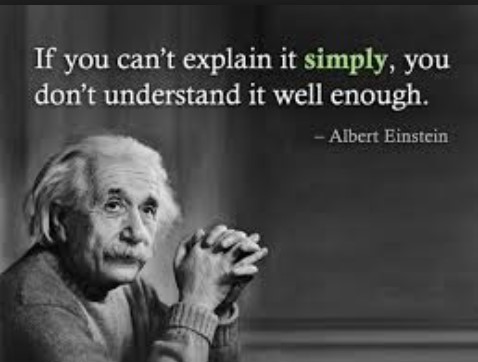
One of my favorite quotations! Mr. Luvera hit the nail on the head, not only for trial presentations, but for any type of writing regardless of your profession. Some people think that their writing should be complex, with lots of Latin, jargon, and legalese. Technical writers often use complicated terms and words understood (barely) by people who work in their industry, but no one else.

Most readers skim or skip the long, single-space block quotations often found in legal briefs. Wouldn’t you? Imagine having to slog through poorly written briefs day after day? Or imagine that you are a juror who must decipher poorly written jury instructions. If what you say is that important, why risk losing the reader even for a moment?

Just like Murphy’s Law, in writing, whatever can be misunderstood, will be. What is the point of writing anything if you are not easily understood? No, you are not “dumbing down” your writing or treating the reader like a child. You are communicating and facilitating your goal — to be understood. -CCE

enstein

Share this:

  • Print (Opens in new window) Print
  • Tweet
  • Email a link to a friend (Opens in new window) Email
  • Share on Tumblr
  • Pocket
  • More
  • Share on Reddit (Opens in new window) Reddit
  • Share on Telegram (Opens in new window) Telegram
Like Loading...

Improve Your Brief With The Curse of Knowledge Test.

14 Friday Nov 2014

Posted by Celia C. Elwell, RP in Appellate Writing, Bad Legal Writing, Brief Writing, Legal Analysis, Legal Argument, Legal Writing, Readability

≈ Comments Off on Improve Your Brief With The Curse of Knowledge Test.

Tags

Appellate Writing, Brief Writing, Bryan Garner, Legal Writing, Mark Herrmann, Raymond Ward, Steven Pinker, the (new) legal writer blog

The Curse Of Knowledge: The Root Of Incomprehensible Writing, by Raymond P. Ward, the [new] legal writer blog

http://tinyurl.com/kjpzl9a

Bryan Garner tells participants in his seminars that good writing makes the reader feel smart, while bad writing makes the reader feel stupid. What is the root of this kind of bad writing? Mark Herrmann has an idea about that, drawn from cognitive scientist Steven Pinker: we think that our readers already know what we are trying to tell them. Pinker calls this phenomenon ‘the curse of knowledge.’

So what is the cure for this affliction? Herrmann recommends empathy for the reader. ‘Put yourself in the reader’s state of ignorance,’ he counsels, “and write for that audience.’ Pinker suggests testing your draft on people who don’t already know what you’re trying to tell them:

A better way to exorcise the curse of knowledge is to close the loop, as the engineers say, and get a feedback signal from the world of readers—that is, show a draft to some people who are similar to your intended audience and find out whether they can follow it. Social psychologists have found that we are overconfident, sometimes to the point of delusion, about our ability to infer what other people think, even the people who are closest to us. Only when we ask those people do we discover that what’s obvious to us isn’t obvious to them.

Garner has a similar recommendation in The Winning Brief, at least for cases where the amount at stake is worth the expense: Convene a focus group of lawyers unfamiliar with the case to play the part of appellate judges by reading and reacting to your draft brief. This exercise has many benefits. One of them is to tell you whether the curse of knowledge has infected your brief.


Share this:

  • Print (Opens in new window) Print
  • Tweet
  • Email a link to a friend (Opens in new window) Email
  • Share on Tumblr
  • Pocket
  • More
  • Share on Reddit (Opens in new window) Reddit
  • Share on Telegram (Opens in new window) Telegram
Like Loading...

Collection of Judges’ Best Advice On Legal Writing.

08 Saturday Nov 2014

Posted by Celia C. Elwell, RP in 5th Circuit Court of Appeals, Appellate Law, Appellate Writing, Bad Legal Writing, District of Columbia Circuit Court of Appeals, Editing, Legal Argument, Legal Writing, Legalese, Oregon Supreme Court, Plain Language, Readability, Texas Supreme Court, United States Supreme Court, Wisconsin Supreme Court

≈ Comments Off on Collection of Judges’ Best Advice On Legal Writing.

Tags

Appellate Brief Writing, Bryan A. Garner, Joseph Kimble, Legal Writing, Legalese, Michigan Bar Association, Plain Language

Judges on Effective Writing: The Importance of Plain Language, by Bryan A. Garner, Vol 84 Mich. B. J. 44 (February 2005)

http://tinyurl.com/kk6trum

Each quote here is a pearl of wisdom – classical and timeless. Look no further to find the heart and soul of effective legal writing. Click on the hyperlink to find the footnotes for each quotation. -CCE

I trust that, after more than 20 years, some of the Plain Language columns are worth reprinting. This one appeared in March 1994. As I noted then, the survey that Mr. Garner mentions in his introduction is the same one that we first did in Michigan, with very similar results. See the October 1987 and May 1990 columns. The judges are identified by their judicial positions when they make their remarks. —JK (Joseph Kimble)

Lawyers are notoriously poor at gauging what judges prefer in legal writing. Too many of us believe, for example, that judges expect us to use legalese. In 1991, when the Texas Plain-Language Committee surveyed all the state district and appellate judges in Texas, we found that more than 80 percent prefer plain language (Plaintiff complains of Defendant and says) over legalese (Now comes the Plaintiff, by and through his attorneys of record, Darrow and Holmes, and for his Original Petition in this cause would respectfully show unto the Court the following). Indeed, several judges responded to the survey with a plea that we stamp out legalese once and for all.

The results of that survey surprised many Texas litigators—and many changed the form of their court papers. But many more have persisted in the old, legalistic style—perhaps out of a fondness akin to what some people feel for the language of the King James Version of the Bible. Judge Lynn Hughes of Houston speaks directly to those litigators: ‘Anyone who thinks Comes now the Plaintiff is anything like the King James Version has no sense of poetry.’

Literary tastes may differ, of course, but it’s worth knowing what judges say—and have been saying for a long time—about the language we lawyers use. Following are some choice quotations I’ve recently collected. —Bryan A. Garner

Judicial Diagnoses

‘Lawyers spend a great deal of their time shoveling smoke.’ Hon. Oliver Wendell Holmes1, U.S. Supreme Court

‘[Too many lawyers believe that] it is essential to legal English that one write as pompously as possible, using words and phrases that have long since disappeared from normal English discourse.’ Hon. Antonin Scalia2 , U.S. Supreme Court

‘The reason legal writing has gotten to such a low point is that we have had very bad teachers—judges who wrote years ago and wrote badly. We learned bad habits from them and their opinions in law school.’
Hon. William Bablitch3, Supreme Court of Wisconsin

Stick to the Mother Tongue

‘[The advocate] will stock the arsenal of his mind with tested dialectical weapons. He will master the short Saxon word that pierces the mind like a spear and the simple figure that lights the understanding. He will never drive the judge to his dictionary. He will rejoice in the strength of the mother tongue as found in the King James version of the Bible, and in the power of the terse and flashing phrase of a Kipling or a Churchill.’  Hon. Robert H. Jackson4, U.S. Supreme Court

‘[A]void as much as possible stilted legal language, the thereins, thereofs, whereinbefores, hereinafters, and what-have-yous. Use English wherever you can to express the idea as well and as concisely as in law or Latin. A healthy respect for the robust Anglo-Saxon appeals more than does the Latin, whether or not it is Anglicized. The home-grown product in this case is better than the imported, not to say smuggled, one.’ Hon. Wiley B. Rutledge5, U.S. Supreme Court

‘Write so that you’re understood. English is a hard language to learn, but it’s an easy language to communicate in. There’s no reason to put Latin in your brief.’ Hon. Craig T. Enoch6, Fifth Court of Appeals, Dallas

‘Don’t use legalese. It causes you to put your contentions in stale ways.’ Hon. Thomas Gibbs Gee7, U.S. Court of Appeals for the Fifth Circuit, 1974-91

‘Legalese is an impediment to clear, logical thinking.’ Hon. F. Lee Duggan8, First Court of Appeals, Houston

‘It’s easier for a judge when you’re using common usage. Judges are only human, after all.’ Hon. Carolyn Wright9, Family District Court, Dallas

Simplify, Simplify!

‘For a hundred years, good lawyers have been writing without all the garbage and in a simple, direct style.’ Hon. Lynn N. Hughes10. U.S. District Court, Houston

‘A lawyer should write the brief at a level a 12th grader could understand. That’s a good rule of thumb. It also aids the writer. Working hard to make a brief simple is extremely rewarding because it helps a lawyer to understand the issue. At the same time, it scores points with the court.’ Hon. William Bablitch11, Supreme Court of Wisconsin

‘When a judge finds a brief which sets up from twelve to twenty or thirty issues or ‘points’ or ‘assignments of error,’ he begins to look for the two or three, perhaps the one, of controlling force. Somebody has got lost in the underbrush and the judge has to get him—or the other fellow—out. That kind of brief may be labeled the ‘obfuscating’ type. It is distinctly not the kind to use if the attorney wishes calm, temperate, dispassionate reason to emanate from the cloister. I strongly advise against use of this type of brief, consciously or unconsciously. Though this fault has been called over-analysis, it is really a type of under-analysis.’ Hon. Wiley B. Rutledge12, U.S. Supreme Court

‘The key is to make the brief easy for the judge to follow.’ Hon. Lloyd Doggett13, Supreme Court of Texas

Cut the Verbiage

‘You want your brief to be as readable as possible . . . . If I pick up a brief of 49 and a half pages, it has a little less credibility than one that succinctly argues its points in 25 pages . . . . There’s nothing better to read than a well-written brief from a really good lawyer.’ Hon. Jerry E. Smith14, U.S. Court of Appeals for the Fifth Circuit

‘Eye fatigue and irritability set in well before page 50.’ Hon. Patricia M. Wald15, U.S. Court of Appeals for the D.C. Circuit

‘A brief should manifest conviction . . . . [That] is virtually impossible . . . if it contains an excessive number of quotations or is larded with numerous citations to the authorities. Short quotations sometimes clinch a point, but long ones fail in that objective.’ Hon. George Rossman16. Supreme Court of Oregon

‘Start in the very first sentence with the problem in this case. Put it right up front. Start early. Don’t bury it under a lot of verbiage and preliminaries.’ Hon. Nathan L. Hecht17, Supreme Court of Texas

Does Style Matter?

‘Style must be regarded as one of the principal tools of the judiciary and it thus deserves detailed attention and repeated emphasis.’ Hon. Griffin B. Bell18, U.S. Court of Appeals for the Fifth Circuit

‘Lawyers are excused from the necessity of interesting their readers, and all too often—let’s face the evidence—they take advantage of this enviable exemption.’ Hon. Jerome Frank19, U.S. Court of Appeals for the Second Circuit

‘Is good writing rewarded? I used to think it doesn’t matter much, in comparison with legal authority, justice, and the like. Now I know better: Good writing is rewarded so automatically that you don’t even think about it.’ Hon. Murry Cohen20, Fourteenth Court of Appeals, Houston

Bryan A. Garner (bagarner@att.net), president of Dallas-based LawProse, Inc. (www.lawprose.org), is the author of many books on writing, including Legal Writing in Plain English (2001) and The Elements of Legal Style (2d ed. 2002). He is also editor in chief of all current editions of Black’s Law Dictionary. He teaches at Southern Methodist University School of Law.

Share this:

  • Print (Opens in new window) Print
  • Tweet
  • Email a link to a friend (Opens in new window) Email
  • Share on Tumblr
  • Pocket
  • More
  • Share on Reddit (Opens in new window) Reddit
  • Share on Telegram (Opens in new window) Telegram
Like Loading...

Corporate Memo Writing Guide.

11 Saturday Oct 2014

Posted by Celia C. Elwell, RP in Bad Legal Writing, Corporate Memorandums, Editing, Legal Writing, Legalese, Readability

≈ Comments Off on Corporate Memo Writing Guide.

Tags

Corporate Memos, Internal Memos, Legal Writing, Quartz Blog, Vickie Elmer

The Complete Guide To Writing Corporate Memos, by Vickie Elmer, Quartz Blog

http://qz.com/153401/complete-guide-to-writing-corporate-memos/

A recent all-staff internal memo from two senior Yahoo executives addressed its readers as ‘pilgrim,’ then ‘sailor,’ and mentioned ‘T-Rex,’ ‘The Itsy-Bitsy Pterodactyl,’ the ‘hippocampian wagons’ and ‘Ayn Randian Objectivism’ all in one paragraph.

That widely ridiculed email served as a reminder that internal memos matter as much as any marketing brochure or press release—especially given how likely they are these days to leak online. ‘What we write in memo form is going to become our business persona,’ says Sandra Lamb, author of How to Write It.

That persona could be someone who speaks in jargon and ‘stilted business-school gobbledygook’—as Microsoft CEO Steve Ballmer did in a memo announcing leadership changes. It could be brutally matter-of-fact, as former Nokia CEO Stephen Elop was in a wake-up call to staff. Or it could be funny and enduringly honest, as Groupon CEO Andrew Mason was when he announced his resignation. Here are some tips to ensure that your memo is clear, effective, and memorable—for the right reasons. . . .

Share this:

  • Print (Opens in new window) Print
  • Tweet
  • Email a link to a friend (Opens in new window) Email
  • Share on Tumblr
  • Pocket
  • More
  • Share on Reddit (Opens in new window) Reddit
  • Share on Telegram (Opens in new window) Telegram
Like Loading...

Appellate Judge Explains How To Lose An Appeal – Works Every Time!

27 Saturday Sep 2014

Posted by Celia C. Elwell, RP in Appellate Writing, Bad Legal Writing, Brief Writing, Editing, Fonts, Footnotes, Legal Analysis, Legal Argument, Legal Writing, Legalese, Proofreading, Psychology, Readability

≈ Comments Off on Appellate Judge Explains How To Lose An Appeal – Works Every Time!

Tags

Appellate Brief Writing, Appellate Record Citations, Bad Legal Writing, Hon. Alex Kozinski, Legal Writing, The Montana Lawyer

The Wrong Stuff: How You Too Can…Lose Your Appeal, by Hon. Alex Kozinski, 1992 BYU L. Rev. 325, The Montana Lawyer, 23 Mont. Law 5 (Oct. 1997)

Webmaster’s note: This was originally presented as a lecture at Brigham Young University, J. Reuben Clark School of Law on January 21, 1992. It was later recycled as The Wrong Stuff, 1992 BYU L. Rev. 325. The lecture was repeated during the 1997 Montana State Bar Annual Meeting, and again recycled in the Montana Lawyer as How You Too… Can Lose Your Appeal (and you thought Judge Kozinski didn’t care about the environment!).

The BYU L. Rev. edition is available as a PDF scan. What follows is the Montana Lawyer edition.

[former link is broken – see new link below]

https://digitalcommons.law.byu.edu/cgi/viewcontent.cgi?article=1748&context=lawreview


When George Bousliman called a few months ago and invited me to come, I said, ‘What could I possibly talk about that would be of interest to members of the State Bar of Montana?’ He said, ‘The truth is, we don’t really care what you say; what we really want is a cover boy for The Montana Lawyer.’

Well, I have my pride. I want to be loved for my intellect, not just my face. So, I decided to talk on a totally irrelevant topic that I know a little something about: How to lose an appeal.

* * *

First, you want to tell the judges right up front that you have a rotten case. The best way to do this is to file a fat brief. So if the rules give you 50 *6 pages, ask for 75, 90, 125–the more the better. Even if you don’t get the extra pages, you will let the judges know you don’t have an argument capable of being presented in a simple, direct, persuasive fashion. Keep in mind that simple arguments are winning arguments; convoluted arguments are sleeping pills on paper.

But don’t just rely on the length of your brief to telegraph that you haven’t got much of a case. No. Try to come up with something that will annoy the judges, make it difficult for them to read what you have written and make them mistrust whatever they can read. Here are a few suggestions: Bind your brief so that it falls apart when the judge gets about half way through it. Or you could try a little trick recently used by a major law firm: Assemble your brief so that every other page reads upside down. This is likely to induce motion sickness and it’s always a fine idea to have the judge associate your argument with nausea. Also–this is a biggie–make sure your photocopier is low on toner or take a key and scratch the glass so it will put annoying lines on every page.

Best of all, cheat on the page limit. . . .

Share this:

  • Print (Opens in new window) Print
  • Tweet
  • Email a link to a friend (Opens in new window) Email
  • Share on Tumblr
  • Pocket
  • More
  • Share on Reddit (Opens in new window) Reddit
  • Share on Telegram (Opens in new window) Telegram
Like Loading...

“Comes Now” — The Most Common Legalese Words Ever?

30 Saturday Aug 2014

Posted by Celia C. Elwell, RP in Bad Legal Writing, Legal Writing, Legalese

≈ Comments Off on “Comes Now” — The Most Common Legalese Words Ever?

Tags

Comes Now, Legalese, Michael M. Simpson, The Grammar Snob Blog

Comes Now?, by Michael M. Simpson, The Grammar Snob Blog

http://grammar-ttlms.blogspot.com/2007/07/comes-now.html

“Comes Now” is probably one of the most common legalese phrases, and often used in pleadings, motions, briefs — almost any legal document except contracts. (If Comes Now shows up often in contracts, please don’t tell me. Let me keep some of my happy place illusions.) If you have a legalese phrase used more frequently than “Comes Now,” please share!

As I have said before, there is no statute, case law, regulation, constitution, or any other legal requirement to use legalese. I’ve looked. If you disagree, please point me to that legal authority. I have been looking for it a long time. I’ve been told by a lawyer that they use it because it just sounds “more legal.” Judge for yourself. -CCE

As always, because I have a real job I don’t get to post to my blog as much as I like. I’ve been editing a post on dangling modifiers, since there are only 52,138 other internet pages explaining why dangling modifiers are bad, but I haven’t finished mine, which will be the pinnacle of dangling modifier criticism, I suppose. (Again, for those of you who haven’t the foggiest idea what a dangling modifier is, surely there’s a NASCAR race stored in your Tivo ready to watch.) Instead, I’ve got a blog for my fellow attorneys, many of whom file pleadings in court containing the phrase ‘Comes now.’ As in:

‘Comes now Plaintiff, John Doe, and complains of Defendant, David Evildoer, and pray the Court grant him judgment, and for cause of action would show the following.’

A question. You’re sitting on your favorite barstool at the local watering hole, taking the edge off a rough day in the salt mine with your favorite poison (for me, a tall draft of Harp or Warsteiner, or on a Friday, a shot of Maker’s Mark with a sidecar of ice) and your best friend walks in to join you. Do you exclaim ‘Comes now Drew, and sits next to mine self to drink beer’? Okay, if you answered this question ‘yes,’ an exciting career in writing boring pleadings awaits you. If you answered ‘no,’ then I understand why you hate legalese. . . .


Share this:

  • Print (Opens in new window) Print
  • Tweet
  • Email a link to a friend (Opens in new window) Email
  • Share on Tumblr
  • Pocket
  • More
  • Share on Reddit (Opens in new window) Reddit
  • Share on Telegram (Opens in new window) Telegram
Like Loading...

Arrogant Legal Writing Gives Texas A Horrible, Terrible Very Bad Day.

26 Saturday Jul 2014

Posted by Celia C. Elwell, RP in Appellate Law, Appellate Writing, Bad Legal Writing, Brief Writing, Legal Analysis, Legal Argument, Legal Writing, U.S. District Court for the District of Columbia, U.S. District Courts, Voting Rights Act

≈ Comments Off on Arrogant Legal Writing Gives Texas A Horrible, Terrible Very Bad Day.

Tags

Attorney Fees, Bad Legal Writing, Judge Rosemary M. Collyer, Kevin Underhill, Legal Writing, Lowering the Bar Blog, Prevailing Party, Shelby County, State of Texas, Voting District, Voting Rights Act

Bad Attitude Costs Texas in Fee Dispute, by Kevin Underhill, Lowering the Bar Blog

http://www.loweringthebar.net/2014/06/bad-attitude-costs-texas.html

 Hey, I get it—sometimes when you win and you think the other side’s position was bogus, it’s hard not to get all smug and self-righteous.

But you really should try.

Not trying very hard—well, not trying at all—cost the State of Texas a lot of money on June 18, when a judge awarded other parties in a voting-rights case $1,096,770 in legal fees and costs, even though Texas had a decent argument that it was the prevailing party and so it should get paid. (McClatchy DC; thanks, Mark.)

In the U.S., normally each side has to pay its own fees, but some statutes say the ‘prevailing party’ is entitled to recover fees from the loser. But exactly who ‘prevails’ in a lawsuit is not always clear, and that was the case in this lawsuit, which involved Texas’s plans to redraw its voting districts. (Skip down three paragraphs or so if that could not sound more boring.)

Under the Voting Rights Act—Still here? Nerd. Under the Voting Rights Act, Texas was one of the states that had to get federal ‘preclearance’ for redistricting because of the history of discrimination there. Texas decided to sue for a declaration that its plans were okay, and the feds opposed. Other parties (Democrats, basically) intervened because they also wanted to oppose. Texas mostly lost in the district court, and it appealed. In the meantime, though, it came up with new plans that were more likely to comply with the court’s order.

One day before the new plans became law, the U.S. Supreme Court held in Shelby County that all this VRA preclearance stuff was unconstitutional—or had become unconstitutional at some point over the last 50 years, anyway, discrimination now being a thing of the past, you see. Told you so, said Texas, and moved to dismiss the still-pending case involving its first set of plans.

Okay, so who ‘prevailed’ in that mess? The Democratic groups said they did, because Texas lost the first ruling and changed its plans, just like they wanted it to, and they filed motions seeking over $1 million in fees. Texas did not agree.

It did not agree so much, in fact, that it didn’t even bother to file responses. Or, rather, it did file something but it couldn’t bring itself to call the document a ‘response.’ It filed this three-page thing it called an ‘Advisory,’ saying that not only did Shelby County mean Texas won, it meant Texas had essentially always been right because the law was unconstitutional all along (an ‘affront’ and a ‘nullity’), and the case never should have been brought. That’s wrong for a couple of reasons, I think, but Texas was so sure of itself that it didn’t bother to say much of anything else.

As the judge’s decision made clear, this was a Bad Idea. . . .

Share this:

  • Print (Opens in new window) Print
  • Tweet
  • Email a link to a friend (Opens in new window) Email
  • Share on Tumblr
  • Pocket
  • More
  • Share on Reddit (Opens in new window) Reddit
  • Share on Telegram (Opens in new window) Telegram
Like Loading...

Senior Judge Shares Tip To Avoid “Lousy Brief Writing.”

22 Tuesday Jul 2014

Posted by Celia C. Elwell, RP in Abbreviations, Acronyms, Appellate Law, Bad Legal Writing, Brief Writing, District of Columbia Circuit Court of Appeals, Initialisms, Legal Writing, Readability, Style Manuals

≈ Comments Off on Senior Judge Shares Tip To Avoid “Lousy Brief Writing.”

Tags

Acronymns, Brief Writing, Bryan Garner, Garner’s Dictionary of Legal Usage, Initialisms, Legal Writing, Louisiana Appeals Blog, Raymond Ward, Senior Judge Laurence Silberman

Don’t Let Your Brief Be DOA, by Raymond Ward, Louisiana Civil Appeals Blog

http://tinyurl.com/k8urt5j

Here is a briefwriting tip courtesy of Senior Judge Laurence Silberman of the D.C. Circuit: avoid overuse of uncommon initialisms.

Petitioner’s brief, unfortunately, was laden with obscure acronyms notwithstanding the admonitions in our handbook (and on our website) to avoid uncommon acronyms. Since the brief was signed by a faculty member at Columbia Law School, that was rather dismaying both because of ignorance of our standards and because the practice constitutes lousy brief writing. [Ouch!] . . . .

Share this:

  • Print (Opens in new window) Print
  • Tweet
  • Email a link to a friend (Opens in new window) Email
  • Share on Tumblr
  • Pocket
  • More
  • Share on Reddit (Opens in new window) Reddit
  • Share on Telegram (Opens in new window) Telegram
Like Loading...
← Older posts
Newer posts →
Follow The Researching Paralegal on WordPress.com

Enter your email address to follow this blog and receive notifications of new posts by email.

Search

Sign In/Register

  • Create account
  • Log in
  • Entries feed
  • Comments feed
  • WordPress.com

Categories

Archives

  • June 2024
  • March 2022
  • January 2022
  • November 2021
  • October 2021
  • January 2021
  • November 2020
  • October 2020
  • September 2020
  • August 2020
  • June 2020
  • May 2020
  • April 2020
  • January 2020
  • December 2019
  • October 2019
  • August 2019
  • July 2019
  • May 2019
  • March 2019
  • January 2019
  • December 2018
  • November 2018
  • October 2018
  • September 2018
  • August 2018
  • July 2018
  • June 2018
  • May 2018
  • April 2018
  • March 2018
  • February 2018
  • December 2017
  • November 2017
  • October 2017
  • September 2017
  • August 2017
  • July 2017
  • June 2017
  • May 2017
  • April 2017
  • March 2017
  • February 2017
  • January 2017
  • December 2016
  • November 2016
  • October 2016
  • September 2016
  • August 2016
  • July 2016
  • June 2016
  • May 2016
  • April 2016
  • March 2016
  • February 2016
  • January 2016
  • December 2015
  • November 2015
  • October 2015
  • September 2015
  • August 2015
  • July 2015
  • June 2015
  • May 2015
  • April 2015
  • March 2015
  • February 2015
  • January 2015
  • December 2014
  • November 2014
  • October 2014
  • September 2014
  • August 2014
  • July 2014
  • June 2014
  • May 2014
  • April 2014
  • March 2014
  • February 2014
  • January 2014
  • December 2013
  • November 2013
  • October 2013

Recent Comments

lawyersonia's avatarlawyersonia on In Custodia Legis – Lega…
Eric Voigt's avatarEric Voigt on Top 20 Paralegal Blogs, Websit…
profvoigt's avatarprofvoigt on Research Guides in Focus – Mun…
Make Your PDF Docume… on Make Your PDF Document Edit-Pr…
madlaw291282999's avatarmadlaw291282999 on Using Hyperbole -Are You Riski…

Recent Comments

lawyersonia's avatarlawyersonia on In Custodia Legis – Lega…
Eric Voigt's avatarEric Voigt on Top 20 Paralegal Blogs, Websit…
profvoigt's avatarprofvoigt on Research Guides in Focus – Mun…
Make Your PDF Docume… on Make Your PDF Document Edit-Pr…
madlaw291282999's avatarmadlaw291282999 on Using Hyperbole -Are You Riski…
  • RSS - Posts
  • RSS - Comments

Blog at WordPress.com.

  • Subscribe Subscribed
    • The Researching Paralegal
    • Join 460 other subscribers
    • Already have a WordPress.com account? Log in now.
    • The Researching Paralegal
    • Subscribe Subscribed
    • Sign up
    • Log in
    • Report this content
    • View site in Reader
    • Manage subscriptions
    • Collapse this bar
 

Loading Comments...
 

You must be logged in to post a comment.

    %d