• Home
  • About Me
  • Disclaimer

The Researching Paralegal

~ Articles and Research for Legal Professionals

The Researching Paralegal

Category Archives: Plain Language

Pleading Code In Poetry.

18 Saturday Apr 2015

Posted by Celia C. Elwell, RP in Civil Procedure, Federal Civil Procedure, Legal Writing, Legalese, Plain Language, Pleadings

≈ Comments Off on Pleading Code In Poetry.

Tags

Edgar Allen Poe, Legalese, Mark Cooney, Michigan Bar Journal, Plain English, Plain English Subcommittee, Pleading Code, Pleadings

The Pleading, by Mark Cooney, Plain Language, 94 Mich. B.J. 3, 42 (March 2015)

Click to access pdf4article2583.pdf

Another article from the Plain English Subcommittee of the Michigan Bar Journal. As always, each article makes a case for using plain English in legal writing. This group has been, and remains, a strong proponent for elegant legal writing without legalese.

This selection is a clever take off Edgar Allen Poe’s poem, The Raven, that cautions the reader against writing pleadings with stuffy, archaic language. Its author, editor in chief of The Scribes Journal of Legal Writing and author of Sketches on Legal Style, Mark Cooney, is a legal writing professor at Western Michigan University Cooley Law School. -CCE

Once upon a docket dreary, as I pondered
after hearings,
Over many a curious case then pending
with the busy court,
While I read, attention sapping, suddenly
there came a tapping,
As of someone gently rapping, rapping at
my chambers door.
‘Tis my clerk again,’ I grumbled, ‘tapping
on my chambers door—
Oh, yet another matter more.’

Pausing just a moment further, bracing
for the fresh-faced fervor,
Up I turned my heavy head to bid my
clerk in through the door.
In he stepped with youthful stride,
brand-new filing at his side,
Still another motion coming briskly
through my chambers door—
A docket full and motions more, another
through my chambers door—
Coming through my chambers door. . . .

Continue reading →

Share this:

  • Print (Opens in new window) Print
  • Tweet
  • Email a link to a friend (Opens in new window) Email
  • Share on Tumblr
  • Pocket
  • More
  • Share on Reddit (Opens in new window) Reddit
  • Share on Telegram (Opens in new window) Telegram
Like Loading...

The Art of Well Written Judicial Opinions.

17 Friday Apr 2015

Posted by Celia C. Elwell, RP in Judges, Legal Analysis, Legal Writing, Legalese, Plain Language, Readability

≈ Comments Off on The Art of Well Written Judicial Opinions.

Tags

Judicial Opinions, Legal Analysis, Legal Writing, Legal Writing Pro Blog, Legalese, Ross Guberman, Trial Judges

The Seven Writing Strategies of Highly Effective Trial Judges, by Ross Guberman, Legal Writing Pro Blog

http://legalwritingpro.com/blog/the-seven-writing-strategies-of-highly-effective-trial-judges/

Asked to name the world’s best opinion writers, traditionalists might rattle off Lord Denning, Learned Hand, or Oliver Wendell Holmes. Modernists often prefer Antonin Scalia or Richard Posner. And the trendy might cite new kids on the block like Lord Sumption or Elena Kagan.

Those august names all deserve heaps of praise. But the fame that these judges enjoy raises questions of its own: Can you write a ‘great’ opinion if you’re a judge who’s not a household name, or even especially influential? And can you write a ‘great’ opinion in a case that’s not a high-profile constitutional crisis, but just another run-of-the-mill dispute in an overflowing docket?

I say ‘yes’ on both counts. No matter how routine a case, and no matter how little time you have, you can write a great opinion. It may not be ‘great’ for the ages, but it can offer readers a clear, accessible, and easy-to-follow analysis of your reasoning, with even a bit of flair or personality for good measure. . . .

Continue reading →

Share this:

  • Print (Opens in new window) Print
  • Tweet
  • Email a link to a friend (Opens in new window) Email
  • Share on Tumblr
  • Pocket
  • More
  • Share on Reddit (Opens in new window) Reddit
  • Share on Telegram (Opens in new window) Telegram
Like Loading...

Legal Writing Tips from “Dear Scrivener.”

29 Sunday Mar 2015

Posted by Celia C. Elwell, RP in Bad Legal Writing, Editing, Legal Writing, Plain Language, Readability

≈ Comments Off on Legal Writing Tips from “Dear Scrivener.”

Tags

Grammar & Punctuation, Judith D. Fischer, Legal Writing, Legal Writing Prof Blog, Scott Moise

A Potpourri Of Tips About Legal Writing, by Judith D. Fischer, Legal Writing Prof Blog

http://lawprofessors.typepad.com/legalwriting/2015/03/a-potpourri-of-tips-about-legal-writing.html

For a potpourri of tips about legal writing, see Dear Scrivener by Scott Moise in the March 2015 South Carolina Lawyer. . . .

Continue reading →

Share this:

  • Print (Opens in new window) Print
  • Tweet
  • Email a link to a friend (Opens in new window) Email
  • Share on Tumblr
  • Pocket
  • More
  • Share on Reddit (Opens in new window) Reddit
  • Share on Telegram (Opens in new window) Telegram
Like Loading...

Plain English Jury Instructions Are Like A Breath of Fresh Air After A Long Trial.

24 Tuesday Mar 2015

Posted by Celia C. Elwell, RP in Jury Instructions, Jury Instructions, Jury Persuasion, Legal Writing, Legalese, Plain Language, Readability, Trial Tips and Techniques

≈ Comments Off on Plain English Jury Instructions Are Like A Breath of Fresh Air After A Long Trial.

Tags

Dr. Ken Broda-Bahm, Jury instructions, Persuasive Litigator, Plain English, Trial Tips & Techniques

Embrace Plain English Jury Instructions, by Dr. Ken Broda-Bahm, Persuasive Litigator

http://www.persuasivelitigator.com/2015/03/embrace-plain-english-instructions-and-plain-english-persuasion.html

I often play the role of the ‘judge’ during a mock trial. In that capacity, I have the pleasure of reading the legal instructions to the mock jurors just before they deliberate. While I’m droning on about ‘preponderance,’ and ‘proximate cause,’ and making the plaintiff ‘whole,’ I am often met with quizzical looks as the jurors grapple with the language. Some have even made a vain attempt to raise their hands to ask a question. I sometimes wish I could explain, ‘Look, my point is not for you to understand this… it is just to be realistic.’ And, too often, what is realistic is for the instructions to be dense at best and incomprehensible at worst. ’Jury instructions are written by lawyers,’ the American Judicature Society points out, ‘and are often filled with legal language whose meaning is not apparent to those without legal training.’ . . .

Continue reading →

Share this:

  • Print (Opens in new window) Print
  • Tweet
  • Email a link to a friend (Opens in new window) Email
  • Share on Tumblr
  • Pocket
  • More
  • Share on Reddit (Opens in new window) Reddit
  • Share on Telegram (Opens in new window) Telegram
Like Loading...

Legislative Drafting And Plain English – They Are Not Mutually Exclusive.

22 Sunday Mar 2015

Posted by Celia C. Elwell, RP in Bad Legal Writing, Editing, Legal Argument, Legal Writing, Legalese, Plain Language, Punctuation, Readability

≈ Comments Off on Legislative Drafting And Plain English – They Are Not Mutually Exclusive.

Tags

Judge Mark P. Painter, Judging Strictly By Merit, Legal Writing, Legalese, Plain English

A Classic Example Of Bad Writing, by Judge Mark P. Painter, Judging Strictly By Merit

http://www.judgepainter.org/legalwriter55

In my last column I gave kudos to the U.S. Supreme Court and its rules committee for rewriting the Federal Rules of Civil Procedure in plain language. But the fight goes on. Legislative drafting continues to be particularly egregious. . . .

Continue reading →

Share this:

  • Print (Opens in new window) Print
  • Tweet
  • Email a link to a friend (Opens in new window) Email
  • Share on Tumblr
  • Pocket
  • More
  • Share on Reddit (Opens in new window) Reddit
  • Share on Telegram (Opens in new window) Telegram
Like Loading...

Are Shorter Appellate Briefs Better? Appellate Judges Seem To Think So.

15 Sunday Mar 2015

Posted by Celia C. Elwell, RP in Appellate Law, Appellate Writing, Brief Writing, Editing, Legal Analysis, Legal Argument, Legal Writing, Plain Language, Proofreading, Readability

≈ Comments Off on Are Shorter Appellate Briefs Better? Appellate Judges Seem To Think So.

Tags

Appellate Brief Writing, Appellate Judges, James B. Levy, Legal Skills Prof Blog, Legal Writing, Louis J. Sirico Jr., The Wall Street Journal Law Blog

Federal Appellate Judges Want To Shorten The Length of Briefs, Lawyers Object, by Professor James B. Levy, Legal Skills Prof Blog

http://tinyurl.com/m3s85z2

If an appeal is extremely complex, would a reduction in the size of a brief compromise the ability of a party to win an appeal to a federal appellate court? Apparently, appellate judges do not think so.

Before making up your mind, please read Professor Sirico’s posts, also included by Professor Levy in his original post. It may not be a question of length, but experience. What do you think? -CCE

The Wall Street Journal Law Blog has posted this story about the reaction by many appellate attorneys to a proposal that would reduce the word count on federal appellate briefs under the federal rules of appellate practice from 14,000 to 12,500. (Interestingly, my co-blogger Professor Sirico reported last month on a new study (and here) that supports the lawyers’ objections to the proposed rule change insofar as the study found that longer briefs filed by appellants ‘strongly’ correlates with success on appeal. However, the authors of the study cautioned against inferring that it is word count, rather than the complexity of the underlying issues which may require more thorough explanations, that explains the correlation). . . .

Share this:

  • Print (Opens in new window) Print
  • Tweet
  • Email a link to a friend (Opens in new window) Email
  • Share on Tumblr
  • Pocket
  • More
  • Share on Reddit (Opens in new window) Reddit
  • Share on Telegram (Opens in new window) Telegram
Like Loading...

We Have Proof! Clients Really Do Prefer Plain Language Over Legalese.

04 Wednesday Mar 2015

Posted by Celia C. Elwell, RP in Legal Writing, Legalese, Plain Language

≈ Comments Off on We Have Proof! Clients Really Do Prefer Plain Language Over Legalese.

Tags

Christopher Trudeau, Legal Skills Prof Blog, Legal Writing, Legalese, Louis J. Sirico Jr., Plain English, The Scribes Journal of Legal Writing

Does Plain English Make a Difference to Clients?, by Louis J. Sirico, Jr., Legal Skills Prof Blog

http://tinyurl.com/mgf49tn

According to an empirical study by Christopher Trudeau, the answer is yes. I think his 2012 article deserves greater attention–The Public Speaks: An Empirical Study of Legal Communication, 14 The Scribes Journal of Legal Writing 121 (2012) (here).

In a carefully designed study, subjects compared passages written in plain English and similar passages that contained the failures that plain English attempts to eliminate. The study provides a good bit of valuable information. It also results in 10 practical pointers.

First, do not underestimate the importance of oral communication. Over half of all respondents preferred some type of oral communication to written communication.

Second, deliver written documents electronically even when you must send a hard copy.

Third, use clear, understandable written communication.

Fourth, do not assume that all readers will understand commonly used legal terms. Instead, define these terms if you must use them.

Fifth, avoid complicated terms and Latin words. They generally bothered or annoyed nearly seven out of ten clients.

Sixth, prefer the active voice. Respondents preferred it almost 70% of the time — and clients at a higher rate than non-clients.

Seventh, avoid multi-word prepositions like pursuant to and prior to and with regard to. They are among the worst aspects of legalese.

Eighth, remember that the more confusing the sentences become, the more likely that a reader will prefer plain language.

Ninth — and this needs to be proclaimed repeatedly, ceaselessly— the vast majority of clients and non-clients prefer plain language. For the choice-of-language questions, readers chose the plain-language version 80% of the time.

Finally, use plain language no matter what the reader’s educational level. Contrary to my original theory, as the level increased, so did the respondent’s preference for plain language.

Share this:

  • Print (Opens in new window) Print
  • Tweet
  • Email a link to a friend (Opens in new window) Email
  • Share on Tumblr
  • Pocket
  • More
  • Share on Reddit (Opens in new window) Reddit
  • Share on Telegram (Opens in new window) Telegram
Like Loading...

No Question About It – Bad Legal Writing Squanders Your Money.

01 Sunday Mar 2015

Posted by Celia C. Elwell, RP in Bad Legal Writing, Economics, Law Office Management, Legal Writing, Legalese, Management, Plain Language, Readability, Time Management

≈ Comments Off on No Question About It – Bad Legal Writing Squanders Your Money.

Tags

Bad Legal Writing, Findlaw, Law Firm Economics, Matthew Salzwedel, Plain English, The Lawyerist Blog

Face It — Bad Legal Writing Wastes Money, by Matthew Salzwedel, The Lawyerist Blog

https://lawyerist.com/60599/face-it-bad-legal-writing-wastes-money/

A recent article on FindLaw.com called Five Ways Attorneys Waste Money claimed that attorneys can cut clients’ costs by avoiding needless motions, staffing cases leanly, focusing on the important issues, avoiding petty spats with the opposition, and being smart about when to settle.

But the article ignored the most important way attorneys can save money for their firms and clients: by learning how to write in plain English.

Most attorneys don’t believe that writing style matters. They might concede that writing in plain English can be aesthetically pleasing to the reader; but they also say that it’s not worth the time to learn how to do it because there’s no evidence that writing in plain English saves time or money.

But these attorneys ignore what legal-writing experts have taught — and what the empirical evidence has shown — for more than 50 years: that plain English saves time and money by increasing the ability of readers to understand and retain what they have read. . . .

Continue reading →

Share this:

  • Print (Opens in new window) Print
  • Tweet
  • Email a link to a friend (Opens in new window) Email
  • Share on Tumblr
  • Pocket
  • More
  • Share on Reddit (Opens in new window) Reddit
  • Share on Telegram (Opens in new window) Telegram
Like Loading...

What A Judge Needs To Give You What You Want.

27 Friday Feb 2015

Posted by Celia C. Elwell, RP in Brief Writing, Judges, Legal Analysis, Legal Argument, Legal Writing, Motions, Plain Language, Readability, Statement of Facts, Summary of the Argument

≈ Comments Off on What A Judge Needs To Give You What You Want.

Tags

Legal Writing, Oklahoma Bar Journal, Retired Judge Wayne Alley

Effective Legal Writing: One Judge’s Perspective, by Retired Judge Wayne Alley, originally published in the Oklahoma Bar Journal, Feb. 14, 2015– Vol. 86, No. 5.

http://www.okbar.org/members/BarJournal/archive2015/FebArchive15/OBJ8605Alley.aspx

This is one of the best articles I have read on how to write to win your case. Judge Alley tells you exactly what a judge wants to read in your brief. So put yourself in the judge’s shoes, and imagine that you’re reading yet another brief at the end of a long day at the end of an extremely long week.

Here you will find what a judge needs to give you what you want. -CCE

What does a judge want in writings (motions, briefs, applications, reports, proposed orders) filed in his or her cases? There is an easy answer; the judge wants an easy out. The judge wants a clear, simple, substantiated solution to the problem at hand — a solution with which he is comfortable. To this end, consider the following suggestions.

Tell the judge why. Except for uncontested applications, such as for extensions of time, both sides typically submit persuasive statutes, cases and secondary authorities in support of their respective positions. Not many positions are “slam dunks.” The judge needs to be educated not merely that the respective authorities are out there, but why one set of authorities leads to a better result than the other. The judge shouldn’t have to figure it out for him or herself. . . .

Continue reading →

Share this:

  • Print (Opens in new window) Print
  • Tweet
  • Email a link to a friend (Opens in new window) Email
  • Share on Tumblr
  • Pocket
  • More
  • Share on Reddit (Opens in new window) Reddit
  • Share on Telegram (Opens in new window) Telegram
Like Loading...

How “Readable” Is Your Writing?

19 Thursday Feb 2015

Posted by Celia C. Elwell, RP in Editing, Legal Writing, Plain Language, Proofreading, Readability, Spell Checking

≈ Comments Off on How “Readable” Is Your Writing?

Tags

Dr. Ken Broda-Bahm, Legal Writing, Persuasive Litigator, Readability

Check Your Language Level, by Dr. Ken Broda-Bahm, Persuasive Litigator Blog

http://www.persuasivelitigator.com/2015/02/check-your-language-level.html

Dr. Brada-Bahm makes a good point. Our job is to be understood, regardless of the method of communication. There is, however, an easy way to check your document’s readability statistics if you use Microsoft Word.  

To set readability statistics for in Word, click on “Options,” then “Proofing.” Scroll down to “When correcting spelling and grammar in Word.” Check the box for “Show readability statistics.” Afterwards, when you run a spell check on any Word document, it will show the readability statistics for your document. -CCE

The image of the trial lawyer that comes closest to our ideal might involve the advocate standing in front of the jury or the bench, waxing eloquent in oral argument. But the reality is that, even for lawyers who get to trial frequently, they’re writing more often than they’re speaking. Before, after, and often instead of those opportunities for oral persuasion, they are drafting briefs, motions, and memos. As attorneys get used to that written style, it can become difficult to gauge how comprehensible they are. You think you’re being perfectly clear — and you are, to you — but you may have lost track of how much work is falling on the reader. There is, however, a tool that can help, and lawyers should be aware of it. Contently, the content-marketing blog, writes about ‘reading level analysis‘ as a free online service you can use in order to test whether you’re writing at, say, a 5th, 9th or 12th grade reading level. The test itself is easy. You simply navigate to the ‘readability-score‘ site, paste any text you want into the window, or upload a file if it is in pdf, or paste in a URL if the text is already online. Then, click ‘calculate score’ and you instantly get a ‘reading ease’ number that varies between 0 (most difficult) and 100 (easiest), along with a more understandable identification of the grade-level that you are writing at. . . .

Continue reading →

Share this:

  • Print (Opens in new window) Print
  • Tweet
  • Email a link to a friend (Opens in new window) Email
  • Share on Tumblr
  • Pocket
  • More
  • Share on Reddit (Opens in new window) Reddit
  • Share on Telegram (Opens in new window) Telegram
Like Loading...

You’ve Written The Brief. Now What About The Conclusion?

07 Saturday Feb 2015

Posted by Celia C. Elwell, RP in Brief Writing, Editing, Legal Argument, Legal Writing, Plain Language

≈ Comments Off on You’ve Written The Brief. Now What About The Conclusion?

Tags

Brief Writing, Bryan Garner, Conclusion, Legal Writing, Plain English, Rebecca Phalen

No more copying and pasting. Draft a strong conclusion. by Rebecca Phalen Blog

http://www.rebeccaphalen.com/draft-strong-conclusion/

You finally finished drafting the argument section of your brief; you are mentally spent. So for the conclusion you copy and paste: ‘For the foregoing reasons, Defendant asks this Court to grant its motion.’ Yes, it feels a little anticlimactic and abrupt, but at least the brief is done. Perhaps you think that judges aren’t paying attention by the end anyway.

But the next time you are tempted to end your brief this way, consider that Bryan Garner, in Legal Writing in Plain English, called this type of conclusion ‘a formulaic cop-out that says nothing.’ Yikes.

Writing a strong conclusion that actually says something can be hard work. But here are some tips to get you started on ending strongly: . . . .

Continue reading →

Share this:

  • Print (Opens in new window) Print
  • Tweet
  • Email a link to a friend (Opens in new window) Email
  • Share on Tumblr
  • Pocket
  • More
  • Share on Reddit (Opens in new window) Reddit
  • Share on Telegram (Opens in new window) Telegram
Like Loading...

iWrite Legal – Free iPhone App For Legal Writers.

26 Monday Jan 2015

Posted by Celia C. Elwell, RP in Apple, Apps, Editing, iPhones, Legal Technology, Legal Writing, Plain Language, Proofreading, Readability

≈ Comments Off on iWrite Legal – Free iPhone App For Legal Writers.

Tags

iPhone App, Kathleen Vinson, Law Sites Blog, Legal Writing, Legal Writing App, Legal Writing Tips, Robert Ambrogi, Writing Checklist

Can An iPhone App Improve Your Legal Writing?, by Robert Ambrogi, Law Sites Blog

http://www.lawsitesblog.com/2013/03/can-an-iphone-app-improve-your-legal-writing.html

Can an iPhone app improve your legal writing? Kathleen Vinson thinks so. A professor of legal writing at Suffolk University Law School in Boston, Vinson has developed iWrite Legal, a free iPhone app designed to help legal writers improve their writing skills.

The app consists of three sections — Legal Writing Tips, Legal Writing Checklist and Additional Resources — all aimed at providing advice and guidance on writing, editing and proofreading a legal document.

The first section, Legal Writing Tips, is simply that — a collection of tips, no doubt gleaned from Vinson’s own experience teaching legal writing. Each tip occupies its own screen, with a heading such as ‘Finding the Time to Write,’ ‘Be Consistent’ and ‘One Point at a Time,’ followed by a paragraph that elaborates on the point. For example, under the heading, ‘Writing Efficiently,’ the app offers this tip:

Do you feel that it is taking a long time to draft a document? Good writing takes time but often what slows writers down is trying to edit while you write. Don’t edit/revise while you write or stop to think of the perfect word. Write quickly and then once you have completed a draft, edit slowly. If you have to, cover the screen while you type so you can fight the urge to edit while you write.

The second part of the app consists of four legal writing checklists. They cover the initial stages of writing, revising, editing and proofreading. For example, the checklist for the initial stages of writing lists items such as, ‘What is the purpose of the document?’, ‘What relief do you want from the court?’ and ‘Why is your client entitled to this relief?’ As you satisfy yourself that you have covered each element, touch that element in the app to check it off.

The final component of the app, Additional Resources, simply provides links to the Suffolk Law Legal Practice Skills program’s Twitter feed, YouTube video and Legal Writing Tips podcasts.

So will this app make you a better writer? . . . .

Continue reading →

Share this:

  • Print (Opens in new window) Print
  • Tweet
  • Email a link to a friend (Opens in new window) Email
  • Share on Tumblr
  • Pocket
  • More
  • Share on Reddit (Opens in new window) Reddit
  • Share on Telegram (Opens in new window) Telegram
Like Loading...

Federal Magistrate On Writing Discovery and Responses – “What We Have Here Is A Failure to Communicate.”

17 Saturday Jan 2015

Posted by Celia C. Elwell, RP in Boilerplate Forms, Discovery, Editing, Interrogatories, Legal Writing, Legalese, Plain Language, Readability, Requests for Admissions, Requests for Production

≈ Comments Off on Federal Magistrate On Writing Discovery and Responses – “What We Have Here Is A Failure to Communicate.”

Tags

Discovery, Discovery Disputes, Discovery Responses, Legal Writing, Oklahoma Bar Journal, U.S. Magistrate Paul J. Cleary

Some Thoughts on Discovery and Legal Writing, by Judge Paul J. Cleary, Oklahoma Bar Journal, 82 OBJ 33 (2011)

http://tinyurl.com/mjfawqa

Since 2002, The Hon. Paul J. Cleary has served as U.S. Magistrate Judge for the Northern District of Oklahoma.  He has the joy of overseeing discovery in civil litigation. You could say that experience makes him an expert. 

It should be no surprise that he urges counsel to use good writing habits and avoid boilerplate language. -CCE

“What we have here is failure to communicate.” Cool Hand Luke (Jalem Productions 1967).

There is a famous scene at the end of the movie Blow Up2 where mimes face off in a tennis match using an imaginary ball and racquets. It reminds me of too many discovery disputes: I sit as the linesman, watching helplessly as the lawyers roil and argue between intermittent swats at imaginary objects.

The fundamental problems that underlie most discovery disputes might be pulled from the pages of a marriage counselor’s handbook: Fear of commitment and inability to communicate. Lawyers won’t commit to a definition of the legal dispute: It’s not a simple breach of contract; it’s a contract, fraud, bad faith, conspiracy, racketeering case. The ill-defined nature of the dispute drives discovery into vast, uncharted territory. By the same token, lawyers responding to discovery requests won’t commit to a clear statement of what responsive documents exist and which of those will be produced. The purpose of this article is to examine the problem of inartful/incomprehensible discovery requests and responses and to offer some observations and, perhaps,some solutions. . . .

Continue reading →

Share this:

  • Print (Opens in new window) Print
  • Tweet
  • Email a link to a friend (Opens in new window) Email
  • Share on Tumblr
  • Pocket
  • More
  • Share on Reddit (Opens in new window) Reddit
  • Share on Telegram (Opens in new window) Telegram
Like Loading...

Rewrite Legalese – This Is How You Do It.

15 Thursday Jan 2015

Posted by Celia C. Elwell, RP in Bad Legal Writing, Editing, Legal Writing, Legalese, Plain Language, Readability

≈ Comments Off on Rewrite Legalese – This Is How You Do It.

Tags

Joseph Kimble, Legal Skills Prof Blog, Legalese, Louis J. Sirico Jr., Plain English, Plain English Movement, William P. Statsky

Examples: Translating Legalese into Plain English, by Louis J. Sirico, Jr., Legal Skills Prof, Legal Skills Prof Blog (with hat tip to William P. Statsky!)

http://lawprofessors.typepad.com/legal_skills/2015/01/examples-translating-legalese-into-plain-english.html

Having problems rewriting legalese into understandable plain English? Use these excellent examples from Joseph Kimble, one of the legal writing giants, posted by another great legal writing expert, Louis J. Sirico, Jr. – CCE

Share this:

  • Print (Opens in new window) Print
  • Tweet
  • Email a link to a friend (Opens in new window) Email
  • Share on Tumblr
  • Pocket
  • More
  • Share on Reddit (Opens in new window) Reddit
  • Share on Telegram (Opens in new window) Telegram
Like Loading...

Mrs. Finklebean And Whether To Use “And” and “But” At Beginning Of Sentences.

04 Thursday Dec 2014

Posted by Celia C. Elwell, RP in Legal Writing, Plain Language, Readability

≈ Comments Off on Mrs. Finklebean And Whether To Use “And” and “But” At Beginning Of Sentences.

Tags

Legal Writing, Mark Cooney, Michigan Bar Journal, Mrs. Finklebean, Plain Language

A Letter to Mrs. Finklebean, by Mark Cooney, Plain Language, 93 Mich. B. J. 60 (August 2014)

www.michbar.org/journal/pdf/pdf4article2413.pdf

Dear Mrs. Finklebean,
I was a student in your fourth-grade class
way back, jeez, almost 30 years ago—long
before my silk-stocking days as a partner at
a prestigious law firm. If I stand out in your
memory, it’s probably because of my regrettable
decision to put a wriggling gob of earthworms
into your coat pocket after recess
one day. I swear it wasn’t my idea; Butch
Dugan threatened to give me an atomic
wedgie unless I did it. Once again, I’m truly
sorry for that little stunt.

But I haven’t written you after all these
years to renew my childhood apologies, Mrs.
Finklebean. In fact, if I may be so bold, I’ve
written because you owe me an apology—
one that’s long overdue. Let me explain. . . .


Share this:

  • Print (Opens in new window) Print
  • Tweet
  • Email a link to a friend (Opens in new window) Email
  • Share on Tumblr
  • Pocket
  • More
  • Share on Reddit (Opens in new window) Reddit
  • Share on Telegram (Opens in new window) Telegram
Like Loading...

Appellate Legal Writing – This Is How You Do It.

27 Thursday Nov 2014

Posted by Celia C. Elwell, RP in Appellate Law, Appellate Writing, Brief Writing, Editing, Legal Analysis, Legal Argument, Legal Writing, Legalese, Plain Language, Proofreading, Propositions and Headings, Readability, Statement of Facts, Summary of the Argument, Table of Authorities

≈ Comments Off on Appellate Legal Writing – This Is How You Do It.

Tags

A Writ In Time, Appellate Writing, Bridging the Gap Seminar, Chief Judge Alex Kozinski, Free CLE Materials and Forms, Legal Writing, Louisiana Civil Appeals Blog, Moot Court, Raymond P. Ward, the (new) legal writer blog

Free La. Appellate CLE Materials, by Raymond P. Ward, Louisiana Civil Appeals Blog

http://tinyurl.com/mg88sy7

Here’s something you don’t see everyday – a top-notch lawyer generously sharing everything juicy in his CLE presentation.  I am a long-time follower of Mr. Ward’s blogs. I strongly recommend this blog, as well as his other blog, the [new] legal writer blog at http://raymondpward.typepad.com/newlegalwriter/. 

Notice how the propositions further the appellate brief’s argument to the court. They are not simply “The Court Should Grant Summary Judgment to Plaintiff” or something equally bland.  Likewise, the propositions are not more than one sentence.

The Statement of the Case is less than one page. The writer doesn’t bog the Court down with unnecessary facts. You can look, but you will not find even a whiff of legalese.

Please pay attention when you read the materials and each sample document (thank you for including them!). Notice that no words are wasted. There is a reason why.

Notice the word choice, the size of the sentences and paragraphs, and the crafting of the propositions and subheadings. The persuasive argument is easy to follow. The writer keeps the reader’s attention – an absolute must for anything you write.

Do you aspire to be a good writer? Write like this. -CCE

This morning [October 28, 2014], I presented an hour of CLE on appellate practice for the Louisiana State Bar Association’s ‘Bridging the Gap’ seminar, a program for newly minted lawyers who passed the February 2014 bar exam. For attendees and anyone else who may be interested, here are some supplemental materials used or discussed in the presentation:

  • My written materials
  • A PDF copy of my PowerPoint presentation
  • My article A Writ in Time, 51 La. B.J. 338 (Feb.–Mar. 2004)
  • Two entertaining and informative articles by Chief Judge Alex Kozinski of the U.S. Ninth Circuit:
    • In Praise of Moot Court—Not!, in which Judge Kozinski discusses the differences between law-school moot-court competitions and real-world appellate practice
    • The Wrong Stuff, in which Judge Kozinski offers tips to help you lose your next appeal

For reasons discussed at the seminar and elsewhere, I recommend against over-reliance on forms. With that caution stated—and with no warranties—I offer some samples of pleadings and briefs, all in PDF:

  • Notice of intent to seek a supervisory writ

  • Application for a supervisory writ

  • Request for oral argument

  • Brief (La. court of appeal)

  • La. Supreme Court writ application

  • La. Supreme Court merits brief

  • US 5th Circuit brief

Share this:

  • Print (Opens in new window) Print
  • Tweet
  • Email a link to a friend (Opens in new window) Email
  • Share on Tumblr
  • Pocket
  • More
  • Share on Reddit (Opens in new window) Reddit
  • Share on Telegram (Opens in new window) Telegram
Like Loading...

Whatever Can Be Misunderstood, Will Be.

15 Saturday Nov 2014

Posted by Celia C. Elwell, RP in Bad Legal Writing, Editing, Legal Writing, Legalese, Plain Language, Proofreading, Quotations, Readability

≈ Comments Off on Whatever Can Be Misunderstood, Will Be.

Tags

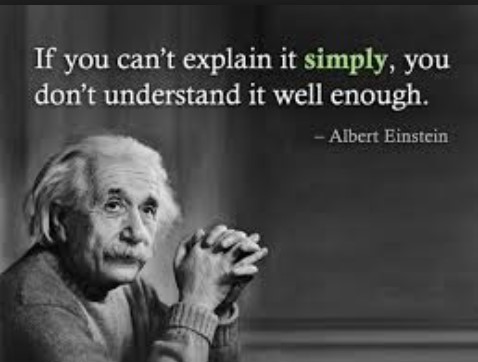
Albert Einstein, Legal Writing, Legalese, Paul Luvera, Plain Language, Plaintiff Trial Lawyer Tips Blog

This Should Be Every Trial Lawyer’s Mantra, by Paul Luvera, Plaintiff Trial Lawyer Tips Blog

http://tinyurl.com/myfv5oo

One of my favorite quotations! Mr. Luvera hit the nail on the head, not only for trial presentations, but for any type of writing regardless of your profession. Some people think that their writing should be complex, with lots of Latin, jargon, and legalese. Technical writers often use complicated terms and words understood (barely) by people who work in their industry, but no one else.

Most readers skim or skip the long, single-space block quotations often found in legal briefs. Wouldn’t you? Imagine having to slog through poorly written briefs day after day? Or imagine that you are a juror who must decipher poorly written jury instructions. If what you say is that important, why risk losing the reader even for a moment?

Just like Murphy’s Law, in writing, whatever can be misunderstood, will be. What is the point of writing anything if you are not easily understood? No, you are not “dumbing down” your writing or treating the reader like a child. You are communicating and facilitating your goal — to be understood. -CCE

enstein

Share this:

  • Print (Opens in new window) Print
  • Tweet
  • Email a link to a friend (Opens in new window) Email
  • Share on Tumblr
  • Pocket
  • More
  • Share on Reddit (Opens in new window) Reddit
  • Share on Telegram (Opens in new window) Telegram
Like Loading...

Collection of Judges’ Best Advice On Legal Writing.

08 Saturday Nov 2014

Posted by Celia C. Elwell, RP in 5th Circuit Court of Appeals, Appellate Law, Appellate Writing, Bad Legal Writing, District of Columbia Circuit Court of Appeals, Editing, Legal Argument, Legal Writing, Legalese, Oregon Supreme Court, Plain Language, Readability, Texas Supreme Court, United States Supreme Court, Wisconsin Supreme Court

≈ Comments Off on Collection of Judges’ Best Advice On Legal Writing.

Tags

Appellate Brief Writing, Bryan A. Garner, Joseph Kimble, Legal Writing, Legalese, Michigan Bar Association, Plain Language

Judges on Effective Writing: The Importance of Plain Language, by Bryan A. Garner, Vol 84 Mich. B. J. 44 (February 2005)

http://tinyurl.com/kk6trum

Each quote here is a pearl of wisdom – classical and timeless. Look no further to find the heart and soul of effective legal writing. Click on the hyperlink to find the footnotes for each quotation. -CCE

I trust that, after more than 20 years, some of the Plain Language columns are worth reprinting. This one appeared in March 1994. As I noted then, the survey that Mr. Garner mentions in his introduction is the same one that we first did in Michigan, with very similar results. See the October 1987 and May 1990 columns. The judges are identified by their judicial positions when they make their remarks. —JK (Joseph Kimble)

Lawyers are notoriously poor at gauging what judges prefer in legal writing. Too many of us believe, for example, that judges expect us to use legalese. In 1991, when the Texas Plain-Language Committee surveyed all the state district and appellate judges in Texas, we found that more than 80 percent prefer plain language (Plaintiff complains of Defendant and says) over legalese (Now comes the Plaintiff, by and through his attorneys of record, Darrow and Holmes, and for his Original Petition in this cause would respectfully show unto the Court the following). Indeed, several judges responded to the survey with a plea that we stamp out legalese once and for all.

The results of that survey surprised many Texas litigators—and many changed the form of their court papers. But many more have persisted in the old, legalistic style—perhaps out of a fondness akin to what some people feel for the language of the King James Version of the Bible. Judge Lynn Hughes of Houston speaks directly to those litigators: ‘Anyone who thinks Comes now the Plaintiff is anything like the King James Version has no sense of poetry.’

Literary tastes may differ, of course, but it’s worth knowing what judges say—and have been saying for a long time—about the language we lawyers use. Following are some choice quotations I’ve recently collected. —Bryan A. Garner

Judicial Diagnoses

‘Lawyers spend a great deal of their time shoveling smoke.’ Hon. Oliver Wendell Holmes1, U.S. Supreme Court

‘[Too many lawyers believe that] it is essential to legal English that one write as pompously as possible, using words and phrases that have long since disappeared from normal English discourse.’ Hon. Antonin Scalia2 , U.S. Supreme Court

‘The reason legal writing has gotten to such a low point is that we have had very bad teachers—judges who wrote years ago and wrote badly. We learned bad habits from them and their opinions in law school.’
Hon. William Bablitch3, Supreme Court of Wisconsin

Stick to the Mother Tongue

‘[The advocate] will stock the arsenal of his mind with tested dialectical weapons. He will master the short Saxon word that pierces the mind like a spear and the simple figure that lights the understanding. He will never drive the judge to his dictionary. He will rejoice in the strength of the mother tongue as found in the King James version of the Bible, and in the power of the terse and flashing phrase of a Kipling or a Churchill.’  Hon. Robert H. Jackson4, U.S. Supreme Court

‘[A]void as much as possible stilted legal language, the thereins, thereofs, whereinbefores, hereinafters, and what-have-yous. Use English wherever you can to express the idea as well and as concisely as in law or Latin. A healthy respect for the robust Anglo-Saxon appeals more than does the Latin, whether or not it is Anglicized. The home-grown product in this case is better than the imported, not to say smuggled, one.’ Hon. Wiley B. Rutledge5, U.S. Supreme Court

‘Write so that you’re understood. English is a hard language to learn, but it’s an easy language to communicate in. There’s no reason to put Latin in your brief.’ Hon. Craig T. Enoch6, Fifth Court of Appeals, Dallas

‘Don’t use legalese. It causes you to put your contentions in stale ways.’ Hon. Thomas Gibbs Gee7, U.S. Court of Appeals for the Fifth Circuit, 1974-91

‘Legalese is an impediment to clear, logical thinking.’ Hon. F. Lee Duggan8, First Court of Appeals, Houston

‘It’s easier for a judge when you’re using common usage. Judges are only human, after all.’ Hon. Carolyn Wright9, Family District Court, Dallas

Simplify, Simplify!

‘For a hundred years, good lawyers have been writing without all the garbage and in a simple, direct style.’ Hon. Lynn N. Hughes10. U.S. District Court, Houston

‘A lawyer should write the brief at a level a 12th grader could understand. That’s a good rule of thumb. It also aids the writer. Working hard to make a brief simple is extremely rewarding because it helps a lawyer to understand the issue. At the same time, it scores points with the court.’ Hon. William Bablitch11, Supreme Court of Wisconsin

‘When a judge finds a brief which sets up from twelve to twenty or thirty issues or ‘points’ or ‘assignments of error,’ he begins to look for the two or three, perhaps the one, of controlling force. Somebody has got lost in the underbrush and the judge has to get him—or the other fellow—out. That kind of brief may be labeled the ‘obfuscating’ type. It is distinctly not the kind to use if the attorney wishes calm, temperate, dispassionate reason to emanate from the cloister. I strongly advise against use of this type of brief, consciously or unconsciously. Though this fault has been called over-analysis, it is really a type of under-analysis.’ Hon. Wiley B. Rutledge12, U.S. Supreme Court

‘The key is to make the brief easy for the judge to follow.’ Hon. Lloyd Doggett13, Supreme Court of Texas

Cut the Verbiage

‘You want your brief to be as readable as possible . . . . If I pick up a brief of 49 and a half pages, it has a little less credibility than one that succinctly argues its points in 25 pages . . . . There’s nothing better to read than a well-written brief from a really good lawyer.’ Hon. Jerry E. Smith14, U.S. Court of Appeals for the Fifth Circuit

‘Eye fatigue and irritability set in well before page 50.’ Hon. Patricia M. Wald15, U.S. Court of Appeals for the D.C. Circuit

‘A brief should manifest conviction . . . . [That] is virtually impossible . . . if it contains an excessive number of quotations or is larded with numerous citations to the authorities. Short quotations sometimes clinch a point, but long ones fail in that objective.’ Hon. George Rossman16. Supreme Court of Oregon

‘Start in the very first sentence with the problem in this case. Put it right up front. Start early. Don’t bury it under a lot of verbiage and preliminaries.’ Hon. Nathan L. Hecht17, Supreme Court of Texas

Does Style Matter?

‘Style must be regarded as one of the principal tools of the judiciary and it thus deserves detailed attention and repeated emphasis.’ Hon. Griffin B. Bell18, U.S. Court of Appeals for the Fifth Circuit

‘Lawyers are excused from the necessity of interesting their readers, and all too often—let’s face the evidence—they take advantage of this enviable exemption.’ Hon. Jerome Frank19, U.S. Court of Appeals for the Second Circuit

‘Is good writing rewarded? I used to think it doesn’t matter much, in comparison with legal authority, justice, and the like. Now I know better: Good writing is rewarded so automatically that you don’t even think about it.’ Hon. Murry Cohen20, Fourteenth Court of Appeals, Houston

Bryan A. Garner (bagarner@att.net), president of Dallas-based LawProse, Inc. (www.lawprose.org), is the author of many books on writing, including Legal Writing in Plain English (2001) and The Elements of Legal Style (2d ed. 2002). He is also editor in chief of all current editions of Black’s Law Dictionary. He teaches at Southern Methodist University School of Law.

Share this:

  • Print (Opens in new window) Print
  • Tweet
  • Email a link to a friend (Opens in new window) Email
  • Share on Tumblr
  • Pocket
  • More
  • Share on Reddit (Opens in new window) Reddit
  • Share on Telegram (Opens in new window) Telegram
Like Loading...

Does The Law Really Require Legalese?

16 Thursday Oct 2014

Posted by Celia C. Elwell, RP in Legal Writing, Legalese, Plain Language

≈ Comments Off on Does The Law Really Require Legalese?

Tags

Joseph Kimble, Legal Writing, Legal Writing Editor Blog, Legalese, Plain Language

You Think the Law Requires Legalese?, by Joseph Kimble, Legal Writing Editor Blog

http://legalwritingeditor.com/2013/10/21/think-law-requires-legalese/

A classic. -CCE

There’s a sign that, in some configuration, appears on every gas pump in Michigan, although most drivers probably don’t even notice it anymore. You can see one in the photo to the right.

Let’s put aside the all-capitals, which are notoriously hard to read. And never mind that the first and second items aren’t exactly parallel. (‘Stop engine. Don’t smoke.’) The trouble — linguistically, stylistically, semantically — shows up in the third item.

Look at that little sentence. We get an explicit subject, A person, which really throws off the parallelism. The lawyer’s shall — now corrupted and ambiguous from misuse — does not belong even in statutes or regulations, let alone on a gas pump. Remain in attendance? Oh, please. The first of is unnecessary. And for the big comedic finish, we’re seemingly told that the nozzle must be able to see the person.

The fix isn’t hard: ‘You must stay outside your vehicle and be able to see the nozzle.’ Or for parallelism with the first two items: ‘Stay outside your vehicle, and make sure you can see the nozzle.’

Now, are people likely to misunderstand the pump version? No. Is this the worst public writing on the planet? Obviously not. But by tracing this mundane example to its source, anyone who cares about clarity in legal and official documents can learn a set of critical lessons. . . .


Share this:

  • Print (Opens in new window) Print
  • Tweet
  • Email a link to a friend (Opens in new window) Email
  • Share on Tumblr
  • Pocket
  • More
  • Share on Reddit (Opens in new window) Reddit
  • Share on Telegram (Opens in new window) Telegram
Like Loading...

10 Top Law-Related TED Videos.

20 Sunday Jul 2014

Posted by Celia C. Elwell, RP in Bad Legal Writing, Computer Forensics, Computer Fraud and Abuse Act, Computer Virus, Copyright, Criminal Law, Cybersecurity, Digital Millenium Copyright Act, Discovery, Encryption, Evidence, Finance and Banking Law, Fraud, Google, Government, Identity Theft, Intellectual Property, Law Office Management, Legal Technology, Legal Writing, Legalese, Malware, Management, Patent Law, PC Computers, Plain Language, Presentations, Search Engines, Trial Tips and Techniques, Trojans, Video

≈ Comments Off on 10 Top Law-Related TED Videos.

Tags

Copyright, Crime, Eyewitness, Fashion Industry, Government, Internet, Legal Productivity Blog, Legalese, Patent Troll, Plain Language, TED, Tim Baran

Top 10 Legal TED Talks, by Tim Baran, Legal Productivity Blog

http://www.legalproductivity.com/op-ed/top-10-legal-ted-talks/

Have you heard of TED? It began in 1984 as a conference and now covers a wide range of topics in more than 100 languages.  Think of it as a massive brain trust that shares great ideas and information.

Each of the law-related TED talks listed in this article are worthwhile on their own: (1) four ways to fix a broken legal system; (2) eliminate legalese by using plain English; (3) how to beat a patent troll; (4) how the Internet will change government; (5) laws that choke creativity; (6) copyright law; (7) why eyewitnesses get it wrong; (8) how technology could make crime worse; (9) the Internet and anonymity online; and (10) how great leaders inspire. -CCE

Share this:

  • Print (Opens in new window) Print
  • Tweet
  • Email a link to a friend (Opens in new window) Email
  • Share on Tumblr
  • Pocket
  • More
  • Share on Reddit (Opens in new window) Reddit
  • Share on Telegram (Opens in new window) Telegram
Like Loading...

Classic Writing Tips From C.S. Lewis.

01 Tuesday Jul 2014

Posted by Celia C. Elwell, RP in Bad Legal Writing, Legal Writing, Legalese, Plain Language, Proofreading, Readability

≈ Comments Off on Classic Writing Tips From C.S. Lewis.

Tags

C.S. Lewis, Editing, Ethos3, Grammar and Punctuation, Legal Writing, Plain Language, Readability, Scott Schwertly

5 Writing Tips by C.S. Lewis, the Purveyor of Childhood, by Scott Schwertly, the Founder and CEO of Ethos3

http://tinyurl.com/qzawhfs

It’s pretty likely that C.S. Lewis brought you a little bit of happiness when you were a child. As author of the ‘Chronicles of Naria’ series, C.S. Lewis created one of the most beloved children series of all time. As a result, he got loads of fan mail from his biggest fans: children. And being the nice purveyor of childhood glee that he was, he managed to respond to many of the letters, including one from Joan Lancaster, in which he included several tips on writing. Let’s see what we can learn about presentations from his poignant advice.

1. Always try to use the language so as to make quite clear what you mean and make sure your sentence couldn’t mean anything else.

This is great advice for the presenter as our job is disseminate information as clearly and simply as possible. In order to do so, use language that tells the audience what they need to know in the simplest way possible. Say what you want to say as simply as possible. Don’t overcomplicate your language for no reason.

2. Always prefer the plain direct word to the long, vague one. Don’t implement promises, but keep them.

This goes hand in hand with Lewis’s previous nugget of advice. Use plain, direct language in your presentation. You won’t sound smarter by using a ten-dollar word when a five-dollar word will do. Rather, you might come across as pretentious. Don’t alienate your audience with obscure language. Be as direct as possible.

3. Never use abstract nouns when concrete ones will do. If you mean ‘More people died’ don’t say ‘Mortality rose.’

Mr. Lewis is adamant about the importance of clear, direct language, isn’t he? Minimize abstraction as much as possible with the language you use. Be as clear and concrete as possible.

4. In writing. Don’t use adjectives which merely tell us how you want us to feel about the thing you are describing. I mean, instead of telling us a thing was ‘terrible,’ describe it so that we’ll be terrified. Don’t say it was ‘delightful’; make us say ‘delightfu’ when we’ve read the description. You see, all those words (horrifying, wonderful, hideous, exquisite) are only like saying to your readers, ‘Please will you do my job for me.’

This may be the best bit of Lewis’s advice, as it’s basically a snarky version of ‘show, don’t tell.’ Engage your audience by using vivid language that describes a situation instead of simply telling the audience how it made you feel using a range of blasé adjectives. Remember Jerry Weissman’s advice: Don’t make the audience think. Describe situations so clearly and in such a compelling nature that the audience won’t have any question as to what happened or how it made you feel.

5. Don’t use words too big for the subject. Don’t say ‘infinitely’ when you mean ‘very’; otherwise you’ll have no word left when you want to talk about something really infinite.

Lewis’s last piece of advice again addresses the need to use clear, precise language. Don’t exaggerate in your description of something as that would be an easy way to mislead your audience. Above all, if we are to follow Lewis’s advice in our presentations, use language that is as direct and to-the-point as possible. Your presentation will be much more accessible and well-received if you eliminate abstract, unclear language altogether.

Share this:

  • Print (Opens in new window) Print
  • Tweet
  • Email a link to a friend (Opens in new window) Email
  • Share on Tumblr
  • Pocket
  • More
  • Share on Reddit (Opens in new window) Reddit
  • Share on Telegram (Opens in new window) Telegram
Like Loading...

George Orwell’s “Politics and the English Language”

01 Tuesday Jul 2014

Posted by Celia C. Elwell, RP in Bad Legal Writing, Editing, Legal Writing, Legalese, Plain Language, Proofreading, Readability

≈ Comments Off on George Orwell’s “Politics and the English Language”

Tags

Bad Legal Writing, Editing, George Orwell, Grammar and Punctuation, Legal Writing, Legalese, Plain Language, Politics and the English Language, Proofreading

Politics and the English Language, George Orwell’s Library

http://tinyurl.com/nsagx

Orwell’s 1946 essay, “Politics and the English Language” is a classic. Mr. Orwell actually had six, not five, excellent rules for effective writing. Follow these rules, and you cannot go wrong. -CCE

1. Never use a metaphor, simile, or other figure of speech which you are used to seeing in print.

2. Never use a long word where a short one will do.

3. If it is possible to cut a word out, always cut it out.

4. Never use the passive where you can use the active.

5. Never use a foreign phrase, a scientific word, or a jargon word if you can think of an everyday English equivalent.

6. Break any of these rules sooner than saying anything outright barbarous.


Share this:

  • Print (Opens in new window) Print
  • Tweet
  • Email a link to a friend (Opens in new window) Email
  • Share on Tumblr
  • Pocket
  • More
  • Share on Reddit (Opens in new window) Reddit
  • Share on Telegram (Opens in new window) Telegram
Like Loading...

Checked Your Readability Score Lately?

28 Saturday Jun 2014

Posted by Celia C. Elwell, RP in Bad Legal Writing, Brief Writing, Editing, Legal Writing, Legalese, Microsoft Office, Plain Language, Proofreading, Word

≈ Comments Off on Checked Your Readability Score Lately?

Tags

Above the Law (blog), Bad Legal Writing, Editing, Legal Writing, Mark Herrmann, Microsoft Word, Readabilty Score, Steve Dykstra

Expose Your Weakness — Now! by Mark Herrmann, Above the Law Blog

http://abovethelaw.com/2014/06/expose-your-weakness-now/

Think you can write? Do these four things.

First, pull out the last brief that you wrote.

Not that one — that’s the final version, edited by guys who could write. We’re looking for your work, untouched by others. Find the unedited draft that you first circulated. (If you don’t have a draft brief handy, that’s okay. Find the last long email that you sent to someone who matters — to the partner, the client, the general counsel, or the CEO.)

Second, click through this link, which will tell you how to enable Microsoft Word’s ‘readability’ feature on your computer. Enable that feature.

Third, let the readability feature score your work.

Finally, take a handkerchief and wipe the spit out of your eye. (I bet you didn’t realize that a computer could spit in your eye.)

You didn’t notice the spit? Here it comes: Compare your readability score to the average readability score for the works of bestselling authors.

I didn’t even know about Microsoft’s readability feature until I published a column on legal writing last month. I argued in favor of using short sentences and the active voice. A reader — Steve Dykstra, who’s a legal recruiter and budding novelist in Toronto — promptly sent me an enlightening email. Steve also subjected my work — my column on legal writing — to Microsoft Word’s readability test. Steve then told me how my column compared to the work of bestselling authors. . . .

Share this:

  • Print (Opens in new window) Print
  • Tweet
  • Email a link to a friend (Opens in new window) Email
  • Share on Tumblr
  • Pocket
  • More
  • Share on Reddit (Opens in new window) Reddit
  • Share on Telegram (Opens in new window) Telegram
Like Loading...

Handouts From The Writing Center.

18 Wednesday Jun 2014

Posted by Celia C. Elwell, RP in Citations, Footnotes, Legal Writing, Plagiarism, Plain Language, Proofreading, Quotations, Readability, Spell Checking

≈ Comments Off on Handouts From The Writing Center.

Tags

Grammar & Punctuation, Handouts, Legal Writing, The Writing Center, University of North Carolina at Chapel Hill, Writing, Writing Guide

Handouts, The Writing Center, The University of North Carolina at Chapel Hill

http://writingcenter.unc.edu/handouts/

Not necessarily for legal writers, but downright handy nonetheless. The folks who put this together are kind enough to share this valuable resource, and welcome your ideas and suggestions. At the bottom of the post’s page, you will find contact information for contributions. Please give back if you can as thanks for this thoughtful gift. -CCE

Share this:

  • Print (Opens in new window) Print
  • Tweet
  • Email a link to a friend (Opens in new window) Email
  • Share on Tumblr
  • Pocket
  • More
  • Share on Reddit (Opens in new window) Reddit
  • Share on Telegram (Opens in new window) Telegram
Like Loading...

Apologizing For Bad Customer Service? Choose Your Words Carefully.

15 Sunday Jun 2014

Posted by Celia C. Elwell, RP in Legal Writing, Plain Language, Readability

≈ Comments Off on Apologizing For Bad Customer Service? Choose Your Words Carefully.

Tags

Advanced Legal Writing & Editing, Apology, Customer Service, Plain English, Roy Jacobsen, Southwest Airlines, Writing Clear and Simple Blog

Need To Apologize? Try Plain English, by Roy Jacobsen,  Writing, Clear and Simple Blog

http://tinyurl.com/pweoxkv

There are good ways and bad ways to address a customer service fiasco. Courtesy of Southwest Airlines, here’s one of the bad ways:

‘We are working directly with the family after sincerely apologizing and issuing a full refund for their less-than-positive travel experience,’ Southwest spokesman Brad Hawkins said Sunday night. ‘We certainly will take away any potential learnings from this experience in our constant evaluation of how to provide the best possible customer service, which is second only to the safety of every passenger.’

Setting aside the situation that led this (the short version: Chris and Heather Dainiak, parents of a terminally ill boy, were told their son could not fly sitting in his protective chair, even though he had used it on another Southwest flight just days earlier), I have to ask: what makes people talk this way? . . . .

Share this:

  • Print (Opens in new window) Print
  • Tweet
  • Email a link to a friend (Opens in new window) Email
  • Share on Tumblr
  • Pocket
  • More
  • Share on Reddit (Opens in new window) Reddit
  • Share on Telegram (Opens in new window) Telegram
Like Loading...
← Older posts
Newer posts →
Follow The Researching Paralegal on WordPress.com

Enter your email address to follow this blog and receive notifications of new posts by email.

Search

Sign In/Register

  • Create account
  • Log in
  • Entries feed
  • Comments feed
  • WordPress.com

Categories

Archives

  • June 2024
  • March 2022
  • January 2022
  • November 2021
  • October 2021
  • January 2021
  • November 2020
  • October 2020
  • September 2020
  • August 2020
  • June 2020
  • May 2020
  • April 2020
  • January 2020
  • December 2019
  • October 2019
  • August 2019
  • July 2019
  • May 2019
  • March 2019
  • January 2019
  • December 2018
  • November 2018
  • October 2018
  • September 2018
  • August 2018
  • July 2018
  • June 2018
  • May 2018
  • April 2018
  • March 2018
  • February 2018
  • December 2017
  • November 2017
  • October 2017
  • September 2017
  • August 2017
  • July 2017
  • June 2017
  • May 2017
  • April 2017
  • March 2017
  • February 2017
  • January 2017
  • December 2016
  • November 2016
  • October 2016
  • September 2016
  • August 2016
  • July 2016
  • June 2016
  • May 2016
  • April 2016
  • March 2016
  • February 2016
  • January 2016
  • December 2015
  • November 2015
  • October 2015
  • September 2015
  • August 2015
  • July 2015
  • June 2015
  • May 2015
  • April 2015
  • March 2015
  • February 2015
  • January 2015
  • December 2014
  • November 2014
  • October 2014
  • September 2014
  • August 2014
  • July 2014
  • June 2014
  • May 2014
  • April 2014
  • March 2014
  • February 2014
  • January 2014
  • December 2013
  • November 2013
  • October 2013

Recent Comments

lawyersonia's avatarlawyersonia on In Custodia Legis – Lega…
Eric Voigt's avatarEric Voigt on Top 20 Paralegal Blogs, Websit…
profvoigt's avatarprofvoigt on Research Guides in Focus – Mun…
Make Your PDF Docume… on Make Your PDF Document Edit-Pr…
madlaw291282999's avatarmadlaw291282999 on Using Hyperbole -Are You Riski…

Recent Comments

lawyersonia's avatarlawyersonia on In Custodia Legis – Lega…
Eric Voigt's avatarEric Voigt on Top 20 Paralegal Blogs, Websit…
profvoigt's avatarprofvoigt on Research Guides in Focus – Mun…
Make Your PDF Docume… on Make Your PDF Document Edit-Pr…
madlaw291282999's avatarmadlaw291282999 on Using Hyperbole -Are You Riski…
  • RSS - Posts
  • RSS - Comments

Blog at WordPress.com.

  • Subscribe Subscribed
    • The Researching Paralegal
    • Join 460 other subscribers
    • Already have a WordPress.com account? Log in now.
    • The Researching Paralegal
    • Subscribe Subscribed
    • Sign up
    • Log in
    • Report this content
    • View site in Reader
    • Manage subscriptions
    • Collapse this bar
 

Loading Comments...
 

You must be logged in to post a comment.

    %d